| Title |
Robert A. Schluter, Salt Lake City, Utah: an interview by Becky B. Lloyd, November 4, 2002: Saving the legacy tape no. 548 and 549 |
| Alternative Title |
Robert A. Schluter, Saving the legacy: an oral history of Utah's World War II veterans, ACCN 2070, American West Center, University of Utah |
| Creator |
Schluter, Robert A., 1924- |
| Contributor |
Lloyd, Becky B.; University of Utah. American West Center |
| Publisher |
Digitized by J. Willard Marriott Library, University of Utah |
| Date |
2002-11-04 |
| Date Digital |
2015-09-16 |
| Access Rights |
I acknowledge and agree that all information I obtain as a result of accessing any oral history provided by the University of Utah's Marriott Library shall be used only for historical or scholarly or academic research purposes, and not for commercial purposes. I understand that any other use of the materials is not authorized by the University of Utah and may exceed the scope of permission granted to the University of Utah by the interviewer or interviewee. I may request permission for other uses, in writing to Special Collections at the Marriott Library, which the University of Utah may choose grant, in its sole discretion. I agree to defend, indemnify and hold the University of Utah and its Marriott Library harmless for and against any actions or claims that relate to my improper use of materials provided by the University of Utah. |
| Spatial Coverage |
Los Alamos, Los Alamos County, New Mexico, United States; Salt Lake City, Salt Lake County, Utah, United States |
| Subject |
Schluter, Robert A., 1924- --Interviews; World War, 1939-1945--Personal narratives, American; Veterans--Utah--Biography; Atomic bomb--Design and construction--History |
| Keywords |
Atom bomb |
| Description |
Transcript (55 pages) of an interview by Becky B. Lloyd with Robert A. Schluter on November 4, 2002. This is from tape numbers 548 and 549 in the "Saving the Legacy Oral History Project |
| Collection Number and Name |
Accn2070, Saving the Legacy oral history project, 2001-2010 |
| Abstract |
Robert Schluter (b. 1924) recalls his childhood and education in Salt Lake City, Utah, prior to enlising in the U.S. Army in 1942. After basic training he was recruited for special service at Los Alamos, New Mexico, where he was involved in electronic-related work on the atom bomb. He served until February 1946. He also relates his post-war experiences in research and academia at various institutions, including MIT and the Argonne National Laboratory. 55 pages. |
| Type |
Text |
| Genre |
oral histories (literary works) |
| Format |
application/pdf |
| Extent |
55 pages |
| Language |
eng |
| Rights |
 |
| Scanning Technician |
Mazi Rakhsha |
| Conversion Specifications |
Original scanned with Kirtas 2400 and saved as 400 ppi uncompressed TIFF. PDF generated by Adobe Acrobat Pro X for CONTENTdm display |
| ARK |
ark:/87278/s62c0x8p |
| Topic |
Personal narratives--American; Veterans; World War (1939-1945); Atomic bomb--Design and construction |
| Setname |
uum_slohp |
| ID |
1017535 |
| Reference URL |
https://collections.lib.utah.edu/ark:/87278/s62c0x8p |
| Title |
Page 27 |
| Format |
application/pdf |
| Setname |
uum_slohp |
| ID |
1017505 |
| OCR Text |
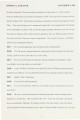
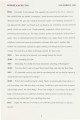
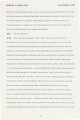
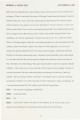
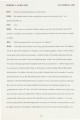
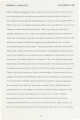
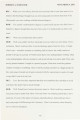
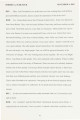
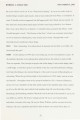
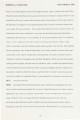
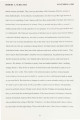
Show ROBERT HL T R MB R .t 20 2 and radar. Oppenheimer was right. We were shocked by putnik which how d that th Russians were doing what Oppenheimer essentially (more or les ) thought we hould d But LeMay reigned and they had to get rid of Oppenheimer. They trumped up a case. There were two war department lawyers and a chemist from Northwestern University, a group of three, and they had hearings. Now Oppenheimer, it was well known that when he was a graduate student in Berkeley before the war, he was pretty flaky. You'd hear these stories about him. There's one I recall. He was out on a date in the Berkeley Hills, driving around there or whatever, and he got an idea and he didn't want to lose it so he talked to his girlfriend, he drove back to his place to make sure he got it down on a piece of paper. So he did that. But he worked the rest of the night on it. So this was how he was. Now whether that's true or not, it was that sort of thing that indicates his intensity. His brother was pretty left-wing. Whether Oppenheimer ever joined the Communist Party or not was not established, but Berkeley was filled with such people at that time, a fact that was not well established. He was a brilliant administrator. He was able to direct all these Nobel Prize winners, American, British, and I think he was a brilliant scientific administrator. Greatly respected. He was a good theoretician, but not a great one. He was quite confident but he never did any great things in theory. So he had to be destroyed. Peer DeSilva came and said, "I always understood he was unreliable," and things like this. Physicists largely testified on his side. Edward Teller, a brilliant person, was at Los Alamos; I knew him afterwards-and he died recently at age ninety-five. He was throughout a very brilliant person. He doesn't handle reporters particularly well. One thing they held against Oppenheimer is that they felt Oppenheimer was against the Hbomb, which is the next step. An efficient bomb that can initiate a fusion reaction of light 26 |
| Reference URL |
https://collections.lib.utah.edu/ark:/87278/s62c0x8p/1017505 |