| OCR Text |
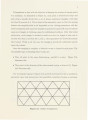
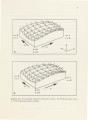
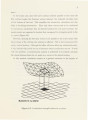
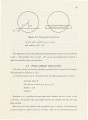
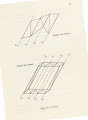
Show t o be based on finding connected dexels analogous to the algorithm of the pr vious section. The x- and y-contours are used to construct a triangular mesh for display. The double row tmeshes in the algorithm described in this chapter correspond to their x-contours. In our method, the remaining faces are covered by single row tmeshes, which eliminate the need for finding y-contours. One advantage of our algorithm is that tmeshes are generated for a given row of dexels as soon as it is traversed. On the other hand, in Huang and Oliver's algorithm, all the contours have to be generated and stored first , and then the triangulation t akes place. This makes their algorithm less efficient. The algorithm presented here has been tried on comlex shapes, and performs reasonably in showing hidden features of machined parts. No direct comparison in this regard is possible with Huang and Oliver's algorithm due to lack of test cases in their paper. 5.4 Accuracy of Resampled Image The algorithm of section 5.2 converts any dexel based structure into a solid whose boundary consists of triangles. These triangles are formed by joining the endpoints of dexels lying in adjacent rows or columns. Any point on such a triangle lies either inside one of the dexels used in forming the triangle or within distance w of one of the dexels, where w is the dexel size. This shows that the solid whose boundary is represented by these triangles lies within tolerance w of the original dexel based structure. |