| OCR Text |
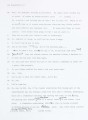
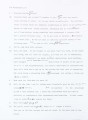
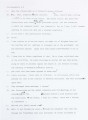
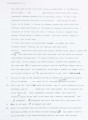
Show Joseph Rosenblatt july 17 p. 2 J think so. [laughs] Yeah. I think so. L If you put your father and yourself and one of your children side by side, and we were concerned here primarily in these three people, and concerned primarily with their sense of being Jews, how would you personally characterize the differences. J Well, of course, my father retained throughout his life the intense years of a--well, a cheder, if that word has meaning to you, a Hebrew School. The intense years of that kind of life in --part of neccessity was the ghetto section of the town in which his family lived. And I think to a measurable extent, that colored his total life. But his--his drifting away from the ritualistic demands of orthodoxy was done without his losing a very solid sense of religion, understanding what in his mind, what it meant to be a practicing Jew. When, for example, His interest was more in the substance rather than the form of religious observance. When Rosh Hashana came around and the Yom Kippur observances you know, there was always a visual change in his behaviour. Those were holy days that really had a meaning for him which unfortunately I was never able to get from you know the observance in an orthodox synagogue. But to him, some of the great prayers were just up lifting and inspiring. What Does God require of you? When he would recite it, he meant it. He meant it, he could feel what it was that God required of him. Or, on Yom Kippur, there's a prayer which .. Forsake me not, .. you know, 11 Let me not be put to shame ... When he prayed that, you could feel it right down to the bottom of your feet. He was really making a plea to a Divine Being. And whe the day was over, he came in the morning and he stayed the whole day. Critical of his peers who would walk out and go do things or who were less interested in the rituals, the liturgy. Whenfue day was over, he was a totally new man. So, religion and the observance of religion to him was of much more meaningful thing than it ever was to me. I've often made this criticism to some of the people who are associated with some of our professional organizations that Judaism is The synagogue and its religious teachings, in those years, the early years of this century, were totally inadequate in giving to any of the young people who were there a sense of understanding. They were quite content to simply teach Hebrew as to how you would read it and there was no accomplishment, and really no effort, in understanding. It was a Hebrew taken out of, almost out of context, as far as the realism of a daily life. Even the dialect of it was a strange thing. For example, what goes on in Israel now. The teachers were without training. Without supervision. And that was especially so in small communities like Salt Lake city was. So, the whole generation grew up at least I think so, with the synagogue--well, the .involvement was not a strong meaningful thing. L Which place did you go to. J Montefoire. L And that' s where you went to school. J Chede r , ues. Sunday school. Things like that. [Where wasthat in shul] Downstairs. |