| Title |
Harry Smith, Interviews with Jews in Utah, Accn 998 and Marjorie Siegal Smith, Interviews with Jews in Utah, Accn 998 |
| Alternative Title |
Accn 998, Interviews with Jews in Utah, Harry Smith |
| Description |
Transcripts (43 pages and 35 pages) of interviews by Leslie Kelen with Harry Smith and Marjorie Smith on June 9, 1982 for the Interviews with Jews in Utah Oral History Project. |
| Creator |
Smith, Harry, 1912-1997; Smith, Marjorie Siegal, 1918- |
| Contributor |
Kelen, Leslie G., 1949-; Oral History Institute |
| Publisher |
Digitized by J. Willard Marriott Library, University of Utah |
| Date |
1982-06-09 |
| Date Digital |
2015-07-06 |
| Access Rights |
I acknowledge and agree that all information I obtain as a result of accessing any oral history provided by the University of Utah's Marriott Library shall be used only for historical or scholarly or academic research purposes, and not for commercial purposes. I understand that any other use of the materials is not authorized by the University of Utah and may exceed the scope of permission granted to the University of Utah by the interviewer or interviewee. I may request permission for other uses, in writing to Special Collections at the Marriott Library, which the University of Utah may choose grant, in its sole discretion. I agree to defend, indemnify and hold the University of Utah and its Marriott Library harmless for and against any actions or claims that relate to my improper use of materials provided by the University of Utah. |
| Subject |
Jews, American--Utah--Interviews; Smith, Harry, 1912-1997--Interviews; Smith, Marjorie Siegal, 1918---Interviews; Jews--Social life and customs |
| Abstract |
Harry (b. 1912) talks about his family background, schooling, religion, and working on a chicken farm in the Depression. Marjorie (b. 1918) also describes her family and growing up during the Depression. She also talks about her education, getting married, her husband's chicken farm, and the local Jewish community. 35 pages, 43 pages. |
| Type |
Text |
| Genre |
oral histories (literary works) |
| Format |
application/pdf |
| Extent |
78 pages |
| Language |
eng |
| Rights |
 |
| Is Part of |
Interviews with Jews in Utah collection, 1982-1988, http://archiveswest.orbiscascade.org/ark:/80444/xv70657/ |
| Scanning Technician |
Niko Amaya; Halima Noor |
| Conversion Specifications |
Original scanned with Kirtas 2400 and saved as 400 ppi uncompressed TIFF. PDF generated by Adobe Acrobat Pro X for CONTENTdm display |
| ARK |
ark:/87278/s6gj1cqq |
| Topic |
Jews, American; Jews--Social life and customs |
| Setname |
uum_iju |
| ID |
903104 |
| Reference URL |
https://collections.lib.utah.edu/ark:/87278/s6gj1cqq |
| Title |
Page 13 |
| Format |
application/pdf |
| Setname |
uum_iju |
| ID |
903037 |
| OCR Text |
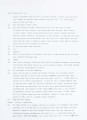
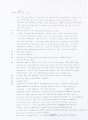
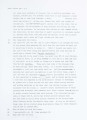
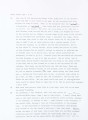
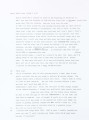
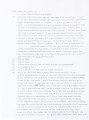
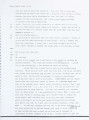
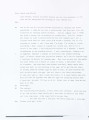
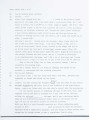
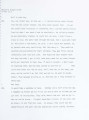
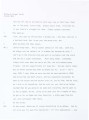
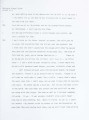
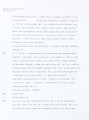
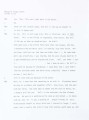
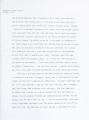
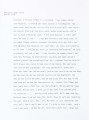
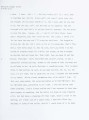
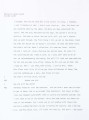
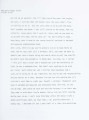
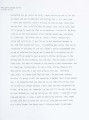
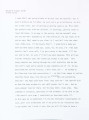
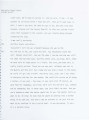
Show Harry Smith tape 1 side two p.12 conditions that existed that could not be overcome. The power of the church disseminated throughout allthe kids. And if you weren't a Mromon, you were outside of the circle. I was inside of most of the circles because of my activiites and perhaps I was likeable enough and I tried hard enough. So that it was hard to resist me in certain fields ... LK This was a Ogden, right. HS That was in Ogden. I didn't have~e same success at the University of Utah. I could/R~~e expected the same success because ~eSalt Lake East Side high school, for example, had plenty of good leaders. They had plenty of people ~o were as active as I was. So wAeH=!=eame= they came up to the university ; and they know each other. They don't know me from Adam. And short--3~ years that I was up there, I couldn't be accepted in their spheres. And I couldn't be active in the things that they were active in because they outnumbered me. LK They-is-- Woman Yeah, but you made the .. HS I did a few things--scholastically I tried to excell . LK Now during those years,those were tough years, when youwere going to school, was it usual for a young man to be going to the University. HS Oh, yeah. Yeah. Woman Especialy, you couldn't .... HS Basically, even though the times were very very tough, Ihad a car . And I commuted te= from Ogden to Salt Lake. I stayed here during the weeks but the purpose of thecar was so I could leave Friday afternoons and I would go to work Friday afternoon and maybe Friday night i necessary and all day Saturday and all day Sunday. LK WHo did yoffitay with here. HS To begin with, I stayed at a Jewish boarding house. [The name?] I don't know. But, it was --Bernstein. Bernsteins had a house; they had a lot of rooms and they didn't have any money. And so they took in boarders in order to exist. And the ironical thing is here is a grandson of theBernsteins who just gave a hundred thousand dollars to charity. Thisyear. How times do change. Andhis father gave plenty to charity. And he was very very wealthy. After 1940, he started to make some money. I'm talking ~out, I'm going to school 1933. And he is barely making enough for carfare to go anyplace. And his brother's going to law school because there wasnt much expenditure of money. to ~~ |
| Reference URL |
https://collections.lib.utah.edu/ark:/87278/s6gj1cqq/903037 |