| Title |
Harry Smith, Interviews with Jews in Utah, Accn 998 and Marjorie Siegal Smith, Interviews with Jews in Utah, Accn 998 |
| Alternative Title |
Accn 998, Interviews with Jews in Utah, Harry Smith |
| Description |
Transcripts (43 pages and 35 pages) of interviews by Leslie Kelen with Harry Smith and Marjorie Smith on June 9, 1982 for the Interviews with Jews in Utah Oral History Project. |
| Creator |
Smith, Harry, 1912-1997; Smith, Marjorie Siegal, 1918- |
| Contributor |
Kelen, Leslie G., 1949-; Oral History Institute |
| Publisher |
Digitized by J. Willard Marriott Library, University of Utah |
| Date |
1982-06-09 |
| Date Digital |
2015-07-06 |
| Access Rights |
I acknowledge and agree that all information I obtain as a result of accessing any oral history provided by the University of Utah's Marriott Library shall be used only for historical or scholarly or academic research purposes, and not for commercial purposes. I understand that any other use of the materials is not authorized by the University of Utah and may exceed the scope of permission granted to the University of Utah by the interviewer or interviewee. I may request permission for other uses, in writing to Special Collections at the Marriott Library, which the University of Utah may choose grant, in its sole discretion. I agree to defend, indemnify and hold the University of Utah and its Marriott Library harmless for and against any actions or claims that relate to my improper use of materials provided by the University of Utah. |
| Subject |
Jews, American--Utah--Interviews; Smith, Harry, 1912-1997--Interviews; Smith, Marjorie Siegal, 1918---Interviews; Jews--Social life and customs |
| Abstract |
Harry (b. 1912) talks about his family background, schooling, religion, and working on a chicken farm in the Depression. Marjorie (b. 1918) also describes her family and growing up during the Depression. She also talks about her education, getting married, her husband's chicken farm, and the local Jewish community. 35 pages, 43 pages. |
| Type |
Text |
| Genre |
oral histories (literary works) |
| Format |
application/pdf |
| Extent |
78 pages |
| Language |
eng |
| Rights |
 |
| Is Part of |
Interviews with Jews in Utah collection, 1982-1988, http://archiveswest.orbiscascade.org/ark:/80444/xv70657/ |
| Scanning Technician |
Niko Amaya; Halima Noor |
| Conversion Specifications |
Original scanned with Kirtas 2400 and saved as 400 ppi uncompressed TIFF. PDF generated by Adobe Acrobat Pro X for CONTENTdm display |
| ARK |
ark:/87278/s6gj1cqq |
| Topic |
Jews, American; Jews--Social life and customs |
| Setname |
uum_iju |
| ID |
903104 |
| Reference URL |
https://collections.lib.utah.edu/ark:/87278/s6gj1cqq |
| Title |
Page 6 |
| Format |
application/pdf |
| Setname |
uum_iju |
| ID |
903030 |
| OCR Text |
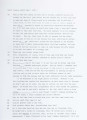
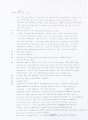
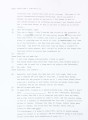
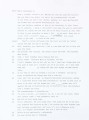
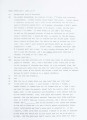
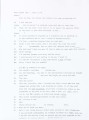
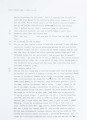
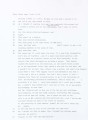
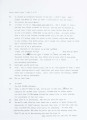
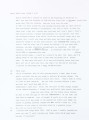
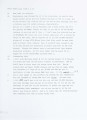
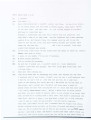
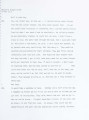
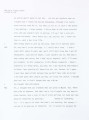
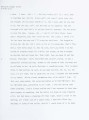
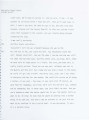
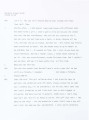
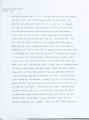
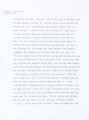
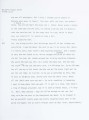
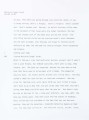
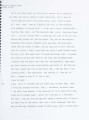
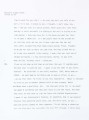
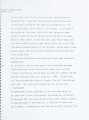
Show Harry Smith tpe 1 p.S LK Why is that trouble. HS Because of the organisms in the ground. The worms, the worm eggs hatch and then you get more worms and more worms. r Woman : chickens ge t every disease .. HS It's a paras ite.See. so the theory was if you have a cement floor , you would minimize the amount of problems. So it didn't take him very long before he bought a cement mixer, and hauled in the sand.and the gravel and started mixing it up and poured all the cements with cement floors in order to solve the problem. LK chicken coops were ri ght on the floor there, right on the cement. HS Yeah . But everything took effort. Now there were sometimes a project was too big for common laborer and he decided to finish and he on rare occasions, he hired a carpenter to come and givehim a hand. He did everything that he could by himself. And his hours were long and I would say they were long and bitter but in determination to be able to stay home he was willing to work seven days a week; he was willing to do all the heavy work; whateverhe could in order to survive. And it wasn't that he --well, he probably wanted to work for himself. I presume that. That goes without saying, he wanted that too. He was written up justifiably in a book- The Pioneer and Farmersof Utah. And I don't know. I doubt if the bok exists and I know I don't have it because I moved away from ( ~v brother Ogden and all the elics that we had there --~Ae=geve~ae~ and his wife took them. Dad was written up of some of the early pioneers in the ~ieaee~s poultry business. And he was because in those days, you didnt know anything about protein, carbohydrates, startch or fats. He didnt know about cod liver oil. He didn't know about control of diseases. He didn't know what to feed or how to feed. It was an improven existence. And so he did many hings that I felt were very very oh eventful .. some of the things he did he didn't like to do. LK Like what. HS He started to kill horses. Well, here was a certain efiaR~e of --there was a certain tinge that it wasn't just the right thing to do. Buy horses, kill themffid feed them to the chickens. LK Chickens needed the protein? HS That ' s the idea. That lasted for quite a number of years. He had a dutchman who used to do the actual killing, used to take plenty of the meat home to eat. He was no fool. horse meat is ------------ being used in he world. Even the French. Don't the French? Sur- they do. |
| Reference URL |
https://collections.lib.utah.edu/ark:/87278/s6gj1cqq/903030 |