| Title |
Interviews with Japanese in Utah: Raymond Uno |
| Alternative Title |
Raymond Uno: interviews on September 27 and October 17, 1987 |
| Creator |
Uno, Raymond, 1930- |
| Contributor |
Kelen, Leslie G., 1949- |
| Publisher |
Digitized by J. Willard Marriott Library, University of Utah |
| Date |
1987-09-27; 1987-10-17 |
| Date Digital |
2014-05-07 |
| Access Rights |
I acknowledge and agree that all information I obtain as a result of accessing any oral history provided by the University of Utah's Marriott Library shall be used only for historical or scholarly or academic research purposes, and not for commercial purposes. I understand that any other use of the materials is not authorized by the University of Utah and may exceed the scope of permission granted to the University of Utah by the interviewer or interviewee. I may request permission for other uses, in writing to Special Collections at the Marriott Library, which the University of Utah may choose grant, in its sole discretion. I agree to defend, indemnify and hold the University of Utah and its Marriott Library harmless for and against any actions or claims that relate to my improper use of materials provided by the University of Utah. |
| Spatial Coverage |
Ogden, Weber County, Utah, United States, http://sws.geonames.org/5779206/ ; Salt Lake City, Salt Lake County, Utah, United States, http://sws.geonames.org/5780993/ ; Park County, Wyoming, United States, http://sws.geonames.org/5834587/ ; El Monte, Los Angeles County, California, United States, http://sws.geonames.org/5345743/ |
| Subject |
Uno, Raymond, 1930- --Interviews; Japanese Americans--Utah--Interviews; Japanese Americans--Forced removal and internment, 1942-1945; Heart Mountain Relocation Center (Wyo.); United States--Armed Forces--Japanese Americans; Japanese American soldiers; Judges--Utah; Utah--Ethnic relations |
| Description |
Transcript (typescript, 134 pages) of an interview with Raymond Uno, a Japanese-American living in Utah in 1987. Judge Uno (b. 1930) reminisces about his childhood in Ogden, Utah, the family's move to California in the mid-1930s, and subsequent experiences during the Japanese relocations of World War II. The Uno family was sent to the Hart Mountain relocation center in Wyoming. In 1948 Uno enlisted in the United States Army and served in post-war Japan. He also relates his experiences in the Utah judicial system |
| Type |
Text |
| Genre |
oral histories (literary works) |
| Format |
application/pdf |
| Language |
eng |
| Rights |
 |
| Relation |
http://archiveswest.orbiscascade.org/ark:/80444/xv45901 |
| Scanning Technician |
Matt Wilkinson |
| Conversion Specifications |
Original scanned with Kirtas 2400 and saved as 400 ppi uncompressed TIFF. PDF generated by Adobe Acrobat Pro 9 for CONTENTdm display |
| ARK |
ark:/87278/s603089w |
| Topic |
Japanese Americans; Japanese American soldiers; Evacuation and relocation of Japanese Americans (United States : 1942-1945); Heart Mountain Relocation Center (Wyo.); Judges--U.S. states |
| Relation is Part of |
Mitsugi M. Kasai Memorial Japanese American Archive |
| Setname |
uum_ijau |
| ID |
900074 |
| Reference URL |
https://collections.lib.utah.edu/ark:/87278/s603089w |
| Title |
Page 7 |
| Format |
application/pdf |
| Setname |
uum_ijau |
| ID |
899945 |
| OCR Text |
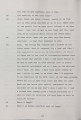
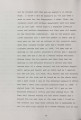
Show LK RU LK RU LK RU LK RU LK RU LK RU LK RU Quite young. Yeah. These stores, you know, who was their clientele? Was it American-Japanese or a mixed or ... The •.. Stores and resturants. Yeah, the restuarants, the noodle parlors mostly were I think mixed, primarily no Caucasian but a lot of Japanese would, you know, go to these also. But primarily the bulk was no Caucasian. What about your father's store? The Star? Star Supply Company was sort of a dry goods store like and sold to the Japanese primarily and he used to sell to a lot of farmers around the area, Weber County, DAvis County. Do you remember what the store stocked? Rice and a lot of Japanese things, you know. Japanese food, Japanese kind of eating utensils and dishes and things like that. All kinds of foods or just ... I think primarily Japanese stock food. Rice, oh I don't remember all these other things that he had in there. But it was primarily, you know, things that Japanese would eat. More ethnic. Right. How did the food get to people? Did they come and pick it up or was it delivered? I think people used to come in if I recall correctly. 6 |
| Reference URL |
https://collections.lib.utah.edu/ark:/87278/s603089w/899945 |