| Title |
Esperanza and Gavino Aguayo, No. 2, Hispanic Oral Histories, Accn 1369 |
| Creator |
Aguayo, Esperanza, 1932-; Aguayo, Gavino |
| Contributor |
Kelen, Leslie G., 1949- |
| Date |
1985-02-06 |
| Date Digital |
2016-05-02 |
| Spatial Coverage |
Bingham, Salt Lake County, Utah, United States |
| Subject |
Mexican Americans--Utah--Interviews; Aguayo, Esperanza, 1932- --Interviews; Aguayo, Gavnio--Interviews; World War, 1939-1945--Personal narratives, American; Kennecott Copper Corporation; Emigration and immigration--Social aspects |
| Access Rights |
I acknowledge and agree that all information I obtain as a result of accessing any oral history provided by the University of Utah's Marriott Library shall be used only for historical or scholarly or academic research purposes, and not for commercial purposes. I understand that any other use of the materials is not authorized by the University of Utah and may exceed the scope of permission granted to the University of Utah by the interviewer or interviewee. I may request permission for other uses, in writing to Special Collections at the Marriott Library, which the University of Utah may choose grant, in its sole discretion. I agree to defend, indemnify and hold the University of Utah and its Marriott Library harmless for and against any actions or claims that relate to my improper use of materials provided by the University of Utah. |
| Keywords |
WWII; World War II |
| Description |
Transcript (102 pages) of part 2 of 2 of interviews by Leslie Kelen with Esperanza and Gavnio Aguayo, on February 6, 1985 and February 25, 1985. |
| Collection Number and Name |
ACCN 1369, Hispanic Oral Histories, 1984-1987 |
| Abstract |
The interview continues with Gavino's being drafted in 1943 at the age of eighteen and sent to New Zealand. He talks about combat in New Guinea and the Philippines, the behavior of conquered Japanese during occupation, and the condition of Japanese cities. Other topics covered include women working for Kennecott, postwar working conditions at the mine, unions and strikes, being evicted from company houses to make room for mine expansion, employment practices at Kennecott, Father Miersman, accidents and safety, family marriage customs, and Mormon religion and culture. |
| Type |
Text |
| Format |
application/pdf |
| Extent |
123 pages |
| Language |
eng |
| Rights |
 |
| Rights Holder |
For further information please contact Special Collections, J. Willard Marriott Library, University of Utah at spcreference@lists.utah.edu or (801)581-8863 or 295 South 1500 East, 4th Floor, Salt Lake City, Utah 84112 |
| Relation |
http://archiveswest.orbiscascade.org/ark:/80444/xv46923 |
| Scanning Technician |
Mazi Rakhsha |
| Conversion Specifications |
Original scanned with Kirtas 2400 and saved as 400 ppi uncompressed TIFF. PDF generated by Adobe Acrobat Pro X for CONTENTdm display |
| ARK |
ark:/87278/s60w0kgs |
| Topic |
Mexican Americans; World War (1939-1945); Kennecott Copper Corporation; Emigration and immigration--Social aspects |
| Genre |
oral histories (literary works) |
| Setname |
uum_hoh |
| ID |
893095 |
| Reference URL |
https://collections.lib.utah.edu/ark:/87278/s60w0kgs |
| Title |
Page 45 |
| Format |
application/pdf |
| Setname |
uum_hoh |
| ID |
893014 |
| OCR Text |
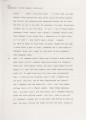
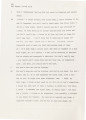
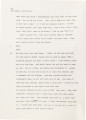
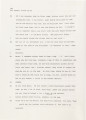
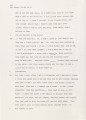
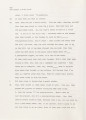
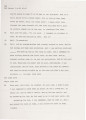
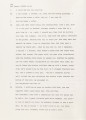
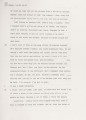
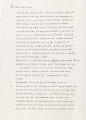
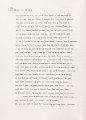
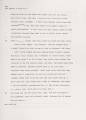
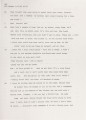
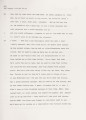
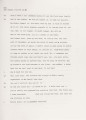
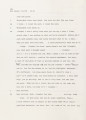
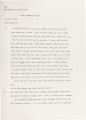
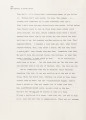
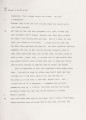
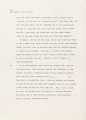
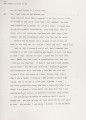
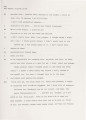
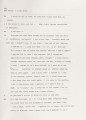
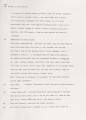
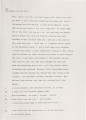
Show OHI E&G Aguayo 3-4-85 s 6 :43 He could go h ome and s ay the pickers didn ' t let me go through. ANyway, Ihad him unload it. But, the company - they -they had the photographer the~e and he c ome over a nd t ook my picture, just trying to scareyou off. That's wha t I figur e d . That- I figured that's all he was going to do anyway. The sherrif didn't do nothing. He parked over there. Thepaper he had. I odn't know whether it was not worth nothing or he didn't think it was worth the trouble. Becuase he turned around and went back. EA I don't know if this is the same strike. My married brother. He's married andmd a family, you could .understand this. He was having a real hard time during the strike. And he came down here one day and he was talking. He said, I think I'll just have to cross thatp.cket line. And my brother, you try and we'll both stop you. he went wt and got another job. Thepoor man. But I felt, you know, he was married. He has responsibilities. It was different. But I remerrher them saying, and I thought, oh gee, you know. Because I remember both, telling him, you try it and we'll be the01es that will stop you. He said, I'll cross±, I've got to work. L It was a tough situation. GA I think · .alot of times, like f say,. it could have got worse a lot of times I think if the company wouldhave made effort to put people up there. Because a lot of times, I think the people would have - really would have stopped them.They used to make an attempt to stop the foremen . But we know the rules o f |
| Reference URL |
https://collections.lib.utah.edu/ark:/87278/s60w0kgs/893014 |