| OCR Text |
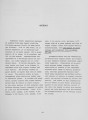
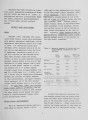
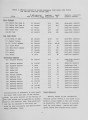
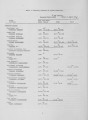
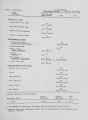
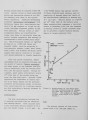
Show ABSTRACT Flameless atomic absorption analyses of samples from Lake Powell yield the following mercury levels (in mean parts per billion): 0.01 in lake water, 30 in bottom sediments, 10 in shoreline substrates, 34 in plant leaves, 145 in plant debris, 28 in algae, 10 in crayfish, and 232 in fish muscle. Concentrations are expressed on a wet-weight basis for animals; all other samples are on a dry-weight basis. In bottom sediments, mercury levels are found to be highest in sediments with high organic content and fine texture. The mercury content of plant leaves is higher than that of stems or roots. The mercury levels in lake-transported plant debris are higher than in shoreline plants. In rainbow and brown trout, bloody tissues have higher mercury levels than do muscle or other tissues. In six other species of fish analyzed, mean relative mercury levels (compared to muscle as 1.00) are the following: liver, 0.51; heart, 0.43; kidney, 0.36; spleen, 0.28; stomach, 0.20; brain, 0.16; gonads, 0.14; skin, 0.13; gills, 0.12; and bone, 0.07. Larger fish of a given species and fish of higher trophic levels have higher mercury concentrations, with the muscle of large walleye and largemouth bass exceeding jOO ppb. Bioamplification and the association of mercury with organic matter are evident in this recently created, relatively unpolluted reservoir. Formulation of an estimated mercury budget suggests that the restriction of outflow in the impounded Colorado River leads to mercury accumulation, and that projected regional coal-fired power generation may produce sufficient amounts of mercury to augment significantly the mercury released by natural weathering. The extent of this augmentation and its effect on Lake Powell principally depends on the actual mercury content of the coal; the degree to which this mercury enters the lake drainage; and the movement and bioamplification of the mercury within the system. vi i |