| OCR Text |
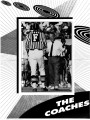
Show Hea RON McBRIDE Year at Utah: 4th Record: 17-18 In December of 1989, Ron McBride traded a relatively obscure existence as a longtime assistant football coach for life in the fish-bowl of head college coaching. In November of 1992, he turned the fish-bowl into the Copper Bowl. McBride, who fashioned back-to-back winning (pre-bowl) seasons in 1991 and 1992-the first Ute coach to do so since Bill Meek in 1972-73-promised a bowl bid when he signed up for his first head coaching post. Three seasons later, he delivered. After taking his first team to a 4-7 record in 1990, he produced 7-5 and 6-5 regular season records in 1991 and 1992, respectively. At the Weiser Lock Copper Bowl, Utah's first bowl appearance since 1964, McBride's underdog Utes threw a scare into favored Washington State before falling, 31-28. The narrow bowl defeat moved Utah's final record to 6-6. Along the way to Utah's first bowl game in 28 years, McBride exchanged Utah's reputation as a defensive pushover for that of one of the league's crack units. He swapped the downward slide that threatened to land the Utes at the bottom of the Western Athletic Conference for an upward surge that placed them in the title chase for much of last season. He ditched an unbalanced offensive scheme in favor of a run-pass mix. He ended 10 years of sub-.500 Ute road woes by assembling three straight 3-3 road records. Back at home, McBride made Utah's Rice Stadium a regular stop for bowl scouts. The scouts saw a speedy, hard-hitting defense and a poised, veteran offense. McBride, who inherited the nation's worst defense (ranked 106th in 1989), watched his Utes move to the top of the WAC's total defense charts in 1991 and secure a third-place standing last fall. His 1992 Utes also led the league in passing defense. Offensively, the 1992 Utes ranked second in the WAC in passing offense and fourth in total offense (19th nationally). Superlatives aside, McBride is simply living up to the promise he made upon accepting the offer to become Utah's 15th head football coach. He pledged a future fraught with physical play, winning records, bowl invitations and WAC championships. He got a leg up on the list quickly-fulfilling the first three in as many years. Here's a closer look at McBride. McBride Highlights at the U.: 1992-Invitation to Weiser Lock Copper Bowl was first Ute bowl appearance since 1964 ... nearly upset heavily favored Washington State in Copper Bowl (lost 31-28) ... Utes went 6-5 during regular season to complete second straight winning season (first by same coach since 1972-73 at U.) ... counting Copper Bowl, final record was 6-6 ... WAC's passing defense and third down defense leader.... first win ever at Air Force (20-13) ... Luther Elliss named first-team all-WAC. 1991-Utes ranked first in WAC in total defense, second in passing defense and third in both scoring defense and turnover margin ... improved defense 41 places nationally (from 106th, last in nation prior to McBride, to 65th in 1991) ... 7-5 record in 1991 was best Ute mark in 6 years ... 4 first-team all- WAC picks: Anthony Davis, Bryan Rowley, Jimmy Bellamy, Lavon Edwards ... 8 Academic all-WAC picks in 1991. 1990-Upset Minnesota on road (35-29) in second game of head coaching career... 2-1 ledger against Pac-10; missed 3-0 mark by 1 touchdown (lost at Arizona State, 21-15) ... Utah's first win over Wyoming in Laramie since 1972 (5742) ... Anthony Davis was named first-team all-WAC. McBride Philosophy: Known as a players' coach, McBride coined the acronym MAFU while at Arizona to explain his philosophy. MAFU stands for mental toughness, aggressiveness, fanatical effort and unity. Assistant Coaching Highlights: At Arizona (assistant head coach, offensive line coach, 1987-89): Second in the Pac-10 ... Copper Bowl ... Glenn Parker and Joe Tofflemire both gained second-team All-America honors ... Parker, an offensive tackle, was also first-team all-Pac-10, while four-time all-conference pick Tofflemire won the Morris Award (awarded to the top lineman in the Pac-10) and was a second-round draft pick of the Seattle Seahawks ... V its led Pac- 10 in rushing all three years. At Utah (offensive line coach, 1985-86; offensive coordinator, 1977-82): Seven all-WAC offensive linemen in eight total years as U. assistant ... Three players (Dean Miraldi, Wayne Jones and Dave Cullity) advanced to the NFL ... During McBride's stint as offensive coordinator, Utah went 35-30-1. At Wisconsin (offensive line coach, 1983-84): Badgers were 14-8-1 ... 1984 Hall of Fame Bowl... Coached Paul Gruber (first lineman taken in the 1985 NFL draft) and Jeff Dellanbach (Most Valuable Lineman in the Big Ten and a second-team All-American). A Winning Mark: In 27 years of college football, which also included stints at Cal State- Long Beach, Cal-Riverside, Gavilan Junior College and San Jose State, the 52-year-old South Gate, Calif, native has been involved in 23 winning seasons. Thirty of his proteges have advanced to the professional ranks. McBride's Playing Careen An all-city football and baseball standout at Los Angeles' South Gate High from 1954-57, McBride went on to become team captain at San Jose State, where he played football from 1959- 62. Following his days as a Spartan linebacker, McBride played professional football with San Jose of the USA League, where he was a linebacker and defensive coordinator. McBride's Coaching Synopsis: 1990- present, head coach, Utah; 1987-89, assistant head coach/offensive line, Arizona; 1985-86, offensive line, Utah; 1983-84, offensive line, Wisconsin; 1977-82, offensive coordinator, Utah; 1974-76, offensive coordinator, Cal State-Long Beach; 1972-73, offensive coordinator, Cal-Riverside; 1969-71, offensive coordinator/defensive line (one year), Gavilan Junior College; 1966-68, defensive coordinator, Piedmont Hills High School (San Jose); 1965, freshman coach/defensive coordinator/ linebackers, San Jose State. Personal: A 1964 San Jose State graduate, McBride earned a bachelor's degree in secondary education. He was born on Oct. 14, 1939. McBride and his wife Vicky are parents of four children-Danny (34), Mike (32), Jill (29) and Kelly (26). 14 oath MiBride Style 15 mmes RICK RASNICK Offensive Coordinator 3rd Year Midway through the 1992 season opener, Utah's offensive coordinator Rick Rasnick lost All-America wide receiver Bryan Rowley for the season with a broken ankle. For three games, Rasnick coached an offense missing star quarterback Frank Dolce (knee injury). Another three games saw Rasnick arrange a game plan around the absence of 1991 second-team all-WAC tailback Keith Williams (ankle injury). But, despite the key losses, Rasnick's Utes still gained an average of 416 yards per game of total offense- 19th in the nation. And his potent passing plan produced 261.6 ypg-14th nationally and second in the Western Athletic Conference. In addition, Rasnick's 1992 offense averaged 26.5 points per game-up from 23 ppg the previous year. Obviously, making gains is a Rasnick trademark. In 1991, his first test as a Ute assistant coach, Rasnick merely rescued a Ute running game fallen on hard times, tutored one of the WAC's finest running back tandems (Williams and Charlie Brown), saw his backs set a single-game rushing record (478 yards) against New Mexico and helped reinstate Utah as an offensive threat. Rasnick, who came to Utah as its assistant head coach for the offense and running back coach in 1991, improved Utah's ground game dramatically. Led by second-team all- WAC tailback Williams' 1,097 net yards, Utah's rushing totals jumped to 165.7 yards per game-nearly double the production of the preceding year. Rasnick, who also cast a final vote on the overall offensive package, helped Utah to a No. 25 national ranking in passing offense and a No. 28 total offense ranking in 1991. Now in his third year overall at the U., Rasnick, 33, is in his second season as offensive coordinator-a title he held for five years at perennial Big West champion San Jose State. The man who in 1987, at age 27, became the youngest offensive coordinator in Division I football, quickly established a reputation for offensive fireworks. In his first year as offensive coordinator at SJS, Rasnick's unit led the nation in passing offense. Three times, all five of his offensive linemen were named to the all-Big West team in a single year. Rasnick, who helped lead San Jose State to four California Bowls, was named the Big West Conference's Top Offensive Assistant in 1990 by The Sporting News. A member of the Spartan coaching staff since 1981, he was offensive line coach for the nation's total offense leader in 1986. A former starting center at SJS (1979-80), Rasnick co-captained the 1980 squad. He joined the Spartan staff as a graduate assistant with the offensive line in 1981, moving into the position of offensive line coach in 1982. He spent his final four years as offensive coordinator. Rasnick served as interim head coach at SJS during the spring of 1990. Rasnick graduated from San Jose State in 1982 with a bachelor's degree in physical education. He earned a master's degree in the same field from St. Mary's in 1985. He and his wife Karen have two sons, Blair and Pierce. Rasnick Report: Coaching Synopsis: 1992-present, offensive coordinator, Utah; 1991, assistant head coach for offense/running backs, Utah; 1987-90, offensive coordinator, San Jose State; Spring 1990, interim head coach, San Jose State; 1982-86, offensive line, San Jose State; 1981, graduate assistant offensive line, San Jose State; Education: 1985, master's degree in physical education, St. Mary's; 1982, bachelor's degree in physical education, San Jose State; Born: Sept. 15, 1959. FRED WHITTINGHAM Defensive Coordinator _ 2nd Year Last year, his first as Utah's defensive coordinator, Fred Whittingham dealt the Utes a great defensive hand by taking the gamble out of the game plar .Vhittingham, a 20-plus-year veteran of collegiate and professional coaching, instilled an assignment-oriented, more-think, less-instinct, defensive look. The result? The disciplined Utes led the WAC in passing defense (104.4 yards per game) and finished third in total defense (392.7 ypg). Playing in the high-scoring WAC, Whittingham's crew allowed just 23.5 points per game-third in the WAC. The Ute defense also topped the WAC in third down conversions; opponents converted on just 31-percent of their third down attempts. Says Whittingham, "My main goal is no points. The team with the fewest points loses. That is the only stat I ever care about.'' Whittingham took the Utah position after nearly a decade with the Los Angeles Rams of the National Football League. Beginning in 1982, he served in a variety of capacities at L.A. He began as coach of the special teams and tight ends. The next year, Whittingham was given responsibility for the linebackers. Most recently, he spent the 1991 season as a scout for the Rams. Whittingham didn't come into the Ute coaching post cold, in terms of WAC football. He spent the 1973-81 seasons on the staff at Brigham Young. He coached the Cougar linebackers from 1973-77. In 1978, he was promoted to defensive coordinator-a position he held until moving on to the Rams in 1982. During his four years at the helm of the Y. defense, Whittingham's clubs never finished lower than third in the WAC in total defense. His defense led the conference in 1979. In fact, his 1979 defense was the first to ever lead the WAC in every statistical category. Prior to his success at BYU, he coached for a year (1972) at Alhambra High School in Alhambra, Calif. Whittingham's defensive file holds more than his substantial coaching credentials. He played football at BYU in 1959 and concluded his collegiate career at Cal Poly-San Luis Obispo (1960-62), where he was an all- Coast tight end and defensive end. He then embarked on a nine-year professional career (1963-71), during which time he played linebacker for the Rams, Dallas Cowboys, Philadelphia Eagles and New Orleans Saints. In 1968, while playing for the Saints, Whittingham was named second-team all- East and was chosen as NFL player of the week once. 16 ssistant Coaches The Warwick, R.I., native and his wife Nancy have four sons-Kyle, Cary, Fred Jr. and Brady-and a daughter, Julie. The three oldest boys all played football at BYU. Whittingham Ways: Coaching Synopsis: 1992-present, defensive coordinator, Utah; 1991, scout, LA. Rams; 1983-90, linebackers, L.A. Rams; 1982, special teams/tight ends, LA. Rams; 1978-81, defensive coordinator, Brigham Young; 1973-77, linebackers, Brigham Young; 1972, head coach, Alhambra High School (Calif.). Education: 1965, master's degree in education, Cal Poly-SLO; 1963, bachelor's degree in physical education, Cal Poly-SLO. Bora: Feb. 4,1941. DAN HENSON Quarterbacks/ Passing Game 4th Year Dan Henson steps into his fourth year as a Ute assistant coach on the heels of his finest season to date. Henson, now in his second year as Utah's quarterback and passing game coach, helped steer the Utes to a No. 2 passing offense ranking in the Western Athletic Conference (14th nationally) in 1992. Ahead for Henson, who spent his first two years at the U. as offensive coordinator, lies the revamping of a Ute passing game which lost its leader-quarterback Frank Dolce. Given his documented success at the passing aspect of football, Henson should keep his quarterback game on keel with the 1992 club-a team which produced 261.6 yards per game in passing offense. Certainly, if history repeats itself, there are more high flying numbers in Henson's and Utah's future. Prior to joining the U. staff, Henson spent three years coaching the San Jose State quarterbacks and receivers, including Ail- American Mike Perez, who quarterbacked the nation's top passing team in 1987. Henson's quarterback and receiving teams combined to finish 12th on the nation's passing leader board in 1988 and '89. He coached the outside linebackers his first two years at San Jose State and also served as recruiting coordinator. Unlike the offensive stability he enjoyed with the Spartans, Henson arrived to an unsettled offensive situation at Utah. After an up-and-down inaugural season, Henson's 1991 air show helped Utah fly to its best record in six years. Last season, it played a big role in Utah's first bowl appearance since 1964. Henson's rise in the coaching ranks took a circuitous route. The Flint, Mich., native began his career as an assistant at Swartz Creek High (Mich.) in 1974. He spent the next three years at Sebring High (Fla.), where he was assistant football and head basketball coach. Christian High in San Diego was Henson's next stop; there he would spend five years as head football coach and athletic director. Utah's assistant coaching staff remains virtually intact from 1992-a season which saw the Utes rank among the Western Athletic Conference leaders on both offense and defense. The dean of the staff is Sean McNabb, now in his 17th year as a Ute assistant. The lone newcomer is Ken Delgado, who will be responsible for the defensive line. In 1982, the collegiate ranks came calling and Henson accepted a position as defensive backs coach at Southwestern Junior College. Southwestern posted a 10-1 record and won the league title and a bowl game in '82. In 1983, Henson left for San Diego, where he coached the Toreros' quarterbacks and receivers. The next year found Henson back in Michigan, as linebacker coach and recruiting coordinator for Hope College. Hope finished 9-0 in 1984. In 1985, he began his five-year stint at San Jose State. Henson's own collegiate playing career took place at Central Michigan, where he played defensive back. He graduated from Central Michigan in 1975 with a bachelor's degree in education. In 1980, he tacked on a master's degree in education from Azusa Pacific. Henson and his wife Carol have two children: Drew, 13, and Brittany, 10. Henson's History: Coaching Synopsis: 1992-present, quarterbacks/passing game, Utah; 1990-91, offensive coordinator/quarterbacks, Utah; 1987-89, quarterbacks/receivers, San Jose State; 1985-86, linebackers, San Jose State; 1984, linebackers/recruiting coordinator, Hope College; 1983, quarterbacks/receivers, San Diego; 1982, defensive backs, Southwestern JC; 1978-82, head coach/athletic director, Christian High School (San Diego); 1975-78, assistant coach, Sebring High (Fla.); 1974, assistant coach, Swartz Creek High (Mich). Education: 1980, master's of education degree, Azusa Pacific; 1975, bachelor's degree in education, Central Michigan. Bora: Aug. 18, 1952. SEAN MCNABB Running Backs/ k Special Teams 17th year Some things never change. Like a Utah football staff with Sean McNabb. McNabb, dean of the Ute football staff, is in his 17th year with the program. Although four head coaches have come and three have gone at the U. during his tenure, McNabb survived each staff upheaval. Count versatility and success as the keys behind his lengthy stay. He put the former to use last fall, when he took charge of the Ute running backs, after seven years with the tight ends. He also tasted the latter, by retaining his special teams responsibilities-an area where success has been the operative word. McNabb's switch to running backs proved beneficial for the U. offense. His backs produced four 100-yard games. And, when star tailback Keith Williams exited the field for three games with an ankle injury, McNabb pulled first-year sophomore Pierre Jones out of the woodwork and directed him to a 700-plus yard rushing season. During a previous eight-year stint as running backs coach (1977-84), McNabb instructed 17 Assistant Coaches some of the biggest names in Utah rushing history, including school (and/or WAC) record-holders Tony Lindsay, Del 'Popcorn' Rodgers, Carl Monroe and Eddie Johnson. In fact, of all the Ute running backs to gain 100 or more yards in a game prior to 1985, over half were coached by McNabb. As for McNabb's wizardry at special teams, 1992 reaffirmed his reputation. His Ute special teams blocked a total of eight kicks, following a six-block year in 1991. In 1990, the Utes blocked three field goals in their first three games; one of which led to a 91-yard game-winning touchdown return as time expired against Minnesota. They blocked another two later in the season. Utah's return game has also benefitted from McNabb's expertise. Ute MVP Sean Williams provided lots of excitement last year with his explosive punt returns. The previous year, LaVon Edwards (who led the WAC in punt returns in 1988), completed his career as Utah's all-time punt return leader. McNabb coached a pair of NCAA kickoff return leaders in Carl Monroe and Errol Tucker. As for the kicking game, Chris Yergensen booted his way into the Ute books with a 54-yard field goal (third best ever) in 1991, while punter Steve Young finished his career second all time with 18 punts over 50 yards (10 in 1992). Other kickers to benefit from McNabb's expertise include school record-holders Andre Guardi, Scott Lieber and Wayne Lammle. He began his coaching career in 1972 as an assistant to former Ute football coach Wayne Howard at UC-Riverside. He would clock 10 years as Howard's assistant-following him to Cal State-Long Beach, where he spent three years as an assistant-and then journeying with Howard to Salt Lake. Born in Maryland, McNabb spent most of his youth in Southern California. After graduating from Carlsbad High School in 1968, he enrolled at Notre Dame, where he spent two years. He then transferred to UC-Riverside, where he played both offensive and defensive line for two years. Upon graduating with honors from UCR with a bachelor's degree in political science in 1972, McNabb embarked on his coaching career. In an age of specialization, McNabb has enjoyed the opportunity to either play or coach every position on the field, except the secondary. McNabb Minutes: Coaching Synopsis: 1992-present, running backs/special teams, Utah; 1985-1991, tight ends/special teams, Utah; 1977-84, running backs/special teams, Utah; 1974-76, assistant coach, Cal State- Long Beach; 1972-73, assistant coach, UC-Riverside; Education: 1972, bachelor's degree in political science, UC-Riverside. Bora: Aug. 17, 1950. FRED GRAVES Wide Receivers 12th Year Over the past decade, Utah has gained a reputation for its prolific passing game. The catch behind it? To a large degree, it is none other than wide receivers coach Fred Graves, now in his 12th year on the Ute staff. Graves, the primary figure behind the recruitment and development of Utah's receiving cast, has had a hand in the success of Utah's most noted wideouts. Ute record holders like 1991 first-team all-WAC, second-team The Sporting News All-America wide receiver Bryan Rowley, and Carl Harry, who led the WAC in receptions in 1988, are two recent beneficiaries of Graves' expertise. Last year, when Rowley exited for the season in the first game with a broken ankle, Graves adopted a group approach. Sean Williams hauled in 734 yards worth of receptions and Henry Lusk and Greg Hooks combined for more than 1,000 yards in receptions. Graves resumed his responsibilities with the receivers in 1991, after a season as running backs coach. In his one-year sabbatical from the receivers, Graves helped then first-year head coach Ron McBride move away from a predominantly passing offense to a pass-run mix. The framework Graves implemented in the 1990 backfield helped set the tone for its successor's 166 yard-per-game rushing unit-Utah's best since 1984. Graves has been a part of numerous success stories in his 17 years as a collegiate coach (which includes stmt. at New Mexico State, Western Illinois and Northeast Missouri). In 10 years as receivers coach, Graves helped Utah attain numerous NCAA offense records. Joining Harry and Rowley on the list of Graves' products are the likes of U. record holder Loren Richey, who went on to sign an NFL contract with the Los Angeles Rams; Lloyd Henry (Northeast Missouri State) Miami Dolphins; Jerry Holloway (Western Illinois) Denver Broncos; Bobby Humphery (New Mexico State) Los Angeles Rams; Steve Cox (Utah) Toronto; Andy Parker (Utah) Los Angeles Raiders and Ray Elgaard (Utah) Saskatchewan. Graves' contributions to the Ute program extend beyond the realm of coaching. As an undergraduate, he played halfback and split end for the Utes from 1968-71. He started at halfback in 1969 and 1970, and moved to split end in 1971. His senior year, he led the team in receptions, with 45. Upon graduation, Graves played part of a season with the Chicago Bears of the NFL, and also spent time with the California Sun of the World Football League. Graves began his coaching career at his prep alma mater, Verbum Dei High School in Los Angeles. In 1975, he trekked to Northeast Missouri, where he coached for two seasons. He then spent two years at Western Illinois, before making New Mexico State his next stop (1979). Graves was an assistant Aggie coach for three years, where he recruited Fredd Young, a future all-pro linebacker for the Indianapolis Colts and Leo Barker, a linebacker for the Cincinnati Bengals. Graves graduated with a bachelor's degree in business from Utah in 1971. He has three children-Dawnyell, Amber and Joseph. Graves' Guide: Coaching Synopsis: 1991-present, wide receivers, Utah; 1990, running backs, Utah; 1982- 1989, wide receivers, Utah; 1979-81, tight ends/wide receivers, New Mexico State; 1977-78, tight ends/ wide receivers, Western Illinois; 1975- 76, tight ends/wide receivers, Northeast Missouri; 1974, head coach, Verbum Dei High School (Calif.); Education: 1971, bachelor's degree in business, Utah; Born: Mar. 2, 1950. 18 Assistant Coaches TIM DAVIS Offensive Line 4th Year In three years as Utah's offensive line coach, Tim Davis has installed a solid front for one of the Western Athletic Conference's premier offenses. Davis, who was greeted with a notoriously porous offensive line upon his hiring in 1990, turned the corner the very next year. His 1991 line allowed fewer than half the number of quarterback sacks that Utah inflicted upon its opponents. Last year, Davis' blockers provided plenty of breathing room for the Ute passing game, which ranked second in the WAC. Individually, Davis mentored left tackle Mike DeHoog to second-team all-WAC status. Davis, a former Ute offensive tackle, rejoined his alma mater after a year as offensive line coach at Idaho State. He started for the Utes from 1978-80. Before hooking back up with the Utes, Davis made coaching detours to Wisconsin, Arizona, Walla Walla Community College and Idaho State. He began his coaching career in 1981 as a student assistant offensive line coach with the Utes. The following year, he coached the tight ends and assisted with the U. special teams. In 1983, Davis went to Wisconsin, where he remained for four years. He performed a variety of coaching duties with the Badgers-working with the offensive line, tight ends, special teams and scouting. The 1984 Wisconsin team was 7-4 and went to the Hall of Fame Bowl. In 1987, Davis moved on to Arizona, where he assisted with the Wildcat offensive line and special teams. He also handled scouting and academics. Walla Walla Community College and a position as offensive coordinator and offensive line coach called next. Davis spent the 1988 season at Walla Walla, helping the Warriors to a 64 record and a Centennial Bowl berth. In addition to his coaching experience, Davis made a name for himself on the offensive line as a player. The Castro Valley, Calif., native was a two-year starter at offensive and defensive tackle for Castro High. He then enrolled in Chabot College, where he started on the offensive line for two years before signing with the Utes. At Utah, Davis was the team's Most Inspirational Player in 1980. A brief professional career with the Canadian League Hamilton Tigers (1981) and the USFL Los Angeles Express (1983) followed. A 1982 graduate of Utah, Davis earned a bachelor's degree in physical education. He received a master's degree in curriculum and instruction from Wisconsin in 1986. He is married to the former Janice Price. Davis Data: Coaching Synopsis: 1990- present, offensive line, Utah; 1989, offensive line, Idaho State; 1988, offensive coordinator/offensive line, Walla Walla CC; 1987, offensive line/ special teams/scouting, Arizona; 1983-86, offensive line/tight ends/special teams/scouting, Wisconsin; 1981- 82, tight ends/special teams student assistant coach, Utah; Education: 1986, master's in curriculum and instruction, Wisconsin; 1982, bachelor's degree in physical education, Utah; Born: June 17, 1958. WAYNE 'JUGI' HOGUE Secondary 4th Year Even an eight-year break from football couldn't cause Wayne 'Jugi' Hogue to lose a step. Hogue, back in the business of coaching football for the past three years, after spending eight in private business, has spearheaded the Western Athletic Conference's best pass defense for the past two years. Utah's pass defense ranked No. 1 in '92 and No. 2 in '91. In the two-year span, Hogue's nickel package has inspired one first-team all-WAC pick (Lavon Edwards, '91), a second-team choice (Reggie Alston, '91) and three honorable mention selections (Alston, '92; Mark Swanson, twice; and Sharrieff Shah, twice). Shah was named WAC and Sports Illustrated player of the week after leading Utah to victory over Oregon State in 1991. Hogue's backs picked off all but one of Utah's interceptions last year and Alston returned one for 69 yards. Two Utes (Swanson and Jeff Kirkman) returned interceptions for touchdowns. Given Hogue's history, the defensive backfield's success since his return to the staff is merely more of the same. During his tenure with Ute football in the late 70s, he coached a secondary which ranked among the WAC leaders in pass defense. Hogue developed such outstanding players as Jeff Griffin, who spent several seasons in the NFL with the St. Louis Cardinals, and Tony Reed, a first-team all-WAC choice in 1981. Hogue came to Utah via Long Beach State, where he coached the defensive backs from 1974-76. His Long Beach State teams earned national rankings of ninth and 16th in total defense. He took the post with the '49ers after four years as defensive backs coach at De Anza Junior College. The York, S.C., native also enjoyed a successful playing career. He began his collegiate career at De Anza JC and closed it at San Jose State, where he earned a bachelor's degree in physical education in 1973. Hogue played semi-pro football with the San Jose Apaches from 1959-67. He and his wife Clara are the parents of three sons-Arnie, Robert and Sean. Hogue's Highlights: Coaching Synopsis: 1990-present, secondary, Utah; 1977-81, defensive backs Utah; 1974- 76, defensive backs, Long Beach State; 1970-73, defensive backs, De Anza Junior College; Education: 1973, bachelor's degree in physical education, San Jose State; Bora: Dec. 19, 1937. BILL SMITH Linebackers 4th Year Utah's jump from the cellar to the penthouse in the Western Athletic Conference's 19 Assistant Coaches defensive standings got a big boost from assistant coach Bill Smith and his linebackers. Although injuries decimated Smith's linebacker corps last year, he found enough healthy bodies to help Utah finish third in the league in total defense. In his three years, Smith has polished the game of two of Utah's finest linebackers in recent memory. Anthony Davis, a first-team all-WAC pick in 1990 and '91, signed with the Houston Oilers after two years under Smith's watchful eye. Pita Tonga, who missed repeated series and entire games with assorted injuries, was Utah's leading tackier in 1990 and its leader in tackles per game last year. Smith's instant impact on Utah's defensive fortunes was practically a given. The defense made a name for itself at all of his previous landing points. Smith, defensive coordinator and assistant head coach at Weber State in 1989, was also responsible for the Wildcat linebackers. Prior to his Weber experience, Smith developed the Big Sky's total defense leader as Montana's defensive coordinator from 198(3-88. In 1988, the Griz defense yielded just 279.9 yards of total offense per game. Under Smith's guidance, the 1988 Grizzlies led the Big Sky in rushing defense, passing defense, scoring defense, completion percentage (43.1%) and interceptions (28). They finished with an 84 mark and qualified for the NCAA I-AA playoffs. Utah's defense went from being the worst in the nation before the current coaching staff was in place, to one of the best in the WAC. Portland State was another beneficiary of Smith's defensive abilities. He served as defensive coordinator and line coach at PSU from 1980-85. His 1984 Viking defense did not relinquish a single touchdown in Western Football Conference play. Before embarking upon his collegiate coaching career, Smith spent 11 years as a high school coach. A fine player in his own right, the Boise, Idaho, native spent two seasons playing for his father, Lyle Smith, at Boise Junior College and was an all-conference, All-America choice in 1964. His NCAA Division I playing experience was at Oregon, where he won all-coast honors in 1966 and played in the 1967 Senior Bowl All-Star Game. He was drafted and played professional ball for the Pittsburgh Steelers in 1967. Smith graduated from Oregon with a bachelor's degree in history in 1968. In 1971, he earned a master's degree in curriculum/ instruction from the same institution. He and his wife Janine have two children- Riley and Ashley. Smith Notes: Coaching Synopsis: 1990-present, linebackers, Utah; 1989, assistant head coach/defensive coordinator, Weber State; 1986-88, defensive coordinator, Montana; 1980-85, defensive coordinator/defensive line/linebackers, Portland State; 1978-79, head coach, Marian High School (San Diego); 1971-77, defensive coordinator, Jesuit High School (Oregon); 1970, graduate assistant, Oregon; 1968-69, offensive line, Capital High School (Idaho); Education: 1971, master's of curriculum/instruction degree, Oregon; 1968, bachelor's degree in history, Oregon; Bora: Mar. 22, 1945. KEN DELGADO Defensive Line 1st Year Ken Delgado became the latest in a relatively long line of San Jose State transplants on the Ute staff, when he accepted a post as defensive line coach. Delgado, the defensive line coach at San Jose State for the past five years, replaced Sam Papalii, who resigned last winter to take a job in private business. After completing a two-year collegiate playing career at San Jose State (1982-83), Delgado became freshman coach at Yerba Buena High (Calif.). The next year, he moved up to the varsity, where he coached the offensive line. In 1986, he returned to his alma mater, where he was a graduate assistant coach with the SJS offensive line. He advanced to part-time assistant coach status- responsible for the tight ends and offensive line-in 1987. The next year, he moved to the other side of the ball, becoming defensive line coach; a position he held until hooking up with the U. In 1990, the Spartans ranked third nationally in rushing defense and 14th in overall defense. They recorded a school-record 56 sacks. Prior to his San Jose years, Delgado was an honorable mention junior college Ail- American for Chabot College. He also received all-conference and all-state accolades as an offensive lineman at Chabot. The San Jose, Calif., native completed his associate of art degree from Chabot in 1981 and earned a bachelor's degree in business administration from San Jose State in 1984. He and his wife, the former Beverly Anderson, have two children. Delgado Data: Coaching Synopsis: 1993, defensive line, Utah; 1988-92, defensive line, San Jose State; 1987, tight ends/offensive line, San Jose Sate; 1984-85, freshman head coach and offensive line, Yerba Buena High School (Calif.); Education: 1986, bachelor's degree in business administration and management, San Jose State; Born: Aug. 18, 1961. RANDY GOMEZ Graduate Assistant/ Quarterbacks Randy Gomez, a former two-time Most Valuable Player for the Ute football team (1977-78), returned as a graduate assistant last fall. Gomez, a record-setting quarterback during his Ute career, now helps coach the U. quarterbacks. An academic all-WAC football pick in 1978, Gomez also played baseball at Utah, and was twice chosen as his team's MVP. He left the U. for a professional baseball career, which spanned seven years (1980-87) and two organizations (San Francisco Giants and Chicago White Sox). In 1987, Gomez switched to coaching-serving as quarterback coach at San Mateo Junior College. Gomez and his wife, the former Machelle Sitgraves, have a daughter, Marissa. 20 |