| OCR Text |
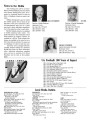
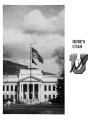
Show HERE'S UTAH 1 8 3 2 - 1 9 9 2 UNIVERSITY OF UTAH The University of Utah is situated in one of the nation's most appealing locations. To the east, the towering Wasatch Mountains are snow-capped billboards for a series of popular ski resorts. To the west shimmers a landlocked sea-the Great Salt Lake. Five minutes from the U. is the center of Salt Lake City. With a metropolitan population in excess of one million, Salt Lake City is the hub of the Intermountain West. A Census Bureau poll listed Salt Lake as the ninth-fastest growing area in the nation. Cool canyons, a four-season climate and an outdoor lifestyle make Utah a still-beckoning frontier. The world-famous snow and abundance of ski resorts within an hour of Salt Lake International Airport helped Salt Lake City win the United States bid as host city for the 1998 and 2002 Winter Olympics. The University, itself, has a front rank reputation for its spectacular advances into the world of the artificial. The first total artificial heart was developed and implanted in a human at the University Medical Center. The widely-acclaimed "Utah Arm" prothesis and Utah-developed wearable artificial kidney show why the area earned the complimentary title of Bionic Valley. The University's Human Toxicology Laboratory is known world-wide, and its graduate programs in the various sciences have been cited among the nation's best. The ballet and modern dance programs at Utah have also achieved national recognition. Frequently described as Utah's economic engine, the U. generates more than $400 million annually in non-tax revenue and is one of the state's largest employers. It has the only medical, social work and pharmacy schools in a multi-state area, and ranks 22nd among public institutions (38th among all universities) in federal research grants. Nearly one million people enjoy the University of Utah's athletic, entertainment and cultural offerings each year. Utah has earned a reputation as a site of championships in the athletic arena-serving as host to a number of national tournaments (eight in the last decade alone). Those national events include six national Women's Gymnastics Championships, the 1979 NCAA Basketball Final Four, two Women's Tennis Championships and the 1981 and '91 NCAA Ski Championships. The U. provides undergraduate, graduate and professional education to more than 26,000 students- drawn from all 50 states, as well as numerous foreign countries. Students attend classes on the beautiful 1,500 acre pedestrian campus, adorned with flowering malls, fountains and plazas. Architectural landmarks include the Medical Center, which overlooks the entire campus; the striking and comfortable Alumni House; the domed Huntsman Center (which seats 15,000) and the five-level Marriott Library. 41 ACADEMICS AND U. The University of Utah enjoys a richly deserved reputation as a top-notch academic institution. For the student-athlete, the U. provides the opportunity for an exceptional academic and athletic experience. The Utah athletic department is committed to providing the means for a quality education to every varsity athlete. With three full-time athletic academic advisors (Steve Baumann, Charlene Doi and Rob Rainey), the U. offers specialized academic counseling for its student-athletes. Such features as the athlete study table program, the tutorial program, the career planning program, and the fifth-year program have proved invaluable to the student- athlete's learning experience. Steve Baumann, coordinator of academic advising at the U., is in his sixth year as overseer of the academic progress of the Ute men's teams. Charlene Doi, a 16-year veteran of academic advising, is responsible for the women's teams and some men's sports. Rob Rainey is in his second year as the Ute football team's academic advisor. The three monitor the academics of each student-athlete to ensure he or she is making progress toward a degree. They also dispense their knowledge of departmental and University requirements, and assist with course registration and the exploration and selection of majors. Under their direction, all freshmen are required to attend study tables their first quarter at the U. All athletes, regardless of year or GPA, are welcomed at the study tables. The athletic department goes a step further with its tutorial program. Individual tutors for any class are available free of charge to the athletes, Programs are in place to help student-athletes choose a major. The testing center offers information on possible career choices and aptitude tests. To assist student-athletes in career planning, the athletic academic advisors work closely with the U. Placement and Career Information Center, academic departments and community resources for possible job and internship placements related to the student's major. University of Utah students are certainly ideal candidates for internships. The U. is an international center for medical and engineering research, and its genetics research ranks among the world's best. While the University stresses research and has gained a national reputation in many areas, its major mission remains undergraduate education (undergraduates comprise 82-percent of the student population). Ninety-percent of the faculty have doctoral degrees, and many are among the leaders in their fields. Utah researchers found themselves in elite company recently, when the National Science Foundation annual report cited the U of U, Harvard, MIT, Cal Tech and Stanford as schools with the most major scientific projects. Junior defensive back Sharrieff Shah is a political science/pre-law major. The University of Utah is a public institution with a ''special overall margin of excellence normally associated with the best private universities," according to the New York Times education editor. The National Institute of Education has called the Utah Liberal Education Program a "model for other universities." The Honors Program (the nation's third oldest) has also been a subject of emulation by other schools. The U.'s ballet and modern dance programs rank with the finest of major American universities. The "Gourman Report" rated Utah 51st out of the top 209 universities around the United States. It gave the U. particularly high rankings in the following undergraduate programs: engineering (8th), computer science (14th), molecular biology (15th), geophysical/geoscience (17th), speech communication (18th), biology (22nd), chemistry (23rd), nursing (25th), accounting (28th), finance (28th), and business administration (28th). Ute athletes are among the 26,000-plus students who enjoy the U.'s varied and high caliber curriculum. And, after a student-athlete's four-year athletic career is complete, his or her academic needs continue to be met through the athletic department's fifth-year senior program. The program provides financial assistance to those no longer on athletic scholarship, but who wish to get their degrees. Academics and athletics. A winning team at the University of Utah. Greg Hoffman was co-recipient of Utah's 1991 Academic Achievement Award. 42 UTE ADMINISTRATION President DR. ARTHUR K. SMITH Athletics Director DR. CHRIS HILL The 1992 Ute football season marks the first anniversary of Dr. Arthur K. Smith's presidency at the University of Utah. Named Utah's 12th president on June 26,1991, Smith settled into his new post in late August. With a background as broad and diverse as the multidimensional University of Utah, Smith was an ideal choice for the school's top seat. To accept the U. offer, Smith relinquished his title as provost and executive vice president at the University of South Carolina. The 54-year-old Smith also served during 1990-91 as interim president and chief executive officer of the University of South Carolina system. As CEO of the South Carolina system, Smith held full responsibility and executive authority for all USC affairs, including matters involving intercollegiate athletics, public relations and university development. In his position as provost and executive vice president, he was responsible for the overall direction of academic affairs on the Columbia campus and for the coordination of academic matters for the entire nine-campus USC system. All academic deans reported to Smith in his role as chief academic officer. He went to South Carolina from the State University of New York (SUNY) in Binghamton, where he had served as vice president for administration. At SUNY-Binghamton, Smith's duties included those of chief budget and financial officer. During his 18 years at the upstate New York campus from 1970 through 1988, he was also a professor of political science and had served as provost for graduate studies and research and chairman of the Department of Political Science. Smith's academic career began at the U.S. Naval Academy, where he earned his bachelor's degree in engineering in 1959. He went on to receive a master's degree in international relations and Latin American studies from the University of New Hampshire in 1966. A Ph.D. in comparative and international politics and Latin American studies from Cornell University followed in 1970. A commissioned officer in the United States Navy from 1959-65, Smith attained the rank of full lieutenant as a naval aviator. His background also includes a visiting professor appointment at the Centro de Estudios Internacionales, El Colegio de Mexico in Mexico City from 1968-69. He taught at both New Hampshire and Cornell briefly, as well. Cited in Who's Who in America since 1980, Smith has authored numerous books, articles and monographs. He is a member of several professional organizations and honor societies, including Phi Beta Kappa. A native of Deny, N.H., Smith and his wife June are the parents of three children, and also have four grandchildren. Dr. Chris P. Hill has established himself as a highly-respected administrator in his four years as director of athletics at Utah. Hill is chair of the NCAA Division 1A Committee on Certification and one of 12 members on the NCAA's National Certification Committee. He is also a member of the College Football Association (CFA) Athletic Directors Committee and is on the Executive Committee of Division I-A Athletic Directors. Under Hill's direction, Ute athletics have become a national force. The women's gymnastics team won the 1990 and 1992 NCAA Championships and the men's basketball team reached the 1991 NCAA 'Sweet Sixteen' and the 1992 N.I.T. semi-finals. He was also instrumental in the completion of the George S. Eccles Tennis Facility and the Dee Glen Smith Athletics Facility-two of the finest of their kind in the entire nation. And Hill's insistence on academic performance has improved Utah's athlete-graduation rate dramatically. The former director of development at the U. instigated tremendous growth in his two years as an athletic department fund-raiser. Hill's appointment as development director in 1985 marked a return to the University of Utah for the New Jersey native. He first came on board as a graduate assistant basketball coach for Bill Foster (1973-74), and later served as assistant Ute basketball coach under Jerry Pimm (1979-81). Between his two stints with the Utah athletic department, Hill was executive director of United Cerebral Palsy of Utah (1981-85). Under his leadership, the service agency attracted $750,000 in federal, state and private funding to develop a critically needed housing project for people with severe handicaps. In 1984, Hill received an Outstanding Service Award from the Utah Recreation Therapy Association. He was awarded a Milton Bennion Fellowship in 1981. Hill remains active on issues affecting people with handicaps. As an undergraduate, Hill lettered three years and was co-captain of the 1971-72 Rutgers basketball team. In 1972, he graduated from Rutgers with a bachelor's degree in mathematics. A master's of education degree (1974) and a Ph.D. in educational administration (1982)-both from Utah-followed. He taught in the University's special education department from 1983-85. Hill coached boys' basketball at Granger High (Utah) from 1975-79, winning class 4A coach-of-the-year honors his first year. Hill is married to the former Kathy Cronin, who is a clinical instructor in the U. special education department. They have two children: Alyson (14) and Christopher (10). 43 UTE CONSULTANTS BILL BEAN Trainer For more than a decade and a half, Bill Bean has treated and rehabilitated injured athletes at the University of Utah. Bean, now in his 17th year as Ute athletic trainer, oversees the training operation of Utah's 16-sport varsity program. In addition to his training certification, Bean is a licensed physical therapist. He graduated with a bachelor's degree in physical education from Utah State in 1971 and received his master's in sports medicine Irom Utah in 1977. Bean earned a bachelor's degree in physical therapy from Utah in 1986. He is married to the former Nancy Pickett. They are parents of two sons-Brandon and Justin. RUSS BOLINGER Recruiting Coordinator After one year as a graduate assistant coach with the offensive line, Russ Bolinger was promoted to recruiting coordinator at the U. in February. He came to Utah after 10 years in the National Football League-the first seven which were spent with the Detroit Lions as their third-round draft pick (1976). From 1983-85, he played with the Los Angeles Rams, with a midseason (1984-85) stint with the USFL Memphis Showboats. After retiring from football, Bolinger co-wrote, produced and acted in a play about professional football-"Game Face." He played his college ball at UC-Riverside and Long Beach State, where current Ute head coach Ron McBride was an assistant coach. Bolinger won the Lynn Hoyem Outstanding Senior Award and played in the 1976 East- West Shrine All-Star Game. He graduated with a degree in Liberal Arts from Long Beach State in 1978. He is an inductee in the UC-Riverside Athletic Hall of Fame and the Long Beach State Hall of Fame. The 37-year-old is pursuing a master's degree in sport psychology at the U. He and his wife Paula have three children: Joey, Kaylin and Jaclyn. DR. ROBERT BURKS, M.D. Orthopedic Consultant Dr. Robert Burks, an orthopedic surgeon for the University of Utah athletic department since 1988, is in his second year as U. football orthopedist. He also directs the Wasatch Sports Clinic and is an assistant professor of orthopedic surgery at the University of Utah. Burks came to Utah from Wayne State University, where he was director of sports medicine from 1986-88. The St. Louis native is a member of the American Orthopedic Society for Sports Medicine, the Orthopedic Research Society, the American Academy of Orthopedic Surgery and the Arthroscopy Association of North America. Burks attained his medical degree from St. Louis in 1978 and followed that with an orthopedic residency and sports fellowship at UC-San Diego in 1983. He and his wife Karen have two children: Rachael and Peter. Utah Symphony, Evans is its former senior vice president of development. He and his wife Jan have eight children. DWIGHT DAUB Strength Coach Dwight Daub brought a wealth ol strength and conditioning experience to the Ute athletic department when he joined the staff two years ago. A certified strength and conditioning specialist (CSCS), Daub came to the U. from Illinois, where he was co-head strength coach. Prior to his year at Illinois, he spent two years as assistant strength coach at Arizona. As an undergraduate at Evansville, Daub played football. The Milledgeville, III. native graduated with a bachelor's degree in physical education and biology from Evansville in 1979. Daub, 36, and his wife Laurie have two children- Gentrie and Bryce. DR. BURTIS EVANS Team Physician Dr. Burtis Evans, the Ute team physician, is also president of the private internal medicine practice of Evans, Evans and Evans, Inc., and of Physician Care Corporation. On the board of directors of CARE Enterprises, Inc. and the Utah Medical Political Action Committee, Evans is also a member of the Utah State Medical Association Legislative Committee and the House Staff Committee at LDS Hospital. He is an assistant clinical professor of medicine at the University of Utah and received a 1991 Distinguished Alumni Award from the U. An avid fan of the ROB RAINEY Academic Advisor Rob Rainey, a second-year member of the academic advising staff, handles the academic counseling for the Ute football team. Rainey came to Utah from Arkansas State, where he was director of academic services. Prior to his Arkansas State post, he interned at Penn State University. Rainey, who was MVP of his track and cross country teams as a senior at Delaware, earned a bachelor's degree in history from Delaware in 1987. He holds a pair of masters' degrees-one in elementary education from Wilkes (1988) and the other in counselor education from Penn State (1990). He is married to the former Laurie Dougherty. They have a son, Kevin. ROBERT WISCOMB Equipment Manager Robert Wiscomb rounds out a decade as athletic equipment manager this fall. He spent the four previous years as assistant equipment manager, Wiscomb is responsible for ordering equipment, equipment maintenance and laundry. His equipment duties extend to all home and away football games. He currently serves on the Champion Advisory Staff. Wiscomb is married to the former Lisa Blonquist, 44 Ted Capener Vice President for Univ. Relations Gary Ratliff Athletics Facilities Director Steve Baumann Coordinator for Academic Advising Shauna Taylor Assistant Ticket Manager Carolyn Johnson Development Coordinator Kate Chidester Recruiting Assistant Ned Alger Associate Athletics Director Monty Howard Director of Athletics Ticket Sales Charlene Doi Academic Advisor Steve Pyne Asst Athletic Facilities Manager Linda Edgar Administrative Assistant Evelyn O'Donnell Secretary r I \ Fern Gardner Associate Athletics Director Mark Amicone Director of Marketing Bill Richards Concessions Manager Dave Copier Asst Huntsman Center Director Lisa Kelly Administrative Assistant Victor Checketts Asst Equipment Manager 45 Peter Hart Director of Finance Diane Sperry Business Manager Jim Black Senior Program Analyst Gerald Fischer Assistant Trainer Jacquie Winrow Administrative Secretary Ronell Fielding Crimson Club Secretary Rick James Huntsman Center Director m\ Larry Gerlach Faculty Representative Deb Willardson Head Women's Trainer Ron Goch Marketing and Promotions Asst. J, Cathie Pezely Football Secretary Marlene Killian Secretary ROBERT L. RICE STADIUM AND THE SPENCE CLARK FOOTBALL CENTER The University of Utah football team plays all its home games in Rice Stadium, one of the most attractive and complete football facilities in the country. Rice Stadium seats 35,000 and there is not a bad seat in the house. A major remodeling took place in 1982, when the field was lowered nine-and-a- half feet, with new seats added along the sidelines and in the south end zone. The remodeling made each seat even more intimate with the action on the field. Another result of the stadium upgrading was the construction of the Spence Clark Football Center at the south end of the field. The building, made possible by a $1 million gift from local businessman Spence Clark, houses new locker rooms for both teams and game officials, a stadium club room and a band room. Also installed was the Astroturf on the stadium floor-the same kind of turf found in Texas Stadium. Several new, convenient concession stands were installed, as well. One of the most recent additions to Rice Stadium is a four-color matrix scoreboard. Nearly any kind of visual effect can be produced by the 4,600 individually controlled lights in the matrix-adding yet another dimension of fun to Ute football. An earlier remodeling of Rice Stadium oc- Rice Stadium- Top 15 Crowds 1. 2. 3. 4. 5. 6, 7. 8, 9, 10. 11. 12. 13, 14. 15. Brigham Young Brigham Young San Diego State Brigham Young Brigham Young Brigham Young Air Force Wyoming Hawaii Utah State Idaho State Utah State Wyoming Utah State Texas-El Paso 1982 1984 1986 1988 1986 1990 1986 1985 1988 1961 1987 1979 1990 1989 1985 36,250 36,110 35,982 34,216 34,128 33,515 33,281 33,248 32,892 32,438 32,283 31,108 31,051 30,948 30,745 curred in 1972, when the first artificial surface was installed, along with the scholarship box (located on the east side of the stadium). A new lighting system and new ticket and concession areas were also introduced at that time. The first rudiments of what is now Rice Stadium were completed in 1927. The Utes inaugurated the stadium with a 44-6 win over Colorado Mines in 1927. Constant improvements and remodeling projects since that time have resulted in the current beautiful and practical facility, The stadium is a timber and concrete construction, with dirt fill. The press box, located on the west side of the facility, was completed in 1966 in yet another timely renovation. In 1989, the press box was upgraded and the newly revamped press area was named the John Mooney Press Area, in honor of longtime Ute football writer-former Salt Lake Tribune sports editor John Mooney. Utah's 1982 game against Brigham Young drew the largest crowd ever to see a game in Rice Stadium, when 36,250 people came to see the annual instate battle. A fall Saturday at the Robert L. Rice Stadium - home of the Utah football team. 46 DEE GLEN SMITH ATHLETICS CENTER The Dee Glen Smith Athletics Center houses the football coaches' offices, training, strength, meeting and locker rooms. Lounge area in the Dee Glen Smith Athletics Center. The center's computer facilities are available to U. student-athletes. 47 DEE GLEN SMITH ATHLETICS CENTER The auditorium is used for team meetings, among other things. The spacious strength training facility is glass enclosed. The Utah athletic teams enjoy the finest strength training equipment available in their Dee Glen Smith Athletics Center home. 48 DEE GLEN SMITH ATHLETICS CENTER A state of the art, fully-equipped training facility is used in the treatment of any injured University of Utah athlete. The training room's "Aqua Arc" is seven-feet deep. The rehabilitation room gets injured athletes back on the field. 49 |