| OCR Text |
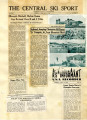
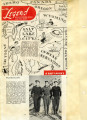
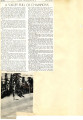
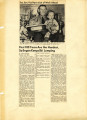
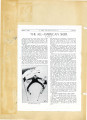
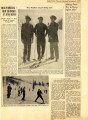
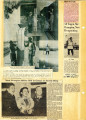
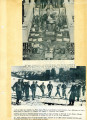
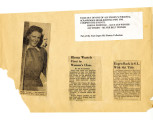
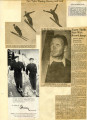
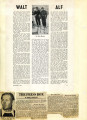
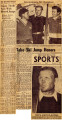
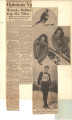
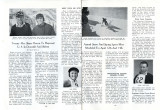
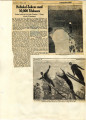
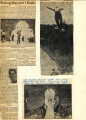
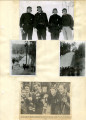
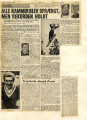
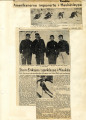
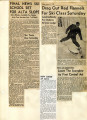
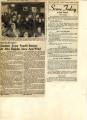
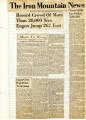
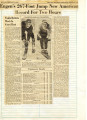
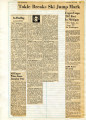
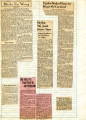
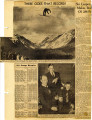
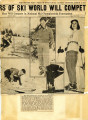
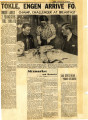
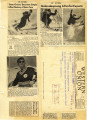
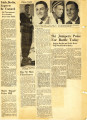
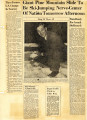
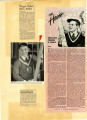
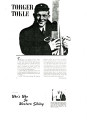
Show • rTor ger T okel, i Skier, l(illed By Sid Feder WITH THE lOTH MOUNTAIN DIVISION IN ITALY, March 16 (1PJ-T/Sgt. Torger D. Tokle, one of the great skiers of all time, was killed leading his infantry platoon during an attack by the the lOth mountain division across rugged Apennine peaks, March 3, it was announced Friday. Shell fragments cut down the 25-year-old ski jumper - soldier shortly after his rifle company of the 86th regiment jumped off north of the 3000-foot Monte Torraccia in a drive which resulted in an advance of four miles through some of the most rugged terrain of the Apennines. Tokle's platoon was aiming for the little town of Monte Forte, two miles to · the north, when a fragment from the heavy concentration of shells the enemy had been pouring on the American positions for days struck and killed him. fiH'ger Tokle won numerous ski prizes in Norway, now competes as an amateur for Norway Ski Club of Brooklyn. He is unmarried, has already taken out first papers. 'Aw.ard Goes.To Sergeant Tokle · ' NEW YORK, Aug. 7 l~fP)-The 1944 citation tor l'l)Ortsmanship has been awarded posthumously to S gt. Torg ·~r Tokle, the champion ski j jlmp- 1 er who was kined in aGtion in : n crthern Italy· last spring, the ! Sportsmanship Brctherhoo{l, an : nounced tcday. ; The citation will be pr·esented to i Tokle's brother, Kyrne. who is chief ' p ~tty officer on the USS DesL1-oyer · Leon. Copi·es also will bo senL lo Toklc's parents L'1 Norw<Jy. TECB. SGT. ~ORGER D. TOKLE XXXIX LITLE has been told about the lOth Mountain Division, and yet no other command in the armed forces of the United States was ever called on for greater courage and more supreme fortitude than these _ski and snowshoe experts who played so large a part in the Battle of Italy. Fighting above the clouds, clawing handholds in the ice, whipped by blizzards as they swung ·by ropes across terrifying chasms, they won their way from peak to peak in the Apen- nines, and atthe time ot.th.e capituhition_we.r.e hammering at the gateway to the Brenner Pass. In the early days of the war, General George C. Marshall looked ahead to the possibility of campaigns in the mountainous terrain of Italy, Norway, the Tyrol and Greece, and called on the National Ski Association to aid in the formation of a division that would be as much at home in high altitudes as the chamois of the Alps or the wild goats of the Rockies. Also called in for consultation were such Arctic explorers as Vilhjalmur Stefansson and Sir Hubert Wilkins. From every part of the country came men with some skill in winter sports, and among the first was Torger D. Tokle, a ski champion with few peers. Entering the United States in 1939, the young Norwegian dominated competition for a full three years, and one soaring leap of 289 feet still stands as a world record. Cut off from his native land and family by the war, blue-eyed, yellow-headed Tokle took out his citizenship papers, and enlisted in the lOth Mountain Division, proudly lugging his own skis. Men of steel, all of them, used to exposure and hardship from earliest youth, nevertheless they were subjected to months of rigorous training that brought groans from the strongest. In the Adirondacks, the Rockies, the Sierras and the Cascades, they climbed the highest peaks, bedding down in the snow above timberline, and learning how to scale precipices and to skirt canyon sides while loaded down with 40-pound rucksacks plus rifle and side arms. After a time, any temperature higher than 20 degrees above zero was looked on as a heat wave. Cheated out of a chance for action in Alaska, due to the retreat of the Japanese, the lOth Mountain Division went to Italy, but it was not until January, 1945, that the highly trained specialists were given opportunity to do their stuff. The Germans, occupying the Apennines, dominated the highway between Florence and Bologna, blocking any American advance to the Po. "Clean them out!" came the crisp order from headquarters, and the 86th Regiment, in which Torger Tokle was a platoon leader, sprang forward to do the job. The main ob: jective was Mount' Belvedere, but in the way loomed Riva Ridge, a chain of peaks five miles long, and rising steeply to a height of 3,500 feet. Marching in small detachments at night, the mountain men were finally collected in a small valley at the base of the ridge, and as darkness fell on February 18th, the order to attack was whispered down the line. Up , they went, bound together by...ropes as_they scaled sheer cliffs, hacking footholds in the ice, whipped by .a storm that never abated its fury, and at 5:30 in the morning, after ten ghastly hours, the summit of Riva Ridge was reached. A moment to catch breath, and then they fell upon the unsuspecting Germans, killing and capturing. Even so, fierce counterattacks necessitated two days of savage fighting, and at the end there was still Mount Belvedere, a 5,000-foot peak to be taken. Even iron-nerved Torger Tokle must have suffered a bad moment, for aside from the . steep ascent itself, the raging storm and the numbing cold, every possible trail was mined, and the heights were thick with pillboxes and machine-gun nests. At the signal, however, every man went forward as though it had been no more than a competition for silver cups at Lake Placid. German fire killed many, and scores fell to death as their frozen fingers missed a hold, but Mount Belvedere was won. Two days more of hand-to-hand fighting, and the stronghold of Della Toraccia was also taken and held. Desperate German resistance continued, and Tokle and his comrades zoomed down one mountainside, only to climb another. In the following three days, ten peaks were captured, all in an advance of six miles. Up to the morning of March 3d, the young viking from Norway had never suffered an injury, but on that day his luck ran out. When the withering fire from a machine gun held up his platoon, Tokle grabbed a bazooka and crawled forward across an area heavily shelled by enemy artillery. Gaining a high point, he turned loose with the bazooka and put the machine gun out of commission, but just as he turned to wave his fellows on, a German shell blew him into fragments. A bad blunder on the part of the Germans, for in all that gathering of gay, gallant men, none was more loved than Torger Tokle. With a wild shout, the mountain men charged past the mangled body of their dead comrade, smashed the German stand, swept on past Bologna, reached the Po, and were ready for the kill when the surrender came . . . . GEORGE C REEL PORTRAIT BY WILLIAM AUERBACH-LEVY |