| OCR Text |
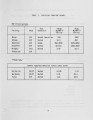
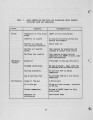
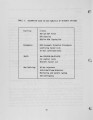
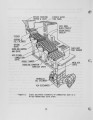
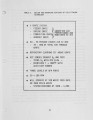
Show J which use the minimum amount of gas by allowing the gas to be put in the right amounts in the optimum locations. GRI has developed a program with the Institute of Gas Technology and Riley Corporation to aid in the definition of furnace conditions for mass burn technology. The study i nvol ves both probing of full scal e mass burn furnaces as well as the use of bench and pilot scale simulators of the intrinsic features of mass burn units. Specifically the new Riley-Takuma designed mass burn unit in Olmsted County (Rochester, Minnesota) is being used as the full scale test unit. This 200 Tpd plant (2 units) has just recently come on line and will generate both electricity and steam for a district heating system. It employs the Riley-Takuma technology shown schematically in Figure 2 and summarized in Table 5. The Takuma grate includes four sections, a feeder grate, a drying grate, a firing grate and a finishing grate, each with a separately controlled air distribution plenum. The furnace is designed so that the furnace throat is situated directly above the burning region of the grate and an arch is positioned above the drying and finishing grates. This configuration is sometimes referred to as "center flow"(15). The boiler furnace itself is a straight wall configuration with silicon carbide cladding on waterwall tubes to a height of 30 ft. above the grate. Overfire air ports are provided at three locations and are designed to achieve complete coverage of the lower furnace flow. One set is located above the drying grate and directed downward. A second set is also on the front wall but is directed horizontally. The third set is on the back wall, about 6 ft. below the elevation of the jets on the front wall, and is directed horizontally. The auxiliary burner is located in the lower furnace region at the end of the finishing grate as shown in Figure 2. The in-furnace measurements have been completed at Olmsted County. These included measurements taken with furnace probing just above the grate as well as exhaust measurements. The measurements included 02, C02, NOx, S02, unburned hydrocarbons and temperatures. The impact of changes in excess air and the distribution of air between the grate and overfire and between the three overfire air locations were investigated. The data are currently being reduced and evaluated. 19 |