| OCR Text |
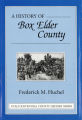
Show . A HISTORY OF County Frederick M. Huchel UTAH CENTENNIAL COUNTY HISTORY SERIES A HISTORY OF County Frederick M. Huchel Box Elder County is Utah's fourth-largest county in area, andit occupies the northwestern corner of the state and includes at least half of Great Salt Lake. It is aland of contrasts, from the craggy, snow-covered peaks of the Wellsville Mountains and the Raft River Range to the playas around the lake, to deserts, marshes, and numerous valleys of rich soil covered with sagebrush, juniper, andpinyon. Box Elder County caves and burial sites give evidence of prehistoric peoples who lived along the streams and traveled the area long before Euro-Americans came on the scene. Through the length of the county ran the Salt Lake Cutoff to the gold fields of Califonia, heavily used even before the influx of European and American converts to the Mormon church dotted the future county with their settlements. The county was home to one of the most successful of the early Mormon religious cooperative endeavors. It is in Box Elder County that arguably the most noted historical event ever in the state took place: the driving of the spike marking the completion of the nation's first transcontinental railroad. The county's industries and institutions have included mines, railroad enterprises, and a rocket-engine manufacturing facility. This volume chronicles Box Elder County's land and its people. ISBN: 0-913738-16-6 A HISTORY OF (Bo?^ 'Eider County A HISTORY OF (Bo?c "Etder County Frederick M. Huchel 1999 Utah State Historical Society Box Elder County Commission Copyright © 1999 by Box Elder County Commission All rights reserved ISBN 0-913738-09-3 Library of Congress Catalog Card Number 98-61321 Map by Automated Geographic Reference Center-State of Utah Printed in the United States of America Utah State Historical Society 300 Rio Grande Salt Lake City, Utah 84101-1182 To my ancestors, who suffered and sacrificed, and made it possible for me to be born in Box Elder County: Niels Andersen and his son Martin Andersen, who came from Denmark; William Evans and his wife, Mary Jordan Evans (and her parents David Jordan and Margaret Watkins Jordan), who came from Wales to make a home in Brigham City. |