| OCR Text |
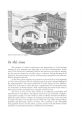
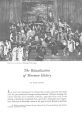
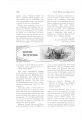
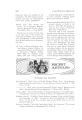
Show j^V"' &v*\ >*• f * W" ' KLIHTO if '* L> Impressive scene from Message of the Ages. \ T/>£ Ritualization of Mormon History BY DAVIS BITTON I T IS EASY FOR HISTORIANS to assume that people maintain their links with the past primarily through reading histories. Without denying that written histories have enormous influence, especially those used in the schools, it should be recognized that a pervasive, ultimately more important, influence in fostering a sense of the past is ritual. Ritual is used here Dr. Bitton is assistant historian, Church of Jesus Christ of Latter-day Saints, and professor of history, University of Utah. 68 Utah Historical Quarterly in a broad sense to refer to the forms and symbols whose function is not primarily the communication of knowledge but rather the simplification of the past into forms that can be memorialized, celebrated, and emotionally appropriated.1 In this sense a ritualized approach to the historic past has of course been promoted, consciously or unconsciously, by churches, political parties, labor unions, and other groups. Most dramatically, nations have stimulated national consciousness by developing a pantheon of heroes, monuments, ceremonies, and standardized narratives reminiscent of morality plays in their insistent simplification.2 Although not yet studied from this point of view, Mormonism provides an instructive case-study of the ritualizing of the past by a modern group with an unusually acute self-consciousness.3 Emile Durkheim has said, "There can be no society which does not feel the need of upholding and reaffirming at regular intervals the collective sentiments and the collective ideas which make its unity and its personality. Now this moral remaking cannot be achieved except by the means of reunions, assemblies and meetings where the individuals, being closely united to one another, reaffirm in common their common sentiments. . . . " 4 It is not surprising, therefore, that the Mormons, who shared with other Christians such anniversaries and festivals as Christmas and Easter, formed their own calendar of annual celebrations. Harvey Cox described such celebrations as "a human form of play through which man appropriates an extended area of life, including the past, into his own experience." 5 1 The term is, of course, used in different ways. "The broader sense of ritual tends to prevail in my field, that is to say ritual as formalized, rule-bound behavior usually with symbolic import. Thus a political convention involves vast amounts of ritualized behavior." John L. Sorenson to Davis Bitton, January 14, 1974. Cf. Robert Middlekauff, "The Ritualization of the American Revolution," in Stanley Coben and Lorman Ratner, eds., The Development of an American Culture (Englewood Cliffs, N.J., 1970). As applied to history the concept is closely related to myth, but the emphasis of ritual is not on beliefs about the past but on behavior commemorating it. 2 Some random examples of the use of simplified history in creating a sense of group consciousness are C.E. Black, Rewriting Russian History: Soviet Interpretation of Russia's Past, 2d ed. rev. (New York, 1962) ; David D. Van Tassell, Recording America's Past: An Interpretation of the Development of Historical Studies in America, 1607-1884 (Chicago, 1960) ; Wesley Frank Craven, The Legend of the Founding Fathers (New York, 1956). 3 Richard D. Poll has said, "Apart from the veneration of certain idealized episodes from the past-the first visions, the martyrdom of the Prophet, the crossing of the plains-we have forgotten our past. And as far as such features of that past as plural marriage are concerned, some of us would appreciate not being reminded of them." Poll, "God and Man in History," Dialogue, 7 (1972), 102. In the present frame of reference I would prefer to say that Mormons, like other groups, have simplified and ritualized their past. * Emile Durkheim, The Elementary Forms of the Religious Life (New York, 1965), 474- 75, as cited in Conrad Cherry, God's New Israel: Religious Interpretations of American Destiny (Englewood Hills, N.J., 1971), 7. 8 Harvey Cox, Feast of Fools (Cambridge, Mass., 1970), 7. Ritualization of Mormon History 69 Almost immediately the date of April 6, the day in 1830 when the church was officially organized, was given special recognition. Apparently no particular notice was given to the date in 1831 or 1832, but in 1833 a meeting of about eighty persons took place on the Big Blue River near the western limits of Jackson County, Missouri. According to Joseph Smith's history, It was an early spring, and the leaves and blossoms enlivened and gratified the soul of man like a glimpse of Paradise. The day was spent in a very agreeable manner, in giving and receiving knowledge which appertained to this last kingdom-it being just 1800 years since the Savior laid down His life that man might have everlasting life, and only three since the Church had come out of the wilderness, preparatory for the last dispensation. . . . This was the first attempt made by the Church to celebrate the anniversary of her birthday, and those who professed not our faith talked about it as a strange thing.6 There was no such "birthday" celebration in 1834, 1835, or 1836, apparently, but in 1837 a solemn assembly was held in the Kirtland Temple over several days, including April 6, when special instructions were given. In 1838, April 6 saw the beginning of a "general conference" at Far West, Missouri, to transact church business and "to celebrate the anniversary" of the church. The following year the prophet was in jail, but in 1840 at Nauvoo, Illinois, another General Conference was held. The pattern was now established, and from then until the present the annual conference has almost always been scheduled so as to include April 6 as one of its days. Thus a need for a regular annual conference was met while at the same time commemorating the founding day.7 Another day with some potential, it would seem, is December 23, the birthday of the Prophet Joseph Smith. Some attention has been given to it from time to time; in fact, usually some special mention of the prophet's contribution is made on or about that day. However, the date falls so close to Christmas that more elaborate celebration is difficult. After the prophet's death those who wanted to give him a day of special remembrance sometimes chose June 27, the date of his martyrdom in 1844.8 8 Joseph Smith, History of the Church of Jesus Christ of Latter-day Saints, 2d ed. rev., 7 vols. (Salt Lake City, 1951), 1:337. T A survey of the April General Conferences finds frequent references to the anniversary of the organization of the church. There were rare occasions when regular conferences were not held. See Jay R. Lowe, "A Study of the General Conferences of the Church of Jesus Christ of Latter-day Saints, 1830-1901" (Ph.D. diss., Brigham Young University, 1972). 8 Charles L. Walker Diary, June 27, 1859, and passim, Archives Division, Historical Department, Church of Jesus Christ of Latter-day Saints, Salt Lake City. 70 Utah Historical Quarterly Small town celebrations of Pioneer Day generate as much enthusiasm and community participation as their big city counterparts. Above, a handcart parade assembled at Eureka in 1914. Utah State Historical Society photograph, courtesy R. R. Runnel. This, however, occurs only about a week before July 4. Furthermore, martyrdom is not really a time of rejoicing; only, as at Easter, when it is accompanied by something unique and glorious like the Resurrection can it be celebrated happily. For festive purposes the day that came to be the annual Mormon celebration par excellence was July 24, the official day of entry into the Salt Lake Valley in 1847. Long enough after July 4, Pioneer Day was still in the summer and seemed to be a time after sowing and before harvest when a day of celebration could be afforded. The day was not celebrated in 1848 due to the harsh conditions, but in 1849 an elaborate celebration was held. Included in the procession, for example, were: Twelve bishops, bearing banners of their wards. Twenty-four young ladies, dressed in white, with white scarfs on their right shoulders, and a wreath of white roses on their heads, each carrying the Bible and Book of Mormon; and one bearing a banner, "Hail to our Chieftain." Twelve more bishops, carrying flags of their wards. Twenty-four silver greys [older men], each having a staff, painted red on the upper part, and a branch of white ribbons fastened at the top, one of them carrying the flag. Ritualization of Mormon History 71 After parading to the tune of band music, the people settled down to a round of addresses, poems, toasts, and more speeches. It was quite an extravaganza for a young, precariously established frontier community.9 Besides the annual celebration, longer intervals seem to have lent themselves to commemorative purposes. On July 24, 1874, for example, a jubilee was held celebrating the twenty-seventh anniversary of the arrival of the Saints in the valley. The Sunday School prepared a program held in the Tabernacle, featuring bands, a special hymn entitled "O Lord Accept Our Jubilee," prayers, and sermons. Participating in the "grand Sunday School jubilee" were some eight or ten thousand children. 10 Celebrations were also held in the individual settlements throughout Mormon country. In 1874, for example, there was a celebration in Bloom-ington, Idaho: At sunrise this morning silence was broken by a volley of twenty-four guns. The people assembled at the schoolhouse at nine o'clock a.m., formed a procession and marched to martial music through the principal streets then back to the schoolhouse in the following manner-twelve fathers of Israel, twelve mothers of Israel, twelve daughters of Zion dressed in white, and twelve sons of Zion, the citizens and Sunday School children following in line. The services consisted of an oration by James H. Hart, George Osmond read an address in behalf of the daughters of Zion, John Walker spoke in behalf of the fathers of Israel, Christian Madsen in behalf of the sons of Zion, Sister Jarvis in behalf of the mothers of Israel. A number of toasts were given. At two o'clock all were seated at table, spread with viands, including strawberries, sugar, and cream. At four o'clock the dance opened for the small children, and in the evening for larger children and parents. All was joy, peace, and unity. The whole was gotten up under the auspices of the Relief Society.11 Even more than the usual annual celebration or that of the twenty-fifth anniversary, the fiftieth anniversary was emphasized. There was 8 Deseret News, July 24, 1849; B.H. Roberts, Comprehensive History of the Church of Jesus Christ of Latter-day Saints, 6 vols. (Salt Lake City, 1930), 3:493-97; Frontier Guardian, September 19, 1849. See also Philip A.M. Taylor, "Pioneer Day," Millennial Star, 120 (1958), 164/f., 193#.; and Dale Beecher, "Pioneer Day in Salt Lake City: The First Fifty Years," unpublished paper. Richard Burton, traveler to Utah in 1860, observed that the Mormons treated July 4 "with silent contempt; its honors are transferred to the 24th of July, the local Independence Day of their annus mirabilis 1847, . . ." The City of the Saints (New York, 1862), 251. He exaggerates but his basic point, the importance of July 24, is sound. 10 Deseret News, July 21, 1874. 11 Ibid., August 5, 1874. 72 Utah Historical Quarterly then a sense of historical distance. While a few of the'original members and leaders remained, a new generation had come to the fore. Besides, the celebration of fifty years had Old Testament precedent as a time of jubilee. Such an opportunity presented itself in 1880, fifty years from the organization of the church. Coinciding with General Conference, this date was mentioned by many of the speakers, including especially church historian Franklin D. Richards, who reviewed the history of the church during the preceding decades. He mentioned Stephen A. Douglas, Sen. Thomas Hart Benton and the Mormon Battalion, the coming of Johnston's Army, and the fate of government officials. "In all these things we recognized the hand of the Lord," he said, "and we should reflect on His providences and be stirred up to individual righteousness, and to battle against the drunkenness and whoredoms and various forms of evil now being introduced by our enemies for our overthrow." Other sermons followed the same theme, as did the great prayer of Apostle Orson Pratt.12 In July 1880 the jubilee was continued in a mammoth celebration. In the parade or procession were the following: The surviving Pioneers of 1847 in five wagons. Portrait of Brigham Young on both sides of the first wagon with the inscriptions "Gone Before Us" and "Absent But Not Forgotten." Above them was the "old pioneer banner," on which were the names of all the pioneers and a picture of Joseph Smith blowing a trumpet. Also the U.S. flag. Surviving members of Zion's Camp. Surviving members of the Mormon Battalion and wagon with "Women of the Mormon Battalion." The "minute Men." Wagon with representatives of the various countries of the earth. On the side were various mottoes. 24 couples. "The ladies looked lovely in cream-colored riding habits, with white silk caps and white feathers, and the young men presented a fine appearance in black dress suits, white neckties, and white gloves." Education was represented by a car containing five ladies personifying Religion, History, Geography, Science, and Art. The parade continued with representation of different church auxiliaries, school children, and industry of Utah. The whole procession extended over three miles. During part of this 1880 celebration Wilford Woodruff told of Brigham Young's "this-is-the-place" statement that has since become a standard feature of pioneer celebrations.13 32 Ibid., April 14, 1880. 13 A detailed description of the procession and program is in the Deseret News, July 28, 1880. See also The Utah Pioneers: Celebration of the Entrance of the Pioneers into Great Salt Lake Valley (Salt Lake City, 1880). Ritualization of Mormon History 73 American culture during the nineteenth century was characterized by a poverty of visual images or man-made artifices. This was before television, before movies, before the rise of technology that enabled magazines and newspapers to reproduce photographs in quantity. In such a context the Mormon celebration, with its slogans, its symbols, its groups of young ladies dressed in white, created a one-shot living mural in its own way dressed with son et lumiere.14 Often the celebrations paid tribute to special groups, especially the surviving members of Zion's Camp, the Mormon Battalion, and the pioneers of 1847. They were given places of honor in the processions and seated together on the stand during programs. Wilford Woodruff's keynote address in 1880 recounted the stories of these three groups who were becoming something like canonized saints in the Mormon hagiog-raphy. Reunions of such groups, like meetings of high school graduating classes, served social purposes, but they also included speeches, orations, songs, and prayers that celebrated the past. Needless to say, the past events seen through the eyes of nostalgia were simplified, romanticized, and in the broad sense of the term ritualized. In 1855 occurred an especially important celebration, the proceedings of which were reported by stenographer J.V. Long and published in a rare pamphlet, The First General Festival of the Renowned Mormon Battalion. In addition to refreshment, music, and dancing, a general setting was decorated with banners, one of which showed an eagle with the word "order" on one side and "justice" on the other and "Great Salt Lake City" across the bottom. Another showed the all-seeing eye, the united hands, a representation of pioneers at the crossing of the Platte, and the motto "blessings follow sacrifice." After toasts honoring such men as battalion leader Col. Philip St. George Cooke and Brigham Young, there were speeches by David Pette-grew, Dimick B. Huntington, Thomas S. Williams, Jedediah M. Grant, Heber C. Kimball, Brigham Young, William Hyde, James Brown, and others. Despite the differences, a common interpretation ran through their remarks: the courage and dedication of the battalion members, the conspiracy theory of the circumstances behind the muster, the providential overruling power of God, and rededication to their leaders. In a ritualized setting a sense of group consciousness was being formed by the reenactment of their history. 14 For calling my attention to the poverty of visual images I am grateful to Robert Flanders of Southwest Missouri State University. 74 Utah Historical Quarterly The Mormon Battalion Monument on the Utah State Capitol grounds was unveiled in 1927. Utah State Historical Society collections, Utah Writers Project photograph. The Mormon Battalion story provides a good example of what typically happens as the historical event is ritualized. Without going into the complex history of the battalion, one can safely say that the decision to call it was made at least in part at the instigation of the Saints, who saw it as a means of obtaining government help for the journey west. Some of the battalion's pay did find its way back to the main body of the Saints where it doubtless was of help. As for the journey itself, there were few noteworthy events in the grand military tradition. Remarkably soon, however, this whole experience was transformed into a symbol of federal oppression, Mormon heroism, and the overruling omnipotence of God. It was told and retold in these terms; participants even started remembering it in these terms. The men of the battalion-and later their descendants -were lionized as representatives of truth in a heroic struggle. Finally, historic markers were placed and monuments were erected. It should be emphasized that the ritualization did not require invention out of whole cloth. From the beginning some Mormons saw the venture as an onerous obligation; some did not know about the previous requests and negotiations; others who did know resented the timing of Ritualization of Mormon History 75 the call and the number demanded. The ritualization was not invention; it was a selecting out of certain aspects, dramatizing them, memorializing them, and giving the whole the simplicity of a morality play. It was but a short step from meetings of groups of survivors, like those of the Mormon Battalion, to the organization of descendants. This occurred, as might be expected, about the time the actual survivors were disappearing in the 1890s and the first two decades of the twentieth century. There were meetings of Sons and Daughters of the Pioneers in 1894 and 1898. In 1901 the Daughters of Utah Pioneers was incorporated and has continued as an active group of women ever since. Later the Sons of Utah Pioneers, especially in the 1930s, performed some of the same functions. In addition to these two important societies, there have been at different times Daughters of the Mormon Battalion (1909), Daughters of Utah Handcart Pioneers (1915), and Sons and Daughters of Indian War Veterans (1916). With the enlargement of membership in the DUP to include all female descendants of pioneers who came to Utah before the railroad in 1869, the other organizations were readily dissolved into the larger group.15 Such societies, analogous to the Daughters of the American Revolution, perform many functions, social and even political. But their raison d'etre is to celebrate and to honor the past not primarily on the level of scholarship but on the level of ritual commemoration and rededication.16 Besides meetings and organizations celebrating past events and those who participated in them, another occasion whose ritualistic possibilities have not been overlooked is the funeral. At least for the first century of the church's existence every funeral must have included sermons eulogizing the dead and attempting to place the sacrifices of the departed one- the persecution, the trek across the plains, responses to other calls to colonize-into a meaningful historical context. This was especially true of leaders, whose funerals offered the entire Mormon community occasion for review of the past and rededication for the future. Conrad Cherry has 18 On Zion's Camp and Mormon Battalion reunions see Journal Historv of the Church, April 9, 1907, LDS Archives. On Daughters of the Mormon Battalion, July 24, 1909; on Sons and Daughters of the Blackhawk and Walker Indian War Veterans, August 17, 1916, February 10, 1922, January 16, 1923, August 13, 1924; on Daughters of Utah Handcart Pioneers, November 2, 1915, October 3, 1916; on Sons and Daughters of the Pioneers, October 29, 1898, October 31, 1898, March 24, 1894, March 30, 1933; on Daughters of Utah Pioneers, April 11, 1901, May 21, 1901, October 24, 1901, April 11, 1903. See also James T Jakeman, Daughters of the Utah Pioneers and their Mothers (n.p., n.d.). 16 A partial impression of the interests of the Daughters of Utah Pioneers can be gained by examining the lesson materials compiled in three multi-volume sets: Heart Throbs of the West, 12 vols.; Treasures of Pioneer History, 6 vols.; and Our Pioneer Heritage, 14 vols. Uncritically compiled and inadequately documented, these works still have some value to scholars, especially for leads that can be verified elsewhere. 76 Utah Historical Quarterly remarked that both Memorial Day and the funeral "are cults of the dead in which the living are united with one another, the living are united with the dead, and all are united with God and what are believed to be his purposes in history." n He sees the funerals of leaders as sacred ceremonies emphasizing America's destiny under God, with the dead leaders portrayed as martyrs for the American cause. Funerals of Mormon leaders served the same purpose for group consciousness and frequently included allusions to the past.18 A physical example of the ritualizing impulse is the historic site or shrine, instances of which can be found almost from the beginning of Mormon history. The Hill Cumorah and the Sacred Grove, sites of historic, even cosmic, events, were visited with interest by Mormon missionaries and converts who doubtless gained inspiration as they contemplated the surroundings.19 The Kirtland Temple, completed in 1836, also early became a kind of shrine that could be visited by Mormon pilgrims. The temple was significant on two counts: it was the scene of heavenly manifestations, and persecution forced its builders to abandon it after a short use. Enhanced by the aura of the past it became an appropriate symbol of the sacrifice of those who erected it, of the divine power manifested in it, and of the persecution that had forced the Mormons to move away. The Nauvoo Temple, an edifice with similar monumental potentialities, was destroyed by arson within two years after the Mormon exodus from Nauvoo, and hence lost most of its value as a site. In a sense the entire city of Nauvoo might be thought of as a monument, and Mormons going through the area often visited the city and reflected on the events associated with it. But there were no monuments, properly so called, during the first generation of Mormonism's history, unless tombstones and grave markers might in some instances have been something of the kind. The work of erecting historical monuments and markers coincided with the generation following the death of the original Mormon leaders, the rise of organizations mentioned earlier, increased prosperity, and the " Cherry, God's New Israel, 6-7. 18 Some funeral sermons in the Journal of Discourses, 26 vols. (London, 1854-86) are those for Ezra Taft Benson, 13:318; William Clayton, 21:9-13; Jedediah M. Grant, 4:129-38; Dimick B. Huntington, 20:138-42; Heber C. Kimball, 12:179-97; and Daniel Spencer, 13:75-77. 19 Two of the earliest examples of visits to Palmyra by Mormons who viewed the place, including the Hill Cumorah, with some awe are described in John S. Carter Diary, September 1833, and Jonathan H. Hale Diary, May 30, 1835, LDS Archives. Ritualization of Mormon History 77 The Brigham Young Monument was placed at the intersection of Main and South Temple streets and formally dedicated during the 1897 Pioneer Jubilee. The old Deseret News Building on the northeast corner has been replaced by Hotel Utah. Utah State Historical Society, photograph, Bennett Collection, courtesy Standard Optical. increase of leisure time and travel in the twentieth century. Even before the turn of the century signs of such memorialization could be seen. A monument was erected at Mount Pisgah in 1888, and the Brigham Young Monument was unveiled in 1897 as part of the jubilee celebration of that year. In 1905 a granite shaft was dedicated at Sharon, Vermont, Joseph Smith's birthplace. The Sea Gull Monument, the work of Ma-honri M. Young, was dedicated in 1913, the original "This Is The Place" monument in 1921, and the Mormon Battalion Monument on the Utah Capitol grounds in 1927. The 1930s and 1940s were a time of almost feverish activity in the erection of monuments and historical markers. The Daughters of Utah Pioneers placed more than three hundred of these, while at least one hundred twenty were the work of the Utah Pioneer Trails and Landmarks Association led by George Albert Smith and John D. Giles. The culmination of this monument building was reached in 1947, the centennial year, with the dedication of the new "This Is The 78 Utah Historical Quarterly Place" Monument. The work did not cease, however, and attention to such recognition of historical sites has continued.20 One activity in the making of historical sites that deserves mention is the work of restoration-the attempt to return homes and buildings to their original appearance. The groundwork for such restorations was laid by the acquisition of important pieces of property and some early efforts in Manchester, Liberty Jail, and Utah. Perhaps because of the rise of historical preservation as a discipline-connected with the success of Colonial Williamsburg-and perhaps because of the need of fairly large expenditures, it was not until after midcentury and mainly in the 1960s that the restoration of the Beehive House and the Lion House in Salt Lake City and, even more impressive, the work of Nauvoo Restoration, Inc., at Nauvoo showed what could be done in restoring the physical surroundings of the past. Another powerful means of capturing and monumentalizing the historic past was through visual representation-in monuments, bas-reliefs, stained-glass windows, paintings, and even photographs. One aspect of the ritualizing process involved commissioning portraits of the leaders of the past: Joseph Smith, Brigham Young, Heber C. Kimball, and the other leaders of the first generation. D. Rogers, W.W. Major, Dan Weg-geland, George M. Ottinger, and others created heroic portraits, the equivalents of equestrian statues on canvas. Daguerreotypes and engravings became important parts of the idealization: for example, the great engravings by Frederick Piercy of the Mormon leaders in the 1850s. Beautiful metal engravings are found later in the century of many of the leaders.21 In 1885 Charles W. Carter copied a daguerreotype of a painting of Joseph Smith, made prints which were heavily retouched by the artist Dan Weggeland-and then rephotographed, copyrighted, and distributed the "portrait." Quite unlike the profile portrait community leaders of the 1850s considered authentic, the Carter portrait was preferred by most 20 Larry C. Porter, "Twentieth Century Monuments to Mormonism," unpublished paper, LDS Archives. Marilyn Seifert and Albert Zobell, LDS Historical Department, helped supply information on monuments and organizations. For an account of the transformation of the Hill Cumorah into a symbolically sacred landscape by landscaping, monument, and pageant, see K. D. Gurgel, "God's Drumlin: Hill Cumorah in the Religious Geography of Mormonism," paper presented at the seventieth annual meeting of the Association of American Geographers, Seattle, Wash., April 28, 1974. K. D. Gurgel's forthcoming doctoral dissertation, "Return to the Mormon Culture Hearth: A Geography of Mormonism in Upstate New York" (Syracuse University), promises to be significant for its treatment of monuments and historic sites in one area. 21 Frederick H. Piercy, Route from Liverpool to Great Salt Lake Valley (Liverpool-London, 1855). See also Mary M. Powell, "Three Artists of the Frontier," Missouri Historical Society Bulletin, 5 (1948), 34-43. Ritualization of Mormon History 79 people. It was "aesthetically superior," closer to a recognizable standard of male attractiveness. The Carter portrait enjoyed a wide distribution and was often framed and hung in homes and ward houses.22 Each of these works had its own tradition, of course, and a subject matter by no means confined to history, but each contributed to the ritualization by transforming events and personalities of the past into something fixed, heightened, and to a greater or lesser degree standardized. The most powerful contribution of art to the ritualization process came when events were frozen into graphic scenes, often conveying tremendous emotion, that could be visualized by successive generations. Quite early visual representations of the assassination of Joseph Smith and other dramatic episodes were made. The Charles Mackay history was full of such drawings, as, for example, was Fanny Stenhouses's Tell It All, which went through several editions in the 1870s and 1880s.23 For the Mormon audience, however, the two great creators of the image were Philo Dibble and CCA. Christensen. As early as 1847 Dibble, an amateur, self-taught painter, had produced scenes of the events that he showed on many occasions through the second half of the nineteenth century. These enjoyed a kind of official endorsement.24 Other speakers used pictures to supplement their lectures about Mormon history.25 The most skilled of these early artists was Christensen who by 1878 had completed eight huge canvases of past scenes and later added to them. Their impact is suggested by the following: . . . in 1878, he had sewn the first group of eight together, rolled them on a long wooden pole and placed the whole package in his wagon. Then, using the pictures as illustrations for a lecture on Mormon history, he drove through the Utah country advertising his appearance as a lecturer on the Mormon story. In 1888 it was reported that nineteen paintings were being exhibited in Sanpete County and other areas in Utah. For Christen- 23 Information supplied by Catherine Gilmore, LDS Archives. 23 See Leonard J. Arrington, "Charles Mackay and His 'True and Impartial History' of the Mormons," Utah Historical Quarterly, 36 (Winter 1968), 24-40. 24 "I spent a part of the day in council with the Presidency and others upon the subject of the Paintings got up by Philo Dibble, the work was finally sanctioned by the Presidency & Twelve who signed their names to it." Wilford Woodruff Diary, March 1847, LDS Archives. See also Millennial Star, 11 (1848), 11-12. Dibble also had casts of Joseph and Hyrum Smith's death masks which he exhibited. In the 1880s he contracted with an artist to make copies for sale. Information supplied by Catherine Gilmore. 25 Others giving "panoramic" lectures were a Brother Kirkham on the Book of Mormon and a Brother Smith on the seven wonders of the world. George Goddard Diary, March 4, 1884 and February 9, 1885, LDS Archives. Dealing specifically with Mormon history were the lectures of Edward Stevenson. Edward Stevenson Diary, passim, microfilm, LDS Archives. Three pictures used by Edward Stevenson in his illustrated lectures are reproduced in Joseph Grant Stevenson. "The Life of Edward Stevenson" (M.A. thesis, Brigham Young University, 1955), 185. 80 Utah Historical Quarterly Torleif S. Knaphus sculpted the memorial to the handcart companies that is located on Temple Square. Utah State Historical Society, Widtsoe Collection. sen's lectures, the roll of paintings was hung over loops of rope suspended from portable tripods, and the individual scenes were rolled out as he spoke.26 In later generations, the process culminated in panoramic works created for the monuments-Mahonri Young's "This Is The Place" Monument in 1947; Torleif Knaphus's work, The Handcart Pioneers, etc.-or in murals, such as those by Lynn Fausett. Branching out, the church presented standardized, "prettified" versions of history through movies produced by the BYU Motion Picture Studio. Working powerfully in the same direction were graphic arts as mediated by manuals, official periodicals, and brochures prepared by public relations firms. By midcentury the visual representations of Mormon history numbered in the thousands-all contributing to the process of ritualization by establishing a sense of the past that was emotional, appropriatable, and not primarily concerned with accuracy. Accurate or inaccurate, it was certainly 38 Carl Carmer, "A Panorama of Mormon Life," Art in America, May-June 1970, pp. 52-71. See also L.F. Wheelwright and L.J. Woodbury, eds., Mormon Arts: Volume One (Provo, 1972), 44-49. Ritualization of Mormon History 81 selective. There are, for example, no marble monuments to polygamy. If not literally excised from all church publications, polygamy was not among the past achievements deemed worth memorializing. Valuable as they were, pictures and monuments were not enough. Words, too, were required to tell the mighty deeds of God's prophets and missionaries "in the early days" of the church. In sermons, in songs, in poems such mighty men were celebrated.27 Then, extending over several decades, came the publication of autobiographical and biographical- actually hagiographical-literature of the Mormons. This process began fairly early, at least with the publication in Times and Seasons of Joseph Smith's history, and the process has continued to the present. But the greatest single publication effort in this direction was originated by George Q. Cannon and Sons in the 1880s and 1890s with the publication of the Faith Promoting Series, volumes which had in common their celebration of personal adventure and faith-promoting experiences. The younger generation growing up in Mormondom had heroes aplenty in the Wilford Woodruff watched over by providence, in the Jacob Ham-blin, missionary to the Indians, and in others whose lives were being written for posterity. One can detect something of the same impulse in the effort to publish reference works listing pioneers and prominent men. These were the founding fathers.28 In addition to published biographies of this kind there were stories in the oral tradition, especially faith-promoting incidents or apocryphal stories somehow connected with the early prophets;29 sermons; orations, the Mormon equivalent of Independence Day orations; and plaques on monuments.30 All referred verbally to the past for the basic purpose of commemoration and are part of the ritualization of Mormon history. 21 See my unpublished paper, "The Martyrdom in Diaries and Poetry." Songs and hymns included "Praise to the Man Who Communed with Jehovah" and "The Seer." 28 There were seventeen volumes in the Faith Promoting Series, 1879-1915. Recent equivalents abound. See especially Leon R. Hartshorn, Classic Stories from the Lives of Our Prophets (Salt Lake City, 1971) and his other compilations. The "monumentalizing" of leading men and women by means of dignified biographical compilations is seen, for example, in Frank Esshom, Pioneers and Prominent Men of Utah (Salt Lake City, 1913); Andrew Jenson, LDS Biographical Encyclopedia, 4 vols. (Salt Lake City, 1901-36) ; Orson F. Whitney, History of Utah, 4 vols. (Salt Lake City, 1892-1904) ; and Edward W. Tullidge, History of Salt Lake City (Salt Lake City, 1886). Some of these works, like similar compilations for other areas even down to the present, were publishers' enterprises based partially on advance subscription of those whose names were included. See Portrait, Genealogical and Biographical Record of the State of Utah (Chicago, 1902); and Men of Affairs in the State of Utah (Salt Lake City, 1914). 29 Austin E. Fife and Alta S. Fife, Saints of Sage and Saddle: Folklore among the Mormons (Bloomington, Ind., 1956); Austin E. Fife, "Folk Belief and Mormon Cultural Autonomy," Journal of American Folklore, 61 (1948), 19-30; and Davis Bitton, "Joseph Smith in the Mormon Folk Memory," annual address of the John Whitmer Historical Association, September 28, 1974. 30 An amusing anecdote about the invention of a quotation to go on a monument is recounted by Eugene E. Campbell, "Brigham Young's Outer Cordon: A Reappraisal," Utah Historical Quarterly, 41 (Summer 1973), 226-27. 82 Utah Historical Quarterly Combining the verbal and the visual were pageants: for example, the 1930 production of The Message of the Ages with a "poetical text" by Bertha A. Kleinman. Perhaps "historical" is the wrong word to describe such a work, but it unquestionably set forth simplified images about the past. After reviewing the different biblical dispensations the pageant reached its great culmination in a series of episodes on the restoration. Kirtland, Nauvoo, the martyrdom, the exodus to the Great Basin-the key scenes were all sharply etched. After the death of Joseph Smith an impoitant scene was given in the following words: So fell Elijah's mantle from the skies, So Priesthood girded Israel's newer Seer, A Moses to emblaze the sunset trail, A Joshua to lead his people there: Of such as this the olden Exodus, That routed teeming legions in a night, Of such as this the migratory surge That swept the Pilgrims over unknown seas; Of such the consummations of the past- The message of the ages to inscribe. The organ played a brief interlude on the theme from "Come, Come Ye Saints," after which the reader proclaimed: List! the Marseillaise of the Latter Days At the battle line of toil, Where sang they litany of praise From the heart of the stubborn soil... After getting the Saints established in the tops of the mountains the pageant continued with tableaus depicting home, church, education, work, play, and the coming of the nations. The work concluded with a ringing "praise for the centennary of truth." A similar pageant was presented in 1947, another centennial year. Pageant-like in some ways, too, are Grace Johnson's The Mormon Miracle, presented annually at Manti, and Roland Parry's All Faces West, frequently presented in Ogden. The westward trek is the subject of Crawford Gates's and Arnold Sundgaard's Promised Valley, which combines words and music in the manner of Rogers and Hammerstein. Presented first at the 1947 centennial, Promised Valley has been repeated every year and most recently has been shown, in shortened form, free to tourists. These productions are all vehicles for perpetuating a romanticized, ritualized version of the Mormon past.31 31 Historical pageants include The Message of the Ages: A Sacred Pageant Commemorating the One Hundredth Anniversary of the Organization of the Church of Jesus Christ of Ritualization of Mormon History 83 A dramatic episode found in Promised Valley, and most of the other pageants and plays, is that of the crickets and the seagulls. This famous miracle, which every Mormon child learns at Primary or Sunday School if not at his mother's knee, is a classic example of how ritualization of history works. Although William G. Hartley has demonstrated that some contemporaries did not view the incident as particularly providential, at least if we are to judge from their diaries, it would be idle to deny the historicity of the event-that is, there were crickets, and seagulls did devour them.32 Of course crickets came on many other occasions, and at other times seagulls or other birds must have helped to fight the invading hordes. The point here is not the event itself but what the people did with it in later years. Seized upon as a useful symbol of the struggle of darkness against light, of the triumph of the latter, and of God's providential care over his Saints, the incident was simplified, dramatized, and commemorated. It was told and retold to successive generations of Mormon children. It was reenacted in pageant and drama. It was pictured in paintings, engravings, journalistic art, and finally in the famous monument to the seagull on Temple Square. All of this constitutes the process of ritualization. Whether the Mormons developed their ritualized past more quickly than similar groups is unknown, but clearly the whole process was carried out with a cumulative intensity. One reason was doubtless the need for group cohesion in the face of ridicule and persecution. New converts, as part of their assimilation into the body of the faithful, could easily master the simplified history and accept it as their own.33 If one of the reasons for the creation of a "mythic history" by early Americans was, as Major Wilson believes, their sense of being "orphans in time and space," the Latter-day Saints (Salt Lake City, 1930); The Message of the Ages: A Sacred Pageant presented in Honor of the Pioneers to the Valleys of the Rocky Mountains (Salt Lake City, 1947); Grace Johnson, The Story of the Mormon Miracle (Salt Lake City, ca. 1973) ; William A. Morton, Joseph the Seer in Song and Story: A Cantata (Salt Lake City, ca. 1920) ; John Karl Wood, The Exodus: A Pageant of the Pioneers (Logan, 1940). Musicals include Arnold Sundgaard (music by Crawford Gates), Promised Valley (Salt Lake City, 1947) ; R. Don Oscarson (music by Crawford Gates), Sand in Their Shoes: A Musical Play (Provo, ca. 1958). 32 William Hartley, "Mormons, Crickets, and Gulls: A New Look at an Old Story," Utah Historical Quarterly, 38 (Summer 1970), 224-39. 33 Jan Shipps's observation is relevant. A friend, she writes, "told me of having heard a new convert describe, at meeting the evening before, the mobbings and persecutions at Kirtland, Far West, Nauvoo, and of how this convert's account failed to make any reference to the possibility that the Saints might have been in some measure responsible for the way they were treated. . . . The convert's rehearsal of this highly ritualized version of Mormon history is an integral part of the process of his becoming a Mormon, acquiring an identity as a Latter-day Saint-of taking the Mormon heritage as his own. It seems to me that what an experience like this does for the individual convert, the ritualization of Mormon history has done for the entire Mormon community-it has helped them acquire an identity and pride in that identity." Jan Shipps to Davis Bitton, January 25, 1974. 84 Utah Historical Quarterly Mormons had the same need in their own new communities.34 "Any people in a new land," wrote Wallace Stegner, "may be pardoned for being solicitous about their history: they create it, in a sense, by remembering it." 35 More importantly, perhaps, the Mormons had their own special problems of orphanage. Cut adrift from the moorings of orthodox Christianity and even, at times, from a sense of belonging to the American nation, they needed ritualistic supports for their legitimacy. Robert Flanders has observed that the ritual incantations of restoration, priesthood authority, unity of the faith, patriotism, etc. may be, in part, cases of protesting too much. In any event, the value of a standardized, moralized sense of the past in helping the Mormons to survive their long identity crisis is unmistakable. Significantly the rituals have tended to focus on the "centrist nucleus" by giving attention to people and events near the center. In this way cohesion of the group is enhanced, the lines of traditional identity maintained. Selecting only those events clearly related to the doings of the hierarchy, however elitist it appears, may be unavoidable, just as national heroes are usually figures high in the government or national military circles. Naturally some regional and local deemphasis, some distortion, some loss of richness and variety result. As Mormonism entered its period of outward expansion after World War II there was bound to be some tension between the need to establish a sense of Mormon identity and the desire to respect local traditions or at least to avoid imposing Wasatch Front mores-the covered wagons of the July 24 parades, for example- in places like Japan and Bolivia. Perhaps ritualization of the religiously significant as opposed to the events of Mormon history in America will accomplish the purpose.36 Ritualized history is not satisfactory for all purposes. By definition it is simplified. It celebrates that which is celebratable, ignoring much of the past. Those who probe more deeply are bound to discover that men of the past were not one dimensional and, more essentially, that the past was not that simple. Historians have a duty to criticize and correct inaccurate, inadequate, or oversimplified versions of the past. Part of "Major L. Wilson, "The Concept of Time and the Political Dialogue in the United States, 1828-1848," American Quarterly, 19 (Winter 1967), as cited in Robert Flanders, "To Transform History: Early Mormon Culture and the Concept of Time and Space," Church History, 40 (1971), 108-17. 35 Wallace Stegner, The Gathering of Zion: The Story of the Mormon Trail (New York, 1964), 2. 34 A handbook of potentially celebratable events is Andrew Jenson, Church Chronology: A Record of Important Events, 2d ed. (Salt Lake City, 1899). Ritualization of Mormon History 85 their social role consists of going over the record more thoroughly than the average person can do, subjecting each other's scholarship to scrutiny and criticism, and producing works of richness and complexity. Students in history classes, especially as they advance in years and experience, will hopefully learn a history that rings true. In this spirit, as the state approaches the great bicentennial of our national history and, soon after, the sesquicentennial of the Mormon church, historians can help to discourage celebration of the patently false or absurdly puerile. But it would be pedantic of historians to ridicule all ritualization of the past. The sense of perspective which the study of history enhances should enable them to take the ritualistic references in stride, recognizing their inevitability and functional value. For most of us will possess our history ritualistically or not possess it at all. STREET MINSTRELS.-The first band of professional wandering minstrels ever seen in this Territory made its appearance in our streets on Monday last. It consists of four boys, said to be recently from Italy,-two playing harps and two, violins. This is one of the earliest instalments of genuine "civilization" imported since the completion of the railway. We may, after a while, be troubled with the hand organ and monkey nuisance, but we sincerely hope not. We have, hitherto, enjoyed complete immunity from professional beggars, ballad singers, organ and hurdy-gurdy grinders, and all specimens of the vagrant professions, and we hope that Utah may never become at all a promising field for these parasitical excrescenses of modern, mis-named civilization." (Deseret News, June 2, 1869.) |