| OCR Text |
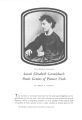
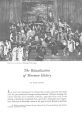
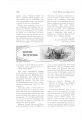
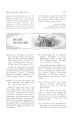
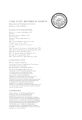
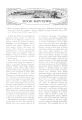
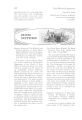
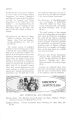
Show Sarah Elizabeth Carmichael. Sarah Elizabeth Carmichael: Poetic Genius of Pioneer Utah BY MIRIAM B. MURPHY A HE POETRY OF PIONEER Utah lies for the most part forgotten in the periodicals of the day and a few slim volumes of verse preserved in local libraries. While a surprising number of early Utahns wrote poetry, only a handful of their poems survive-most notably in hymns such as the Ms. Murphy is assistant editor of Utah Historical Quarterly. Poetic Genius of Pioneer Utah 53 familiar "Come, Come Ye Saints" by William Clayton. Of the poets themselves, Eliza R. Snow is the only one whose name is mentioned with any frequency today. The neglect of pioneer verse is readily explained by reading the poems. Many of them reflect the sentimentality and didacticism that sometimes marred nineteenth-century poetry; additionally, these Mormon poets tended to explore religious themes with a dogmatic zeal that no longer appeals to most readers. Sarah Elizabeth Carmichael- Lizzie, as she was called-overcame these faults to produce poems of genuine literary merit. Regrettably, her work has been obscured in the general eclipse of pioneer poetry. Two facts about Lizzie Carmichael emerge: she displayed a poetic brilliance that was admired by her peers both in Utah and elsewhere, and she lived with a tragic heritage that darkened her life during what should have been its crowning years. While brief sketches of her life have appeared from time to time in local publications, research has uncovered additional material on both the poet and her husband, Jonathan M. Williamson, that will flesh out her story and correct some misconceptions. 1 Lizzie was born in 1838 at Setauket, Long Island, New York, a daughter of William and Mary Ann Carmichael. Her destiny was shaped in large measure by the family's flawed heredity. Her parents were double cousins, and of a reported seven children born to them only Lizzie with her superior mind and a sister of below-normal intelligence survived infancy. Just when and where the Carmichaels were converted to Mormonism is not certain. However, in October 1842 the family joined the Latter-day Saints at Nauvoo where father Carmichael worked as a carpenter on the Nauvoo Temple. By the spring of 1847 the family was living at Winter Quarters, Nebraska; and in 1850 they made their final move to Salt Lake Valley, settling in the city's Eighth Ward. Lizzie was then twelve years old.2 1 Brief accounts of Lizzie's life are found in Ellen L. Jakeman, "Sarah Elizabeth Carmichael Williamson," Relief Society Magazine, 15 (September 1928), 478-90; Mary M. Root, "Pioneer Poet of Utah: Study of the Life and Work of Sarah Carmichael, One of the State's First Literary Producers," Salt Lake Tribune, February 16 and March 8, 1936; Edward W. Tullidge, "Carmichael," Western Galaxy, 1 (May 1888), 334-40; Catherine Hazel Selby, "Sarah Elizabeth Carmichael" (M.A. thesis, University of Utah, 1921.) 2 Jakeman, "Sarah," 478-79, 489; Deseret News, November 21, 1866, and November 11, 1901; Salt Lake Herald, November 11, 1901; Brigham H. Roberts, ed., History of the Church of Jesus Christ of Latter-day Saints, 7 vols. (Salt Lake City, 1902-32), 6:175, 7:326, 463; Kate B. Carter, comp., Heart Throbs of the West, 12 vols. (Salt Lake City, 1939-51), 11:404; Francis W. Kirkham and Harold Lundstrom, eds., Tales of a Triumphant People: A History of Salt Lake County, Utah, 1847-1900 (Salt Lake City, 1947), 24. See also U.S., National Archives, 1850 Census Schedules, Utah, microfilm of holograph, #A143, Utah State Historical Society, Salt Lake City. The Census shows the Carmichaels as Eighth Ward residents and lists the four family members: William, joiner, 46; Mary Ann, 42; Mary, 15; Sarah, 13. 54 Utah Historical Quarterly The earliest plat of Salt Lake City shows William Carmichael as owner of a lot on the northwest corner of State Street and Fifth South. This location opposite the Eighth Ward Square gave Lizzie an ever-changing view of incoming settlers who camped there prior to establishing permanent residence elsewhere. In 1851 an adobe school where Lizzie may have attended classes was built on the north side of Fourth South near State Street. She may also have used the facilities of the fledgling territorial library housed in Council Hall. Despite the limited educational and cultural resources of Zion, the "pretty, big-eyed retiring girl" began her solitary, self-taught career as a writer.3 That the tender bud flowered, given its environment, indicates a personal persistence and a commitment that ran very deep. Edward W. Tullidge called Lizzie's birth "in the severest sense untimely; she was reared in these valleys of Rocky Mountain isolation, when the poet, the musician and the painter were told to go to the canyons with ox teams for wood to earn their daily bread."4 On the Mormon frontier the struggle for survival made the arts expendable. If, as some have suggested, her home life was characterized by misunderstanding or even resentment, the fact would not be difficult to understand.5 Artistic genius and domestic order are fitful companions at best. Nevertheless, some communion- fostered perhaps by parental pride-did exist. A charming picture of Lizzie's father describes him with his dinner pail in one hand and the manuscript of a poem written by his gifted daughter in the other, he might have been seen almost any day going to work and stopping at the newspaper office to leave the manuscript.6 Beginning in 1858 more than fifty poems by Miss Carmichael were published in the Deseret News over a period of eight years. Her first offering was apparently so well done as to cast doubt upon her authorship. The poet sought the help of "a high church official" who assured the editor of the girl's genuineness and Lizzie became a frequent contributor.7 The first poem to carry her name was "Truth" which appeared in the March 10, 1858, issue. Then a young woman of twenty, Lizzie found her 3 Kirkham and Lundstrom, Tales, 25; Andrew Jenson, Encyclopedic History of the Church of Jesus Christ of Latter-day Saints (Salt Lake City, 1941), 746; Kate B. Carter, comp., Our Pioneer Heritage, 14 vols. (Salt Lake City, 1958-71), 2:18. 4 Tullidge, "Carmichael," 335. 8 Jakeman, "Sarah," 489; Root, "Pioneer Poet." "Salt Lake Herald, November 11, 1901. 7 Jakeman, "Sarah," 480-81; Carter, Our Pioneer Heritage, 2:18. Poetic Genius of Pioneer Utah 55 work readily acknowledged by the pioneer intelligentsia, and in 1859 the powerful Eliza R. Snow made her approval public: Make room for the rising minstrel- List, list to her minstrelsy; Its numbers are rich and truthful, And pure is its melody.8 As Lizzie's genius continued to unfold it brought her a measure of fame but at the same time exposed areas of tension between the artist and her family and church. The early published poems of Miss Carmichael are remarkable for their lack of distinctively Mormon subject matter. Often homiletic in character, the verses treat friendship, love, personal integrity, writing, Indian pride, and similar topics from a humanistic, nonsectarian point of view. Even in the poem "Pharaoh," where man's contending with God is explored, she avoided heavy-handed parallels between the exodus of the Israelites and that of the Mormons.9 And in a rare poem on a Mormon subject-Brigham Young-Lizzie retained control over her topic, refusing to be overawed by his power. The result is a poem that praises but does not cloy: We do not call thee chieftain, We do not name thee king, We wreath no brilliants for thy brow, No ermine round thee fling10 The verse continues, expanding the theme of the Mormon leader as a beloved man who belongs to the people: he is "ours." By contrast, there is a remoteness to Brigham Young in these lines by Eliza R. Snow: Servant of God, most honor'd-most belov'd: By Him appointed and of Him approv'd. 8 "To Miss Carmichael, G.S.L. City-," Deseret News, April 13, 1859. Eliza R. Snow copied the poem on some unused pages in her Journal and Notebook (1842-44) now in the Archives Division, Historical Department, Church of Jesus Christ of Latter-day Saints, Salt Lake City. p Lizzie's poetry was signed Sarah E. Carmichael, Miss S. E. Carmichael, or S. E. Carmichael. The latter usage led one childhood admirer to assume the writer was a man. See Louisa L. Greene Richards, "Memories of Miss Carmichael's Writings," Young Woman's Journal 13 (January 1902), 23-25. Under the editorship of Albert Carrington, the Deseret News published many of her poems following her debut with "Truth." Titles and dates of publication through 1859 are: "Perseverance," May 19, 1858; "The World's Wisdom," February 2, 1859; "Pharaoh," March 30, 1859; "Wine," May 18, 1859; "What Is There Worth Living For?" June 22, 1859; "The Father's Legacy," August 3, 1859; "Time," September 14, 1859; "Willie's Dream," September 21, 1859; "The Chieftain's Reply," October 26, 1859; "Thy Mother's Love," November 2, 1859; "History, Romance, and Poetry," November 23, 1859; "Armaund," December 14, 1859. 10 "Brigham Young," Deseret News, October 17, 1860. 56 Utah Historical Quarterly Prophet and Seer-You stand as Moses stood, Between the people and the living God.11 A recently uncovered document asserts that Lizzie "often sought the society and literary counsel of Sister Eliza." Sometime after the 1856 publication of Eliza's first volume of poetry, the two visited Brigham Young, seeking help for "a similar recognition of the youthful aspirant for literary honors." The church president advised the girl to " 'use your gifts to build up truth and righteousness in the earth and your gift will be preserved as long as you shall live. If you prostitute your powers to gain fame or gold, your light will go out in darkness.' " This should not be construed as indicating antagonism on Brigham Young's part toward Lizzie and her work.12 The practical man of affairs probably knew far better than the two women that the world honors poets with laurel wreaths and love but seldom money. Then, too, he may have recognized that despite a close bond of sympathy, the young poet would never emulate the older woman's perfervid zeal. One cannot imagine Lizzie penning lines such as these: O God, bless Brigham Young; Bless him, and all that bless him; Waste them away, O God, we pray, Who, rising to oppose him, Contend with Thee.13 The times generally favored zeal over art. From her earliest years, Lizzie must have longed for the benefits of a broader education. Her facile mind absorbed what it could from the limited resources available in Salt Lake City, but it craved more. John R. Young remembered meeting Lizzie, probably sometime in 1858, when he attended a school taught by Sister Pratt, and here became acquainted with Miss Carmichael, "one of Utah's most gifted daughters." 14 Far 11 Poems, Religious, Historical, and Political, vol. 2 (Salt Lake City, 1877), 1. 12 The handwritten document, undated and untitled, is found in the Susa Young Gates Collection, Miscellaneous Box 8, Utah State Historical Society. The writing looks like Susa's; however, since she was not born until 1856, she likely would not have been an eyewitness to the encounter. The document claims that although Lizzie's husband was kind to her, he wanted to commercialize her work. When that failed, the writer continues, he hoped to reap quick profit from an expose of the Mormon people and their religion which he urged his wife to write. Since Lizzie never wrote a history of the Mormons, one cannot pass judgment on its contents. It is doubtful, nevertheless, that her writing would have fallen into the lurid, expose class. 13 Eliza R. Snow, "Anthem," Deseret News, March 12, 1862. 14 John R. Young, Memoirs of John R. Young, Utah Pioneer, 1847 (Salt Lake City, 1920), 117. Prior to Young's mission to the Sandwich Islands in 1864, Lizzie wrote "A Parting Word to My Friend John R. Young," pp. 127-28. It is not clear whether Lizzie was a teacher or a student at the school. One source indicates that she was a "reticent and sensitive public school teacher." See Root, "Pioneer Poet." PROGRAMMK CELEBRATION OF THE 86™ ANNIVERSARY NATIONAL INDEPENDENCE. At sunrise, a Sdnte will be fired by Major Lidd's Artillery Battalion at the mound uu the Temple Block. The first gou will be the signal for unfurling and displaying flugs in all parts of the city, and for national atrs by the several Bunds. The Nauvoo Brass Biud will be stationed upon the cupola of the State House; Ballo't Bind on the promenade deck of the Theatre, and the Martini Baud at the Conrt House. At nine o'clock a Salute of three guns will be fired, which will be tbe signal for loaning the Procession at the Court House. All persons, whether cititeus or strangers, expecting to join in the Procession, are respectfully requested to be on the ground at tbe Court House, at a quarter before nine o'clock, to avoid unnecessary delay. The Proeessiou will be formed at nine o'clock precisely, under the direction of Col. It T. B jrtou, assisted by Majors Cunningham and Sharp, marshals of the day, in tbe following order, viz.: FIRST. Nanvoo Brass Bmd. Captain W. Pitt. SSVQSD Delai-htiieul ot Cavalry. Captain H. P. Kimball THIRP Battalion pf Artillery. Major S. G. Ladd. Kocr.TB. Ballo's Baud. Captain C. J. Thomas. Firm Carriages containing Public Officers and Distingu shed Quesu in tbe following order, viz. .- 1. Committee of Arrangements. X. State and Federal Offidera. 3. Territorial Officets. 4. Distinguished Guests. ». Orator, Chaplain and Reader of Declaration of Independence 6. Invited truest*. 1. Conuty Officers. », City Officers. 8. Furnishing Committee. Independence Day 1862 in Salt Lake City featured music, speeches, and a poem by Miss S. E. Carmichael. Utah State Historical Society collections. SIXTH Marti*! Bind. Captain Huntington. SSVKKTH Detachment of Infantry. Colonel D. J. Boa*. EIGHTH Citizens and Strangers. Tbe I'romwion will move along Second South Street to First East Street, thence up said street to South Temple Street, and along South Temple S'reet to the Bowery. PKOCSCD1NOS IW TBI 8 iWSRT. Music: "Tbe Star Spmgtat! Banner," by Balm's Band. Prayer: By the Chaplain of the day. Eider John Taylor. Heading ot tbe Declaration of Independence: By Col. John T. Caiue. Music: "Cheers," followed by "Hail Columbia,'' by Nanvoo Braaa Band. Oration: By Col. Geo. A. Smith, Orator of tbe day. Music: "Yankee Doodle." By the Martial Band. Song: Composed for tbe occasion. By Miss E. R. Snow. Address: By Mr. Joseph Romney. Music: By Ballo's Band, "Life and Liberty." Composed for tbe occasion. By Miss B. S. Carmichael. Address: By Mr, H W. Naisbitt. Music: By Nanvuo Brass Band. There wilt then be preseuted and read a variety of toasts and sentiments, with other literary varieties as occasion may present; aftet which, National Anthem: By Ballo's Baud. 0 „ . Benediction: By tbe Chaplain. Paring tbe services brief addresses may be expected from several prominent gentlemen present, At the close of tbe proceedings in the Bowery, a national salute will be fired by Major Ladd's Artillery, which will conclude the i of tbe day. 58 Utah Historical Quarterly from desiring merely "fame or gold," Lizzie may have wanted, even at this early date, to earn money from her poetry to pay for further education in the East. While little is known of Lizzie's personal life in the early 1860s, the "rising minstrel" mixed with prominent members of local society, winning their admiration and acceptance. An elaborate program of speeches and music celebrating Independence Day 1862 included her poem "Life and Liberty," read by John T. Caine. A few weeks later, similar activities commemorating Pioneer Day brought from her pen not a poem but a brief address to the pioneers read by William Clayton.15 She had entered the most productive, challenging, and ultimately tragic decade of her life. National recognition, marriage, and travel lay ahead of her. but by the end of the 1860s her life-the life of the mind-was essentially over. Edward W. Tullidge may have been the most perceptive of Lizzie's contemporaries. He saw her as a genius whose powers of improvisation carried her to the heights, but the patient shaping and reworking of a master such as Keats "cannot, we fear, be justly accredited among her higher poetic gifts and graces." 16 While she appears to have "lisped in numbers" as naturally as Pope, many have lamented along with Tullidge that "the poet was born out of due season." 1T Had her intellectual environment been more challenging and critical, her powers might have matured more fully despite the brevity of her creative years. Nevertheless, the poet did grow. She began to see her subjects in dramatic terms, using conflict, contrast, and irony in an increasingly sophisticated way. "The Daughter of Herodias," "Esau's Petition," "The Stolen Sunbeam," and the "Feast of Lucrezia Borgia" reveal a growing command of her art. A few lines from the latter poem will illustrate how the muse was maturing: Wine! wine! it flowed in a crimson stream Through the crystal cups, till its ruby gleam Shadowed a blush on the soft white hand That raised the glass from the marble stand. As the bacchanal progresses and the wine takes effect, the guests become fearful: 38 "Programme for the Celebration of the 86th Anniversary of Our National Independence," Utah State Historical Society; Deseret News, July 9 and July 30, 1862. The poem and the address are printed in full in the News. 16 Tullidge, "Carmichael," 338. "Ibid., 335. Poetic Genius of Pioneer Utah 59 They spurn the wine with a frenzied ire,- Their hands are ice, and their lips are fire. There's a mantle of blackness above them spread They hear a chant for the dying and dead; They see priests moving; wan tapers gleam; But each life-pulse stands like a torpid stream; And they gaze with a stupor of brain and heart As the gorgeous curtains are torn apart, And a form in velvet of sable dye, With the forehead bound by a jeweled tie, Stood looking upon them with eyes severe, And they shuddering whisper: "Lucrezia's here." But the poisoner's triumph over the nobles is brief; Lucrezia's son is one of the victims.18 Miss Carmichael's advancing skill eventually brought her recognition outside of Zion. William Cullen Bryant published "The Stolen Sunbeam" in his two-volume collection, A Family Library of Poetry and Song. Retitled by Bryant "The Origin of Gold," the poem has been justly acclaimed for its fine conceit depicting heaven's fallen one tearing a plume from the setting sun and burying it in the earth where it becomes gold. Another anthologizer, May Wentworth, selected two Carmichael poems, "A Christmas Rhyme" and "Sorrow," for her volume Poetry of the Pacific in 1867. In addition to the anthologies, some have claimed that Lizzie's poems were often reprinted without credit by the eastern press. In any event, ample evidence exists that the Utah poet was recognized and respected in the literary circles of mid-nineteenth-century America.19 Like many other writers of the period, Lizzie was profoundly moved by the Civil War. The conflict that set brother against brother captured her imagination and brought from her pen vivid, dramatic poems such as "Ashes to Ashes." The war indirectly affected her personal life as well. Miles from Zion the call to arms led Jonathan M. Williamson, a surgeon, to enlist with the California Volunteers in San Francisco on September 27, 1861. A year later the doctor entered Salt Lake City with troops under the command of Col. Patrick E. Connor. Lizzie may have caught a first 18"Lucrezia Borgia's Feast," Deseret News, May 6, 1863. "The Daughter of Herodias" and "Esau's Petition" appeared in the News on October 22, 1862, and March 11, 1863, respectively. "The Stolen Sunbeam" may be found in Sarah E. Carmichael, Poems (San Francisco, 1866), 25-27. "William Cullen Bryant, ed., A Family Library of Poetry and Song . . . 2 vols. (New York 1878) 654-55; May Wentworth, Poetry of the Pacific: Selections and Original Poems from' the Poets of the Pacific States (San Francisco, 1867), 326-29; Jakeman, "Sarah," 484. 60 Utah Historical Quarterly glimpse of her future husband at that time, as the soldiers marched up State Street past her home.20 Williamson surfaced in the local news early in 1863, following the Battle of Bear River, when he traveled fifty miles north with another physician to meet the wounded. One can only speculate on the doctor's activities during the following year and a half. In the summer of 1864 the post newspaper reported his return from California where he had been "for some time past." A few months later the surgeon was mustered out of the service, his three-year enlistment having expired. Wanting to take a more active part in the Civil War, Williamson signed on as a surgeon with the artillery brigade, 16th Army Corps, under Gen. A.J. Smith and saw action in the "great campaign of 1864-65." In August 1866 he returned to Zion "in his own conveyance," reportedly making one of the quickest trips on record.21 One uncertainty remains: when and where did the bright poet and the army surgeon meet? Evidence suggests the couple became acquainted during the doctor's stay at Camp Douglas, in the year and a half between the Battle of Bear River and Williamson's trip to California in 1864. This assumption better explains references-many of which are highly overdrawn- to Lizzie's conflict with church and parental authority. Beyond question feelings ran high when Connor and his men marched into Salt Lake City. The Mormons felt harassed and viewed the troops with suspicion. Many of the soldiers saw the Saints as traitorous lawbreakers and enjoyed poking fun at their beliefs and their leaders. Despite the atmosphere of mutual distrust, social contacts must have been made. Williamson evidently read the poems Lizzie was then writing with some frequency for the Deseret News. Perhaps the dazzling "Feast of Lucrezia Borgia" charmed him as it did so many others.22 If he actively sought her acquaintance at this time, he probably found his status as a physician rather than an ordinary soldier an asset. While he was both a Gentile and an army man, Williamson posed no personal threat to the populace. Indeed, his interest in the poet may have been welcomed by some of the city's social leaders as a sign that bridges between the two hostile camps could be built. 20 Carmichael, Poems, 37-41; Richard H. Orton, comp., Records of California Men in the War of the Rebellion, 1861 to 1867 (Sacramento, 1890), 196; Edward W. Tullidge, History of Salt Lake City (Salt Lake City, 1886), 281. Orton lists the doctor as "Jonathan M." -not the "Josiah" used by some local writers. Contemporary newspapers used only his initials. 21 Fred B. Rogers, Soldiers of the Overland (San Francisco, 1938), 75; Daily Union Vedette, July 4, 1864, and August 12, 1866. 22 One writer says the doctor read Lizzie's story of the "Lily of the Valley" and sought her acquaintance. Salt Lake Herald, November 11, 1901. Poetic Genius of Pioneer Utah 61 In 1863-64 Lizzie was in her middle twenties and unmarried in a society that had little place for that kind of nonconformity. Her wide acquaintance with the city's influential families makes it difficult to believe that no one had proposed marriage to her. As a plural wife Lizzie would have added distinction to a family, and any artistic temperament she displayed could have been easily accommodated by a husband who need not share her company except when he wished. A refusal to marry into a local family and her subsequent alliance with a Gentile probably would have exasperated her family. Reports by Beadle and others that it nettled Brigham Young sufficiently to ban her works or moved Mormons generally to dissociate themselves from her are questionable. Evidence abounds that Lizzie remained a loved and admired figure locally despite her feelings about polygamy-feelings shared by at least one other notable woman poet of the period.23 While Lizzie may have encountered some closed doors and cold shoulders, her poetry never fell out of favor. Indeed, Utahns were eager to claim her as their own. For example, Mormon historian Brigham H. Roberts heaped praise on Miss Carmichael's "President Lincoln's Funeral," asserting that it "is not anywhere surpassed in the literature- prose or poetry-that the sad event produced; no, not even Walt Whitman's 'O Captain! My Captain.' " The poem did attract national recognition following its publication in the San Francisco Golden Era. The famous actress Julia Dean Hayne, who frequently appeared at the Salt Lake Theatre, came on stage during one performance "in appropriate mourning dress, and read the poem with a pure pathos and perfect elocution, considering the immense capacity and imperfect acoustics of the room. It requires genius to read as well as write good poetry." The elegy merits acclaim. Its expression of grief achieves a solemn dignity in lines such as these: Bands of mourning draped the homestead, And the sacred house of prayer; Mourning folds lay black and heavy On true bosoms everywhere: Yet there were no tear-drops streaming From the deep and solemn eye Of the hour that mutely waited Till the funeral train went by. 23 Ina Coolbrith, poet laureate of California and a niece of Joseph Smith, Jr., vigorously opposed polygamy. Nevertheless, Joseph Fielding Smith said his father regularly corresponded with the Oakland librarian and mentor of Jack London. See Kate Thomas, "Ina Coolbrith," Relief Society Magazine, 15 (November 1928), 580-85. 62 Utah Historical Quarterly O h ! there is a woe t h a t crushes All expression with its weight! T h e r e is p a i n t h a t numbs a n d hushes Feeling's sense, it is so great.24 If Lizzie were out of favor with Mormon leaders over polygamy or, as some have suggested, her espousal of the Union cause, they were strangely unsuccessful at keeping her poems from the public. During only one extended period of time, from late 1864 to early 1866, did the poet fail to publish with some frequency in the Deseret News. Most likely the anti-Mormon press seized upon Lizzie's distaste for polygamy and her failure to interest Brigham Young in publishing her poetry to blow the incident out of all reasonable proportion. J.H. Beadle, for example, had Lizzie leaving Utah under the safety of a military escort to marry Dr. Williamson. And as recently as 1969 Stanley P. Hirshson uncritically asserted that Brigham Young banned her works until they were so well recognized that he "finally offered to help her, but the proud girl refused." From many sources it appears that Lizzie's home life was marred by a lack of understanding. Evidence also supports the notion that she rebelled against her parents and the establishment. Far from being a sign of yet another malevolent Mormon plot, Lizzie's conflict with authority seems de rigueur for a poet of any intellectual pretension.25 The publication of Lizzie's only book of poetry sometime in mid- 1866 ushered in a series of events that greatly altered her life. The slender volume, entitled simply Poems, was published with the consent-somewhat reluctantly given-of the authoress, by a devoted circle of her friends and admirers, who design thus to preserve a n early memento of her talents and genius as a writer; and by its circulation among kindred spirits, who as yet are strangers to her muse, secure for her poems a more extended acquaintance and recognition. 24 Brigham H. Roberts, A Comprehensive History of the Church of Jesus Christ of Latter-day Saints, Century 1, 6 vols. (Salt Lake City, 1930), 5:72-75; Daily Union Vedette, October 14, 1865; Deseret News, October 19, 1865. The complete poem is reprinted by Roberts and may also be found in Tullidge, "Carmichael," 337-38, and Carmichael, Poems, 21-24. 25 J. H. Beadle, Polygamy; Or, The Mysteries and Crimes of Mormonism. . . (Philadelphia, 1882), 320-21; Stanley P. Hirshson, The Lion of the Lord: A Biography of Brigham Young (New York, 1969), 293. Hirshson's reference is the New York World, October 2, 1870. See also Albert D. Richardson, Beyond the Mississippi. . . (Hartford, Conn., 1867), 470-72. Richardson accompanied Schuyler Colfax on his visit to Salt Lake City and the West in 1865. The study of Mormon attitudes toward the Civil War goes far beyond the scope of this paper. No doubt opinions on the subject were as widely varied locally as in the East. The Deseret News published several of Lizzie's poems which touch on the subject: "Slavery," February 20, 1861; and "Our Country," March 25, 1863. Her poem "Life and Liberty," read at July 4, 1862, ceremonies also speaks to the issue. On the other hand, Eliza R. Snow was critical of the use of poetry to urge support for the war. She asserted that war and famine were inevitable to "avenge the blood/That stains the wall of Carthage jail." See her poem "Response to 'Our Country's Call,' by Wm. C. Bryant" in Deseret News, December 25, 1861. Poetic Genius of Pioneer Utah 63 Included among the twenty-six poems selected for publication were the frequently praised "April Flowers," "President Lincoln's Funeral," "The Stolen Sunbeam," and "Moonrise on the Wasatch" which is among her best descriptive poems, as its opening section illustrates: The stars seemed far, yet darkness was not deep; Like baby-eyes, the rays yet strove with sleep; The giant hills stood in the distance proud- On each white brow a dusky fold of cloud; Some coldly gray, some of an amber hue, Some with dark purple fading into blue; And one that blushed with a faint crimson jet- A sunset memory, tinged with cloud-regret. Close to my feet the soft leaf shadows stirred; I listened vainly, for they moved unheard- Trembled unconsciously; the languid air Crept to the rose's lip, and perished there. It was an hour of such repose as steals Into the heart when it most deeply feels; When feeling covers every shred of speech With one emotion language cannot reach. And Nature held her breath and waited there, An awed enthusiast at the shrine of prayer; Like a pale devotee, whose reverent lips Stifle the breath that burns her finger-tips.26 Much of the book's story can be traced in the columns of the Daily Union Vedette. On August 6, 1866, the Camp Douglas newspaper carried a review of Poems by Carrie Carlton, originally published in the San Francisco New Age. Praising both book and poet, the reviewer noted that "true to a refined and heavenly instinct she stands up bravely to resist all example, all entreaty, all parental authority." According to the reviewer, Miss Carmichael hoped to be able to enter Vassar College. The following day the Vedette reported that Aaron Stein, who evidently handled the book's sale, had sent Lizzie $581.15, proceeds from subscriptions to her volume of poetry. Stein said that he and another "gentleman" who had been responsible for promoting the book felt rewarded for their efforts and pleased by the "flattering reception given it by a critical press." 27 The Vedette continued to take an interest in Miss Carmichael's poetry, publishing several of her poems during September and October. 28 Carmichael, Poems, v and 28-29. 27 Daily Union Vedette, August 6, 7, and 12, 1866. Stein was cashier for Wells, Fargo & Co.'s Overland Express and lived near the Salt Lake Theatre on First South. E. L. Sloan, comp., The Salt Lake City Directory and Business Guide for 1869 (Salt Lake City, 1869), 140. 64 Utah Historical Quarterly On November 20 the newspaper was pleased to report that Poems had been well received in Boston by a "high authority in matters of letters" who believed the poet was destined to achieve greater prominence in the field of literature.28 The future must have looked bright to the poet who had every reason to believe at age twenty-eight that she had many years left to develop her art to its full potential. The doctor must have felt pleased with Lizzie's modest success and hopeful that as her husband he might help her sustain it. The dream was not to be. Not long after his return from the East, Williamson became embroiled in a controversial claim-jumping case. Albert Brown, a former cavalry captain, and the doctor had claimed an unoccupied piece of land west of the Jordan River. Late one night they were surrounded by forty men and forced down the bank of the river. When Brown was recognized by one of the men as having treated him kindly while on provost guard in the city, the would-be settlers were helped from the water on their promise to immediately leave the country. This potentially tragic event must have discouraged any plans Williamson had for settling in the area at that time.29 In late October a probable obstacle to the doctor's marriage with Lizzie was removed. Mary Ann Carmichael, mother of "our distinguished poetess," died of a heart attack at age fifty-eight.30 On November 4 Williamson and Lizzie were married at Fort Bridger by the well-known Judge W.A. Carter. The Vedette gave its blessing to the occasion: The happy couple are both well and favorably known in this community, the gay Benedict as the late Surgeon of the Second Cavalry C.V., and the worthy bride as the sweet poetess of Utah. May their path through life be strewn with flowers, and every step a fountain of friendship gush forth to water them.31 Nearly a year later, the Vedette reported that the Williamsons were living in Ohio, the doctor's native state. The newspaper reprinted a letter, "evidently from the pen of the accomplished Mrs. J. M. Williamson," originally published in the Cincinnati Commercial, denouncing polygamy and claiming that Lizzie had bearded the Lion of the Lord in his den: 28 Daily Union Vedette, November 20, 1866. "Accounts of the incident are found in Roberts, Comprehensive History, 5:201-2; T.B.H. Stenhouse, The Rocky Mountain Saints . . . (Salt Lake City, 1904), 618; R. N. Baskinj Reminiscences of Early Utah (Salt Lake City, 1914), 166-67; and Daily Union Vedette, September 26, 1866. 30 Daily Union Vedette, October 26, 1866. nIbid., November 6, 1866. Poetic Genius of Pioneer Utah 65 I am no Hagar wandering desolate from the tent of a Mormon Abraham, but one of the few women who have grown up in the shadow of Brigham Young's despotism, and dared to defy him in the presence chamber of his power... ,32 Reportedly, Williamson wanted his wife to write a history of the Mormons, a project that never got beyond the planning stage, as most sources agree that Lizzie went into a severe mental decline about a year after her marriage. The Williamsons showed up next in Pioche, Nevada, a booming mining town, the naming of which has been credited by several authorities to Lizzie.33 Then, some time after 1870, the couple returned to Salt Lake City where they lived out the remainder of their lives. Dr. Williamson continued his medical practice and cared for his wife and sister-in-law, Mary Carmichael.34 Whatever the nature of her rnental debility, Lizzie apparently enjoyed periods of lucidity. In 1874 Mary Jane Mount Tanner, a childhood friend, visited the invalid and described her manner: She is better now but not well enough to take her place in Society. Poor Lizzie! It made my heart ache to see her. She was so changed. The light of intelligence had gone from her eyes, and her voice had a strange sound like some one speaking in the distance, but she talked intelligently and wanted me to come again. She has a beautiful home nicely furnished. Her husband's mother and sister lives [sic] there to take care of her. It made me feel very nervous to see her, and my health is so poor I do not think I can go again.35 In 1880 the doctor's mother, Abigail Williamson, died, and two years later death came to him. J.R. Walker and Boyd Park were executors of his "considerable property." When home care for Lizzie became too difficult, she was sent to the state mental hospital at Provo where she had aIbid., October 18, 1867. **Hubert Howe Bancroft, History of Nevada, Colorado, and Wyoming, 1540-1888 (San Francisco, 1890), 272; Walter R. Averett, Directory of Southern Nevada Place Names, rev. ed. (Las Vegas, 1962), 109. 84 Evidently Mary Carmichael boarded with the Thomas Gamble family. The 1870 Census lists her as an "idiot," age 32, living in the Gamble household between Main and State streets on Fifth South, around the corner from the old Carmichael home on State. See 1870 Census Schedules, Bear-Weber Counties, Utah, #A145, and Sloan, Salt Lake City Directory . . . 1869, 107. When the Williamsons returned to Salt Lake City, they resumed care of Lizzie's sister. See 1880 Census Schedules, Utah: Salt Lake-Sanpete Counties, #A148. In 1880 the household consisted of Williamson, physician, 52; Lizzie, 42; Mary, 44; Eliza Julia Elliott, housekeeper, 24; and Richard Whitmore or Whitman, stable man, 17. The Williamsons probably took up residence on or near the Carmichael property, as the 1874 directory lists them in that area. See E. L. Sloan, comp., Gazeteer of Utah and Salt Lake City Directory (Salt Lake City, 1874), 295 and 321. Selby in "Sarah Elizabeth Carmichael," 7, says Williamson bought a lot next to the old Carmichael home. MMary Jane Mount Tanner, Journal, May 17, 1874, p. 147, microfilm of holograph, LDS Archives. 66 Utah Historical Quarterly "special privileges and attendants." Ellen L. Jakeman saw her there in the 1890s, "a slender figure in a close fitting black dress, with a white crepe shawl over her shoulders, at Sabbath services-with them, but not of them." Finally, after more than thirty years of mental instability, Lizzie died at her Salt Lake City home on November 10, 1901.36 With no family to mourn her, the city's newspapers provided generous eulogies and recalled for their readers the achievements of her youth. The Deseret News praised "the once brilliant poetess whose literary gifts placed her name among those of the best writers of the nation." The Salt Lake Herald called her "a literary genius and bom poetess, who at one time was ranked the peer of American writers, and whose work has been characterized as the spontaneous outbursts of a poetry-filled soul." The Tribune opined that "had she retained the brilliant mind of her youth she would have found a place in the foremost ranks of American literature." 3T The headstone on her forgotten grave in Salt Lake City Cemetery has disappeared, and the poetry that brought a heightened sensitivity to the crude frontier eludes all but the persistent seeker. Lizzie penned her own best epitaph in these haunting lines that foreshadow her mental collapse and the obscuring hand of time: Pale, blighted flowers, the summer time Will smile on brighter leaves; They will not wither in their prime, Like a young heart that grieves; But the impulsive buds that dare The chill of April showers, Breathe woman-love's low martyr prayer- I kiss your leaves, pale flowers.38 Despite changing literary fashion, Lizzie's best poems break the bonds of time and place to speak with a voice readers of today can appreciate. Certainly the genius of nineteenth-century Utah literature merits a permanent place in the state's pantheon. 38Salt Lake Tribune, March 31, 1880; Jakeman, "Sarah," 490. 37 Deseret News, November 11, 1901; Salt Lake Herald, November 11, 1901; Salt Lake Tribune, November 11, 1901. 38 Carmichael, "April Flowers," Poems, 7-8. |