| OCR Text |
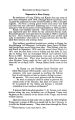
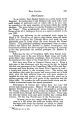
Show THE DESERET ALPHABET. 3 3 0 0 0 © Long E A AH AW 0 00 [ J J H vJ A 9- Short E A AH AW 0 00 A © W V f I ow woo YE H 7 a n a c q p B T D CHE G 0 0 P 8 Z S K GA F V ETH THE 8 6 D § S Z ESH ZHEE r i i i M R L M N NG Courtesy William R. Palmer, Cedar City, Utah THE DESERET ALPHABET Utah, during her period of colonization and long afterward, was a meeting place of many languages. Her settlers and immigrants spoke in several tongues, and the local problem of establishing a common medium of speech was not easily solved. Few, however, save those very familiar with her history, know that during her early years a serious attempt was made to devise an original alphabet and spelling system that all could learn and use more quickly and conveniently. A number of the Mormon leaders became convinced of the need for such a system, and over a period of years strove to popularize it among their people. The characters of this phonetic experiment were known as the " Deseret Alphabet." Its history extends, roughly, from 1853, when a committee consisting of Parley P. Pratt, Heber C. Kimball, and George D. Watt, was appointed by the regents of the University of Deseret to undertake the preparation of this new alphabet and orthography,- to 1877, when the death of the great Mormon leader, Brigham Young, robbed the movement of its guiding inspiration. From first to last. Governor Young took a keen personal interest in its formulation and development. In his message to the Territorial Legislature, December 12, 1853, he stressed the value of the proposed innovation, and there is no evidence that he ever thereafter changed his mind on the subject. It appears to be well established that George D. Watt, an English convert to Mormonism, was the man chiefly responsible for the Deseret Alphabet. As a youth in his native land, he had acquired some familiarity with the system of " phonography" designed and advocated by Isaac Pitman, whose influence on the development of shorthand methods is commonly acknowledged. In 1842 Watt came to the United States and was periodically employed by the Church officials at Nauvoo, 111., as a reporter and as a teacher of the Pitman method. Brigham Young was one of those who evinced interest in the Alphabet, and it is possible that even at this time he conceived the idea of introducing phonetic spelling and writing among his people. Circumstances, however, forbade immediate execution of the plan, and it was not until the Great Salt Lake valley had been settled for a few years that it was taken up in earnest. Watt was recalled from England, where he was fulfilling a mission, and was appointed a member of the committee designated to compose the new alphabet. Early in 1854 the commission produced its work, an alphabet of 38 characters, apparently based in part upon Pitman's phonography, in part upon a system of stenography which 100 UTAH HISTORICAL QUARTERLY Watt had suggested. Some critics add that Greek and Ethiopic symbols are traceable in the characters. The Deseret News, official Church organ, promptly editorialized on the new project in its issue for January 19, 1854, The Board of Regents, in company with the Governor and heads of departments, have adopted a new Alphabet, consisting of 38 characters. . . . The Board have held frequent sittings this winter, with the sanguine hope of simplifying the English language, and especially its orthography. After many fruitless attempts to render the common alphabet of the day subservient to their purpose, they found it expedient to invent an entirely new and original set of characters. These characters are much more simple in their structure than the usual alphabetical characters; every superfluous mark supposable, is wholly excluded from them. The written and printed hand are substantially merged in one. We may derive a hint of the advantage to orthography, from spelling the word eight, which in the new alphabet only requires two letters instead of five to spell it, viz: AT. There will be a great saving of time and paper by the use of the new characters; and but a very small part of the time and expense will be requisite in obtaining a knowledge of the language. The orthography will be so abridged that an ordinary writer can probably write one hundred words a minute with ease, and consequently report the speech of a common speaker without much difficulty. As soon as this alphabet can be set in type, it will probably be furnished to the schools of the Territory for their use and benefit; not however with a view to immediately supersede the use of the common alphabet- which, though it does not make the comers thereunto perfect, still it is a vehicle that has become venerable for age and much hard service. In the new alphabet every letter has a fixed and unalterable sound; and every word is spelt with reference to given sounds. By this means, strangers can not only acquire a knowledge of our language much more readily, but a practised reporter can also report a strange tongue so that the strange language when spoken can be legible by one conversant with the tongue. . . . Acting upon the request of Governor Brigham Young, the DESERET ALPHABET WORDS OF ONE SYLLABLE. dC 3:) & n 6b OZ ( D6 EACH AIM AFT ALL OATH OOZE 9\ Q ^ 7 vJ| 77, \ 7<\ INK EDGE AM ON UP FOOT j , © b ye vba T4Q EYE OWL. AVOOD YIELD HANK 7b © aei nk'sn am PLOUGH BOUGHT TWIST DROUGHT C7 © ns crao © i CHEAP GRASS CREEK GAIN P3S 6f8 arZ Z- 61 FACE VERSE BREATH THOUGHT 8311 6ST 0^ D > ig- Wr SAINT ZEST niSH AZ- URE PAH bhP 9 © I S:* W RIGHT LAUGH MOON PING, DESERET ALPHABET WORDS OF TWO OR MORE SYLLABLES 9Wn 3U9H MPaS EGYPT ALIMENT ARTIFICE AUTHENTIC OMISSION TOOELE » l06 » a* l » 0 » ( DQDI INDIVIDUAL EDUCATION hQUI » 6aDI vja6r8^ or3 ACQUISITION OBSERVATORY asnwwD osn'/ i- f © s DISTINGUISH COUNTING- HOUSE • iwnz JOS7JO" Q en!) TWENTIETH EXPECT AUTUMN EXIGENCE LONGITUDE MORROW o^ M0cj ^ 8 r^ esis KINGDOM OF RIGHTEOUSNESS owenia OWISHIOU/ I^ QUANTITY CONSANGUINITY YOUNGEST BROTHER OF THOMAS THE DESERET ALPHABET 101 Territorial Legislature, in 1855, voted a sum of $ 2500 for the casting of type, an order for which was fulfilled by a St. Louis foundry a year later. The Utah War caused some delay in the shipment, but in 1857 it was delivered and set up in the old Salt Lake Council House. In the meantime, however, sporadic efforts were made, largely under the enthusiastic direction of Brigham Young, to acquaint the Mormon people with the alphabet. Classes were organized in several communities, and a degree of success was attained, as is witnessed by the appearance of the new script in a number of pioneer journals which have survived. The Journal of Thales Haskell, printed herewith, is a typical example. The new type, oddly enough, was not used by the Deseret News until early in 1859, when, beginning with the issue of February 9, and continuing for a period of about six months, excerpts from the Bible or the Book of Mormon were printed. Interest lagged, apparently, in spite of Brigham Young's repeated insistence on the wisdom and utility of the system. From 1860 to 1867 it dropped out of sight. In the latter year, possibly as a reflection of a new wave of interest in phonetic spelling then sweeping the country, it was suddenly revived. Strong attempts were again made to replace the English alphabet with this experimental creation, and the board of regents of the University of Deseret, responding to President Young's urgings, took up the matter and in 1868 voted $ 10,000 for the printing of text books to be used in the Territorial common schools. Robert L. Campbell, superintendent of public instruction, identified himself as an ardent advocate of the Deseret Alphabet, and repeatedly called the attention of the Legislature to its advantages. Thus, in his report dated February 19, 1868, he wrote: The Superintendent takes great pleasure in seconding the efforts of President Brigham Young and the Board of Regents of the University of Deseret in the introduction of the Deseret Alphabet. That English orthography needs reform is patent to all who have given the matter the slightest consideration. To follow in the footsteps of our venerated fathers in a system of orthography so inconsistent and ridiculous and which has never helped to make the comers thereunto perfect, is unworthy of a people whose constant and highest aspirations are to be associated with truth and intelligence, and who discard error in whatever form it is presented. A year later ( Feb. 16, 1869), he returned to the subject: 102 UTAH HISTORICAL QUARTERLY . . . The inhabitants of these mountains are pre- eminent for reform. They hail every invention and discovery as a blessing from Heaven to man, and fail not to acknowledge the Source whence all blessings emanate. . . . The design of the Deseret system is to teach the spelling and reading of the English language in an easy manner. The principal feature is to reduce to simplicity English orthography, and to denude the words used of every superfluous character. . . . To discuss further this matter . . . would be inappropriate, but as the subject of orthography meets us at every step in the schoolroom, and as laudable efforts are being put forth to introduce this important and indispensable reform, the Superintendent could not do less than endorse a movement which augers so much good to the cause of education. . . . The " laudable efforts" referred to in Superintendent Campbell's report were the Deseret First and Second Readers, printed in New York in 1868 and employed briefly in the public schools of the Territory. These were small primers based on the famous McGuffey manuals. They were however, discontinued almost as soon as introduced. Sometime later, Orson Pratt was commissioned to transcribe the Book of Mormon into the alphabet, and a small-sized edition of this was brought out in 1869, together with a large- type printing of the Book of Nephi. These volumes, with the Readers, occasional alphabetic printings in the Deseret News, a few card announcements and copies of the alphabet itself- all now collector's items- form the sum- total of printed works in the new type. Whatever plans were entertained for the transcription of other Mormon scriptural works were shortly abandoned. The almost total lack of popular response spelled the doom of the movement. Superintendent Campbell, in his report for 1870, was still hopeful, and opined that " but a few years will pass until the News, the Instructor, the Ogden Junction, and a lot of other intellectual lights, will spring up, clothed in the unique, novel, and simple dress of the Deseret character." It was his last word on the subject, however, for his later reports do not mention it, and as the years went by the alphabet faded from memory. |