| OCR Text |
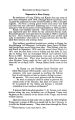
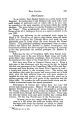
Show TU- CU- PIT, AN OLD UTE INDIAN WHO SAW THE MORMON PIONEERS FIRST ENTER SALT LAKE VALLEY IN 1847. Courtesy L. D. S. Church Historian's Office, from the WPA Writer's Project collection in custody of the Utah State Historical Society, Salt Lake City, Utah. Utah State Historical Society State Capitol, Salt Lake City, Utah Vol. XII January- April, 1944 Nos. 1- 2 INDIAN RELATIONS ON THE MORMON FRONTIER By Juanita Brooks1 The subject of Indian relations on the Mormon frontier deserves more extensive treatment than it has received, since it presents so many avenues of approach and interpretation. Aside from the location of the various tribes and their numbers now as compared with the days when the Mormons first came to Utah, their economic status and their reaction to the white man's culture, there are social developments peculiar to this section. The Mormon philosophy regarding the Indians is unique; the Mormon treatment of their dark- skinned neighbors was determined largely by that ideology. The whole was complicated by the mutual distrust and suspicion that existed between the Mormon settlers and the officials sent out by the Federal government. Documents of the early period, especially the letters to and from Brigham Young and those written by the government agents concerning him would furnish material for a lengthy dissertation. Mormon- Indian relations are interesting, the Gentile- Indian relations equally so, and in combination the three offer a triangle as intriguing as any provided by fiction. There have been many articles on the Indians of Utah, 2 but the whole subject has never been treated exhaustively. Nor does '• Juanita Leavitt Brooks lives in St. George, Utah, and is married to Postmaster William Brooks. She was born in Bunkerville, Nevada, and was reared on the southern Mormon frontier. A graduate of Brigham Young University, she earned her M. A. degree at Columbia University. She has taught in the Dixie Junior College, St. George, and was an area supervisor for the Emergency Relief Administration and the Historical Records Survey of the Works Projects Administration. The notable collection of pioneer journals made by the Utah Works Administration was founded upon the work done by Mrs. Brooks in St. George. She is an acknowledged authority on Mormon culture and Mormon folkways, and has contributed articles to national publications, including " A Close- up of Polygamy," Harpers Magazine, February, 1933, and " The Water's In!" Harpers Magazine, May, 1941. In 1942 she published at St. George a biography of her grandfather, Dudley Leavitt, Pioneer to Southern Utah. Mrs. Brooks now has in preparation a full- length study of Jacob Hamblin, one of the most extraordinary of American frontiersmen. [ Editor]. ' William R. Palmer, " Pahute Indian Homelands," Utah Historical Quarterly, Vol. 6, p. 88, gives a good discussion of locations; a later study as yet unpublished examines their present social and economic condition. 2 UTAH HISTORICAL QUARTERLY this article pretend to do so. Two purposes are paramount here: First, to sketch briefly the historical development and economic basis of Mormon- Indian relations, and the application of the philosophy which led to the taking of Indian children into white homes; and second, to show some of the social results of this racial association and of the intermarriage between the races. In this latter purpose, the inquiry is limited to the southern part of the state, since it was here that more Indian children were reared by the whites than in any other section and since this is the area with which the writer is best acquainted. Mormon interest in the Indians dates back to the publication of the Book of Mormon in 1830. Purporting to explain the origin of the American Indians, this Mormon scripture says that their ancestors came from Palestine some six hundred years before Christ, and that they built up a remarkable civilization on this continent. Because of disobedience, a part of the people were cursed with dark skins, and were known as " Lamanites"; these were later to be called Indians. The Lamanites kept up a series of wars against their civilized brethren until at last the land was laid waste and only the roving bands of Indians were left. Since these Indians were " of the blood of Israel," a promise was held out that they might yet become a " white and delightsome people." That promise, often repeated, became a sort of axiom with the Mormons, though they seem to have been in doubt as to the way the transformation was to come about, unless that by the adoption of civilized manners each succeeding generation would become lighter. The first Mormon missionaries were sent to the Lamanites just six months after the organization of the Church in 1830. By a special revelation in October of that year through the Prophet Joseph Smith, Parley P. Pratt, Oliver Cowdery, Peter Whitmer, and Ziba Peterson were called to labor as missionaries among the Lamanites with the promise that, " I myself will go with them and be in their midst; and I am their advocate with the Father, and nothing shall prevail against them." 3 These missionaries set out from western New York and traveled to the frontier beyond the Missouri River. The undertaking is summed up by Parley P. Pratt himself: This was about 1500 miles from where we started, and we had performed most of the journey on foot] through a wilderness country, in the worst season of the year, occupying about four months, during which we had preached the gospel to tens of thousands of Gentiles and two nations of Indians; baptizing, confirming and organizing many hundreds of people into churches of Latter-day Saints.' " Doctrine and Covenants 32: 3. ' Parley P. Pratt, Autobiography ( Salt Lake City, 1874), p. 55. INDIAN RELATIONS ON THE MORMON FRONTIER 3 Thus ended our first Indian Mission, in which we had preached the gospel in its fulness, and distributed the record of their forefathers among three tribes, viz.: the Cat-terauguas Indians, near Buffalo, N. Y., the Wyandots of Ohio, and the Delawares west of Missouri. 5 Troubles of their own in the East and Middle West prevented very extensive proselytizing among the native Americans until after the Mormons had reached the valley of the Great Salt Lake. Then, although they did send missionaries back to the Indians of the Middle West in 1855, in 1877, and still again in 1883," their chief interest centered in those found in the Territory of Utah. 7 In crossing the plains, the various Mormon companies always adopted a friendly and conciliatory attitude toward the bands they met, partly because other brethren would follow the same routes and this would make for their safety, and partly because of the feeling of moral responsibility toward the Indians which they had by virtue of the Book of Mormon. On the eve of the arrival in the valley of the Great Salt Lake, at Brigham Young's direction a letter was written to Orson Pratt, who was in the advance company. This message, dated July 21, 1847, at 4 a. m., advised Pratt on emerging from the Wasatch Mountains " to bear to the north." 8 President Young had learned earlier from Jim Bridger that Salt Lake Valley was something of a no-man's- land between the Utes in the south and the Shoshoni in the north, and though Bridger had praised Utah Valley, the Mormon leader thought the Saints should not press too closely on Chief Walker's band at first.' Thus, from the time they entered the Salt Lake Valley, the Mormons were intimately responsive to, and keenly aware of the problem of getting along with the Indians. Apart from the precepts of the Book of Mormon, they were practical enough to know that they were isolated and very far from any succor; it was sound policy to render the Indians either friendly or neutral. When the natives gathered around to watch the new- comers " throw the dirt," as they called plowing, and shape the hewn logs into houses, they were treated with kindness and tolerance. Brigham Young early made " Tbld., p. 61. " Julina Smith examines briefly these ventures in " A Discussion of the Interrelations of the Latter- day Saints and the American Indians" ( Master's Thesis, Brigham Young University, Provo, Utah, 1932). ' Since the Territorial boundaries east and west were, until 1861, the Rockies and the Sierra Nevada, the Territory included a tremendous amount of Indian country. "" L. D. S. Journal History," MS in archives, L. D. S. Church Historian's Office, Salt Lake City, Utah, July 21, 1847. ' William Clayton's Journal ( Salt Lake City, 1921), p. 278, gives an account of the conference between Brigham Young and Jim Bridger on June 28, 1847. 4 UTAH HISTORICAL QUARTERLY the pronouncement that became a basic Mormon tenet, " It is cheaper to feed the Indians than to fight them." Every attempt was made to assure the friendship of Chief Walker, especially, for the " Hawk of the Mountains," as he called himself, was war chief of the most formidable group in the Utah area. In June, 1849, Walker visited Brigham Young in Great Salt Lake City, where he was shown every courtesy. Impressed with the friendly attitude of the Mormons, he was baptized and even ordained an Elder of the Church. 10 However, ill feeling over Mormon laws against Indian slave trading in 1853 brought about the brief Walker War. Walker himself did not take a very active part in the fighting, and in May, 1854, Brigham Young met him in council near Nephi, bringing him gifts of flour and meat, and even twenty plugs of choice chewing tobacco as a peace offering. 11 In his conference with Walker in 1849, Brigham Young announced his intention of locating a colony in the valley of the " Little Salt Lake." Walker recommended that one be established in the Sanpete Valley also, and this was done late in 1849. Had Walker been hostile, neither settlement could have been attempted until a later date. Both Isaac Morley in Sanpete Valley, and George A. Smith, who led the Iron County Mission south in December, 1850, were careful to remain on good terms with the Ute chief. The " Journal" of George A. Smith, en route with the Iron County Mission, shows the tact with which the natives were treated, even under provocation, and at the same time takes up a theme that was to become important in Mormon- Indian relations- the adoption of Indian children. The company had been followed by Indians, two of whom, an old brave and a boy about 12, were brought into camp by Captain Fullmer with his company of horsemen for " hand- outs" of food. Both of the Smith family's lead cattle had been wounded, but their ox, " Old Bailey," a faithful animal that all the family had learned to love, was brought in, shot with eleven arrows, groaning with pain and looking to them for relief. They shed tears over it, dressed its wounds, warmed water for it to drink, and covered it with buffalo robes. The journal entry for the next day says: Friday, Dec. 27 [ 1850]- The thermometer 8 below zero. In the morning I found the ox, Bailey must die, so I ordered him to be knocked in the head, out of his misery. I showed him to the Indian and in an angry manner told him he was the scoundrel that had shot it. He denied it, but turned very Pa l e f o r a Red Man, and sent up an Indian cry for the ox. IT* u^ H' R° i, e r t S ' £ Comprehensive History of the Church ( Salt Lake Cltv Utah, Deseret News Press), Vol. 3, p. 464. ^' U" L. D. S. Journal History," May 13, 1854. INDIAN RELATIONS ON THE MORMON FRONTIER 5 I told him it was too late to cry, but if he would let me have the boy he might have the ox, to which he readily agreed. I told him the boy should be well fed, comfortably clothed and made a man if he would be a good boy. The Indian said he wanted to see him dressed like a white man on his return. I told Br. [ Brother] Empey he could take the boy for the present and take care of him. The Indian, pointing to Br. Empey, told the boy that was his father. The boy immediately followed Br. Empey seeming much pleased. 12 This seems to be the first Indian child that was secured by the Mormons of the Southern Mission. To the Indian the carcass of the dead ox would be ample pay for the child, since during the season of hunger the natives often traded their children for much less, while for the white man the loss of an ox was serious indeed. That these colonists were careful to satisfy the natives is shown by another entry in the Smith journal at a time when Walker and some tribesmen were visiting the new colony: Wednesday, March 12, 1851: Brother Barnard had a misunderstanding with Walker. Barnard had traded with Walker for a Pihede [ Indian] girl, given him a cow and a shirt. Walker was dissatisfied and they both came to see me, but could not understand Utah enough to comprehend the nature of the dispute. I rode down on a mule with Walker to the farm and found Wheeler [ the Indian interpreter] ploughing. Walker told Wheeler that he expected an ox instead of a little cow. I returned and advised Barnard as there was a misunderstanding, to return the girl. . . . M It is not clear that this was the same child, but a little more than a week later, George A. Smith records that " Br. Barnard presented me with a child, a Pihede girl about 4 years old. He purchased it off Walker for an ox." That other pioneers were buying Indian children is shown by Smith's entry on March 25: The express started for the Gt. Salt Lake City at J^ past nine o'clock. . . . Br. Baker was accompanied by his son, 12 years old. He had also two Indian children, which he had purchased of Walker, lashed on a mule... ." Though the Mormons opposed the Indian slave traffic, it was necessary to seem to countenance it, for their little colony, Louisa " George A. Smith, " Journal of the Iron County Mission," MS in files of the Utah State Historical Society, Salt Lake City, Utah. aLoc. cit. uIbid. 6 UTAH HISTORICAL QUARTERLY ( later named Parowan), was scarcely three months old and far from the base at Great Salt Lake City. Evidence of the desire to promote good feeling is found in the " talking paper" which George A. Smith gave to Walker when the chief started north. Louisa, Iron County, Deseret March 20, 1851 To all to whom it may concern: This certifies that Captain Walker and Peeteetneet of the Eutah Indians and their band have resided here about 3 weeks and as they have showed themselves Friends and gentlemen and are now leaving to visit your settlements it is my desire that they should be treated as friends and as they wish to Trade horses, Buckskins and Piede children we hope them success and Prosperity and good bargains. GEORGE A. SMITH" Scarcely two months after Walker carried away this letter of recommendation and good wishes, Brigham Young visited the little colony in the south. With regard to the relations of his people with the Indians his instructions were definite: I spoke upon the importance of the Iron County Mission and the advantages of the Brethren filling it. Advised them to buy up the Lamanite children as fast as they could, and educate them and teach them the gospel, so that many generations would not pass ere they should become a white and delightsome people, and said that the Lord could not have devised a better plan than to have put us where we were in order to accomplish that thing. I knew the Indians would dwindle away, but let a remnant of the seed of Joseph be saved." Brigham Young's advice to buy up Indian children did not seem to him inconsistent with the opposition which he always maintained toward Indian slavery. When the Mormons first arrived in Utah, they found the Indian slave traffic firmly established." Companies of Mexicans made regular trips trading for children; Walker and his brother, Sanpitch, stole children from weaker bands or bought them for trifles, and resold them to the traders. The Deseret News, November 15, 1851, reported that such a party " George A. Smith, original letter in possession of William R. Palmer, Cedar City, Utah. "" History of Brigham Young," MS May 13, 1851, p. 846. " William J. Snow, " Utah Indians and Spanish Slave Trade," Utah Historical Quarterly, July 1929, gives a good summary of these conditions in early Utah. INDIAN RELATIONS ON THE MORMON FRONTIER 7 under one Pedro Leon, was at Manti, Sanpete County, trying to trade horses for children. Its protest was vigorous: . . . and we further counsel that no person whatsoever be guilty of, trafficing [ sic] in human blood or of selling Indians or Indian children to be transported out of the Territory or from one part of the Territory to another. Pedro Leon held a license signed by James S. Calhoun, Superintendent of Indian Affairs for the Territory of New Mexico, dated Santa Fe, August 14, 1851, but upon exhibiting it to Brigham Young, he was told that it did not authorize trade with the Indians in Utah." He, with seven of his1 group, was arrested and tried before the justice of the peace at Manti and later before Zerubbabel Snow, Judge of the First District Court, who ruled that they should leave their prisoners and return to their homes. This incident had an immediate effect in Brigham Young's gubernatorial message to the Utah Legislature early in 1852. He drew a fine distinction between actual slavery to the Mexicans and purchase by the Mormons, insisting that in the latter case the Indians were in reality free, merely giving their services for the favor and expense of being kept by the Saints: No person can purchase them without their becoming as free, so far as natural rights are concerned, as persons of any other color; under the present low and degraded situation of the Indian race, so long as the practice of gambling away, selling, and otherwise disposing of their children; as also sacrificing prisoners obtains among them, it seems indeed that any transfer would be to them a relief and a benefit. . . . This may be said to present a new feature in the traffic of human beings; it is essentially purchasing them into freedom instead of slavery; but it is not the low, servile drudgery of Mexican slavery, to which I would doom them, not to be raised among beings scarcely superior to themselves, but where they could find that consideration pertaining not only to civilized, but humane and benevolent society." The Deseret News' report of the Governor's message as well as the talk that went around regarding the trials of the Mexican traders brought the subject of Indian slavery into the limelight. It was a subject, indeed, deserving serious consideration. Harrowing stories were told of the cruelty with which captured children were treated. Daniel W. Jones tells of some Utes who had some Indian children for sale: """ H. H. Bancroft, History of Utah ( San Francisco, 1889), pp. 475ff. ^ Deseret News, January 10, 1852. 8 UTAH HISTORICAL QUARTERLY They offered them to the Mormons, who declined buying. [ Chief] Arapine, Walker's brother, became arrogant saying that the Mormons had stopped the Mexicans from buying these children; that they had no right to do so unless they bought them themselves. Several of us were present when he took one of these children by the heels and dashed its brains out on the hard ground after which he threw the body towards us, telling us that we had no hearts or we would have bought it and saved its life 20 Early in 1852 the Legislature passed a law called " A Preamble and an Act for the Further Relief of Indian Slaves and Prisoners"; its lengthy preamble gave a heart- rending picture of conditions existing among the natives: . . . they are carried from place to place packed upon horses or mules lariated out to subsist upon grass roots or starve, and are frequently bound by thongs made of rawhide until their hands and feet become swollen, mutilated, inflamed with pain and wounded; and when with suffering, cold, hunger, and abuse, they fall sick, so as to become troublesome, are frequently slain by their masters to get rid of them. . . . ai The act itself provided that whenever any person within the Territory should secure such a child, he should go before the selectmen or probate judge of the county wherein he resided and make out an indenture which provided that the apprenticeship should not exceed twenty years; that the master must send his ward to school at least three months each year between the ages of seven and sixteen, and that the apprentice should be clothed in a comfortable and becoming manner, according to his master's condition in life. 22 An interesting application of this law is an indenture made out February 1, 1859, when John Beal of Sanpete County adopted an Indian boy, Samuel, who was then nine or ten years old. He was to have the service of the boy for ten years, in return for which he promised the following: . . . to teach and instruct the said Samuel as an apprentice or otherwise cause him to be well and sufficiently instructed and taught the trade of farming after the best way and "• Daniel W. Jones, Forty Years Among the Indians ( Salt Lake City, 1880), p. 53. "• Laws of Utah ( Salt Lake City, 1852), pp. 93- 94. See also Utah Historical Quarterly, July, 1929, p. 84. This issue is devoted to the subject of Indian slavery in Utah. " Ibid. UTE INDIAN CHILD, TYPICAL OF THE ONES TAKEN INTO MORMON HOMES. Courtesy L. D. S. Church Historian's Office from WPA Writer's Project collection in custody of the Utah State Historical Society. INDIAN RELATIONS ON THE MORMON FRONTIER 9 manner that he can; and instruct said apprintice [ sic] by sending him to school three months in the year of each year while said apprentice is between the age of seven and sixteen; and also to train him to the habits of obedience, industry and morality and allow him meat, drink, washing, lodging and apparel for winter and summer and all other necessaries proper for such an apprentice during the term aforesaid, and at the expiration of said term will give unto the said apprentice a New Bible, Book of Mormon and two new suits of clothing, suitable to his con-dition. 28... After the passage of the law against Indian slavery, the Mormons made it a point to secure all the Indian children they could. This was one of the duties assigned the missionaries who were later called to the various Indian missions. The first mission to be formally established after the Mormons came to Utah was called the Southern Indian Mission, and had its headquarters at Harmony, some sixty miles south of Parowan, Utah. Its inception was no doubt encouraged and hastened by John D. Lee, who wrote eloquently to Brigham Young of the advantages of the southern country. In October, 1851, Lee had led a group of colonists south to establish a settlement in Utah's Dixie, but, for some reason, President Young ordered him to wait for a while. That Lee wanted with all his heart to settle in the southern country is evident from his letter of March 7, 1852: We can raise cotton, flax, hemp, grapes, figs, sweet potatoes, and fruits of almost every kind, be independent of our kind Christian friends who drove us from their midst. When I stood in the midst of one of these valleys and contemplated on the glory of the latter- day work, it was like a fire shut up in my bones. . . .** Later, John D. Lee was permitted to go as far south as Harmony. The Walker War forced the temporary abandonment of this settlement, but as soon as it was over, Lee went back again. He still wanted to move over the rim of the basin, and in his letters to President Young he told of the grass growing and the buds bursting in February and of the advantages of settlements in the southern section. One of his arguments was the interest which the Indians showed in the gospel. On January 24, 1854, he wrote of how Enoch Reese's pack train loaded with goods was attacked by the Indians of the south, with three men killed. He gave an account ^ Utah Historical Records Survey, Inventory of the County Archives of Sanpete County, p. 14. Original owned by Frank Anderson, Manti, Utah. "•" L. D. S. Journal History." 10 UTAH HISTORICAL QUARTERLY of how the Ute Indians preyed upon the Piedes, [ Paiutes] stealing their wives and children to sell into slavery; and included the following account of a visit by old Chief Toquer, who begged the Mormons to come and settle on his land: He threw his arms around me and wept, and said, " Come, go now; we will be lonesome over thereby ourselves, we won't have anyone to talk to us about Shinob. I must confess that I was touched to the center, and prayed in my heart that the Spirit of the Lord would continue to rest upon these poor creatures. 26 It would seem that these letters had a direct bearing on the establishment of the Southern Indian Mission, for the first group of Indian missionaries left Great Salt Lake City on April 14, 1854, scarcely three months after the last quoted letter was written. The launching of this mission had been foreshadowed the previous fall, when Parley P. Pratt was named to head a group of Indian missionaries. This group made some preparation through the winter, but was merged in the company specifically called for the Southern Indian Mission in April, 1854. This is clear from some memoranda as to personnel in the official journal of the mission. A few went to the Green River settlement at Fort Supply as missionaries to the Shoshoni, 27 but it is the company that went south ( the Southern Indian Mission), that is most important in Mormon history, and it was the initial accomplishments of this mission which led quite probably to the extension of the Indian mission system in 1855. At that time a group was also called to the Las Vegas Mission in what is now southern Nevada; another to Salmon River in Idaho; a third to the vicinity of Moab in southeastern Utah; a fourth to the so- called White Mountains, in the area along the Utah- Nevada line in and adjacent to present Millard County; a fifth was sent to the Cherokee Nation, in what is now Oklahoma. The mission sent to Carson Valley, in present Nevada, seems also to have been considered, to some extent, an Indian mission. The White Mountain Mission resulted in nothing but a reconnaissance of the country, and the missionaries were transferred to the Elk Mountain Mission near present Moab, and that mission in its turn was abandoned after only three months. The Cherokee Mission was maintained for some years, without any fruitful results; the Las Vegas Mission failed in 1857, and later that year the Carson Mission was called home as a result of the outbreak of the " Utah War." Those from the Salmon River Mission or Fort Limhi were also recalled early in " Second greatest Paiute Indian god. "" L. D. S. Journal History." " James S. Brown, Life of a Pioneer ( Salt Lake City, 1900), details the experiences of these missionaries. INDIAN RELATIONS ON THE MORMON FRONTIER 11 1858. None of these missions except the Southern Indian Mission could be called successful, and several were attended by tragedy and disaster. The Southern Indian Mission, under the direction, first of Rufus C. Allen, and later of Jacob Hamblin, had a permanency that the others lacked. The missionaries to the Southern Indian Mission arrived at Harmony on May 2, 1854. There were twenty- five of them, the oldest forty- seven, the youngest only seventeen. The camp historian, Thomas D. Brown, 28 gives a colorful and vivid account of the activities of the group, showing their labors, their disappointments, even their petty quarrels and reconciliations. He was especially careful in reporting the minutes of the various meetings, and his notes of the sermons of the brethren retain much of the flavor of their personalities. Two weeks after the arrival of the missionaries in their field of labor they were visited by Brigham Young and his party. His instructions given in Thomas D. Brown's Journal show clearly the objectives of the mission: You are sent not to farm, build nice houses and fence fine fields, not to help white men, but to save red ones, learn their language, and this you can do more effectively by living among them as well as writing out a list of words, go with them where they go, live with them . . . feed them, clothe them, and teach them as you can, and being thus with them all the time, you will soon be able to teach them in their own language. 25 The instructions of all the authorities were in the same vein, those of Parley P. Pratt being perhaps the most impassioned and appealing: The poor Indians, the descendants of the ancient prophets! Can we behold them unmoved? . . . feed, clothe, instruct them; win, save the remnants of the house of Israel. You will all have a measure of the Priesthood, if you cannot yet talk with them, there is one language that all can understand and feel- kindness, sympathy. Say not " be ye fed and clothed" . . . feed, clothe, and instruct them, and in one year they will more than repay you your outlay. You can teach them habits of cleanliness and industry. I would always have clean garments ready and clothe every one I should baptize. . . . Be patient with them. . . .*° Thomas D. Brown, " Journal of the Southern Indian Mission," MS in the possession of the L. D. S. Church Historian's Office. ( This journal is hereafter cited as " Brown, Indian Mission"), p. 45. " Loc. cit, p. 45. " Ibid., p. 55. 12 UTAH HISTORICAL QUARTERLY Since the tribes among whom they were to work " ^ " ^ n ° w a s American Indians perhaps the most primitive, this assig „ , . a big one. To think of the Indians as ever b e £ o m m g t V l . ™ , and delightsome" must have taxed the imagination ot even me most enthusiastic, for everywhere the missionaries saw only squalor, filth, and poverty, tending to arouse more of disgust and loathing than of love. Soon after Brigham Young and his company returned north, a party of the missionaries visited the tribes on the Santa Clara River. Through the eyes of the chronicler, we get details of the Indian life: We went over to their wickiups after supper and found their women grinding seeds by the light of the moon, and making a large potful of pottage- in a conical dish made from sand, thin and hard. This mess seemed of a darkish gray color with like chunks of bacon in it. We tasted the flour which the women were making from the seeds by rubbing them between two rocks. It tasted much like buckwheat flour or bean meal. What we fancied to be pieces of bacon I have since been told was masses of matted ants. One of the brethren tasted this feed and said, " those clusters tasted very oily," but knew not the cause; this porridge the female stirred with a large spoon or ladle . . . made from the horn of a mountain sheep; with this the mess was divided on wicker baskets, flat, in the shape of flat, wood turned dishes, about one quart to each - the elders served first- this was soon cleaned out by bending the forefinger of the right hand inwards around the point of the thumb for a spoon- the same dish handed back and passed around. They supped this up greedily, and with the head of a roasted porcupine, brains and bones, added to an entire roasted sand lark, seemed added to what we gave them, to about satisfy. Then like dogs with little or no covering they huddled together in the sand. Oh! how Ephraim has fallen! 51 . . . ™ he missionaries stayed a week, exploring the country and visiting the various groups, until their supplies were nearly gone. Un their return to Harmony, T. D. Brown wrote a long report of the trip to Brigham Young, dated June 22. 1854: INDIAN RELATIONS ON THE MORMON FRONTIER 13 wards. They rejoiced that the " Big Captain" had told Walker to quit stealing their squaws and children; still more when we told them that we would ask the Big Captain if we could not get ploughs, spades and hoes for them and that probably we might come the next year and teach them. . . .* Although no effort was made on this trip to secure Indian children, there is no doubt that the missionaries did obtain a number of them later. Jacob Hamblin wrote in his diary, July 3, 1854: A few days later I returned to Harmony; I bought an Indian boy about six years old. I gave for him a gun, a blanket, and some ammunition. Bro. A. P. Hardy took him to Parowan and let Bro. Judd have him. Bro. Hardy was offered a horse for him by a gentile. The boy had been stolen from a small tribe. I bought him that I might let a good man have him that would make him useful. 53 This is further proof that the Mormons trafficked in the Indian children, there is no doubt that the missionaries did obtain a num-condition. There are several entries in the Journal of the Southern Indian Mission that show the attempts to secure these children, and some indications as to the number. In the report of a meeting held in Harmony on Sunday, May 14, 1854, there is an account of a speech by an Indian: Isaac spoke at length, his brother was sick south, he was going down among them for a time and would return. They would try and get some papooses, if not they would be mad but would not fight for them. They would bring these children to us. 8* This entry appears seven months later: Sanpitch [ Ute Indian Chief] returns from the Santa Clara with 3 children which he had traded for. Of him Bro. Allen writes favorable and of his trade. He gave a few quarts of beads for one papoose- a horse for another and a gun for a third. 86 Jacob Hamblin, who was living at Santa Clara at this time, " Deseref News, July 3, 1854, Vol. 4, p. 276. " Jacob Hamblin, " Journal," Original MS in the office of the L. D. S. Church Historian, Salt Lake City, Utah, p. 13. " Brown, " Indian Mission," p. 40. " Ibid., p. 161. 14 UTAH HISTORICAL QUARTERLY wrote in some detail of Sanpitch's dealings. It had been the habit of this Ute chief to raid the Paiute band nearly every winter, and when word came that he was on his way, the Indians were tilled with fear. The chief, Tutsegavit, came to the Mormon missionaries and asked if they would help fight Sanpitch. After some deliberation, Jacob said they would. Reassured, the Indian women and children went into hiding, the warriors prepared to fight, and the old chief went out and, standing on a large rock, gave a speech of defiance, as though the invaders were actually within hearing distance. That night was spent in watching. When Sanpitch did arrive, later, Jacob Hamblin records: He stayed with the Piedes eight or ten days; bought three girls of the Tonaquints ( as they call themselves after the Indian name of the stream), he gave one horse and two guns. Two of them the Tonaquints bought of a distant tribe. The Indians that got them for Sanpitch gave one gun for the two. The Indians said that the little girls' father and mother cried to see them go; but they had nothing to eat and it would be better for the children than to stay and starve. I saw tears fall fast from the oldest one of the three; a girl about ten or twelve years old. I felt heartsick to see them dragged from their homes to become slaves to the Gentiles. I saw the necessity of the Elders doing all that they could to ameliorate the condition of this miserable people. 88 In summarizing his work for the winter of 1855- 56, T. D. Brown wrote: I ministered to the necessities of my red brethren, trading with them rifles, etc., for 5 of their children ( only 2 of these now alive), and kept school in Cedar City." Since this was a hard year, with crop failures and serious food shortages, it was often a sacrifice for the whites to feed children other than their own. The extra help given by the Indian child might pay for the expense of his board, but usually this was not true, as the children were often too young when adopted. Nothing short of religious fervor and a strong belief that these children were worth ' redeeming" could have prompted many of the adoptions. Very early the Indians sensed the genuineness of the Mormon attitude, and often sold or gave their children to them. Indian mothers would then know where their babies were, and be assured "" Jacob Hamblin, " Journal," entry for Dec. 17, 1854, p. 15, " Brown, " Indian Mission," p. 217. PAIUTE COUPLE IN CAST OFF CLOTHING OF THE WHITES INDIAN RELATIONS ON THE MORMON FRONTIER 15 that they were given good care. In her later life, Ann Chatterly McFarlane used often to tell of the time when an Indian mother ran into her house in Cedar City and thrusting a two- year- old son toward her said, " Hide him, quick!" and disappeared out the back door. Ann had not time to find a hiding place, so she lifted her long, full skirts and put the baby under, telling him to stand on her feet and hold to her legs. Almost before she had him placed, the warriors came, searching for the child. Mrs. McFarlane pretended not to understand, and in answer to their questions shook her head and pointed off in the opposite direction from which the mother had gone. The men went through the house, searching in every corner, under the bed, in the cellar and closets. In the meantime she went about her work, the child beneath her skirts as quiet as a quail. After a few days his mother returned and took him away. Regardless of the Mormon motives in their dealings with the Indians, the Indian agents sent out by the Federal government were suspicious. They did not appreciate the policy of self- preservation, of safeguarding small settlements and ranches, or of a genuine desire to raise the Indian standard of living; instead, they read into every Mormon move a menace to Gentiles in general and to themselves in particular. The first Utah agent, Major Jacob H. Holeman, was insubordinate to Brigham Young, the Territorial governor, and sent many of his reports direct to Washington. He complained repeatedly of the way in which the Indian affairs were conducted, and of the fact that Brigham Young had absolute control of his people. In a letter to Luke Lea, Commissioner of Indian Affairs, December 28, 1851, he wrote: No one will dare to oppose anything he may say or do. His power and influence is so great that no officer either of the Territory or the Government, who is a Mormon will dare to disobey his will. 88 One cause of constant friction was the giving of presents to the Indians. The government agents did not approve of the distribution made by Brigham Young, though they themselves gave gifts freely. Thus between the Mormons and the Gentile officials the Indians fared badly. Both were profuse in expressions of friendship and occasional gifts of trinkets, but the Mormons steadily encroached on the Indian hunting grounds, while the Gentiles often slaughtered the natives on the slightest provocation. Government agents, almost without exception, complained that the Mormons tried to create in the minds of the Indians a distinction between themselves and other Americans. Garland Hurt, "" Original in records of Utah Indian Superintendency, National Archives, Washington, D. C. 16 UTAH HISTORICAL QUARTERLY successor to Major Holeman, wrote on May 2, 1855, to George Manypenny, the new Commissioner of Indian Affairs: G. S. L. City, U. T., May 2, 1855 Sir: Permit me to call your attention to some facts which I do not feel myself altogether at liberty to remain silent upon. At the last semi- annual conference of the Latter- day Saints, a large number of missionaries were nominated to go and preach to the Indians, or Lamanites, as they are here called. Now, since my arrival in this Territory I have become satisfied that these Saints have either accidently or purposely created a distinction in the minds of the Indian tribes of this Territory, between the Mormons and the people of the United States, that cannot act otherwise than prejudicial to the interests of the latter, and what, Sir, may we expect of these missionaries? There is perhaps not a tribe on the continent that will not be visited by one or more of them. I suspect that their first object will be to teach these wretched savages that they are the rightful owners of the American soil, and that it has been wrongfully taken from them by the whites, and that the Great Spirit had sent the Mormons among them to help them recover their rights. The character of many of those who have been nominated is calculated to confirm this view of the case. They embrace a class of rude and lawless young men such as might be regarded as a curse to any civilized community. But I do not wish to excite prejudice, or encourage feelings of hostility against this people; on the contrary I think such a course would be unwise and impolitic. They always have and always will thrive on persecution. They know well the effect it has had upon them and, therefore, crave to be persecuted. It is due to many of them, however, to say that they are honest in their belief that they are the only Christians on earth, and that God is about to redeem the world from, sin and establish His millennium. It is possible, too, that many of them are loyal in their feelings to the United States, but perhaps this cannot be said of many of their leaders. But time will convince many of them of their errors. . . . Many of their prophecies must come true in a few years, or doubt will take the place of sanguine hope, and will do more to relax their energies and awaken their strength than anything else could do at this time. My object in writing is to suggest that the attention of INDIAN RELATIONS ON THE MORMON FRONTIER 17 all superintendents, agents, and sub- agents, and all other loyal citizens residing or sojourning in the Indian country be called to this subject, that the conduct of these Mormon missionaries be subjected to the strictest scrutiny, and that the 13th and 14th Sections of the act to regulate trade and intercourse with the Indian tribes and to preserve peace on the frontiers be properly enforced. Very respectfully 6c, GARLAND HURT, Indian Agent for Utah P. S.- In proof of the facts before stated, I would say that I have had great difficulty in procuring an interpreter, though there are many persons in the Territory who speak the Indian languages, but they are all nominated as missionaries, and I was forced to the humiliating necessity of imploring the clemency of His Excellency, Brigham Young, to permit one of them to remain with me. I never saw any people in my life who were so completely under the influence of one man. G. H." A similar accusation was made by Lieutenant Sylvester Mowry, of Lieutenant Colonel Steptoe's command, who in the spring of 1855 was ordered to take a detachment of the latter's forces to California by the Southern Route, while Steptoe himself went on to Benicia by the Humboldt Route. In his report of the march of the detachment ( 1st Dragoon Recruits) from Salt Lake City to Fort Tejon, Calif., July 23, 1855, he writes: Col. Steptoe in his communication with the Department, stated his belief that the Utah Indians inhabiting the valleys of Salt Lake, Juab and Fillmore had been taught that the Mormons were a superior people to the Americans, and that the Americans were the natural enemies of the Indians, while the Mormons were their friends and allies. During my march, I found on the Santa Clara, Virgin, Muddy and Vegas rivers several warriors who had undergone the same tutelage. In each tribe two or more Mormon missionaries were found, whose object was to impress upon the Indians the belief in the inferiority and hostility of the Americans and the superiority and friendship of the Mormons. The Indians on the Santa Clara have been supplied with arms and ammunition to a great extent. More than seventy were counted in and "" Original letter in records of Utah Indian Superintendency, National Archives, Washington, D. C. |