| OCR Text |
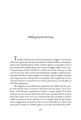
Show Bibliographical Essay T. hough isolated and small in population, Daggett County has attracted a great deal of literary attention. Much of this can be attributed to the colorful nature of the county's history. Long after most of the country had settled down, the remote Daggett region was a surviving bastion of the " Old West." At the turn of the century, as wild west shows and dime novels mythologized a largely vanished western past, the three- corners region was a place where outlaws, rustlers, and range war were still part of everyday life. The exploits of it's citizens provided new material for an urban population craving tales of Old West adventure. The Daggett area settled down quickly in the 1900s, but the public demand for tales of western adventure did not abate. Local residents with literary aspirations found a ready market for their reminiscences and even found that the more sensational the stories, the better they were received. Authorship also brought a certain celebrity status. In such a climate, it is no wonder that writers sometimes exaggerated, colored the facts to put themselves or those that were close to them in a better light, or out- and- out fabricated infor- 291 292 BIBLIOGRAPHICAL ESSAY mation ( telling tall stories was, after all, a western tradition). The curious result of this is that, though much has been written about the county's past, it is sometimes impossible to sort out what is fact, what is folklore, and what is simply untrue. Much of what is known of the wild days in Browns Park comes from a handful of sources. " The J. S. Hoy Manuscript," the unpublished writings of rancher J. S. Hoy, is one of the few primary documents dealing with this subject. Edited by James G. Hodgson, who at the time was Director of Libraries at Colorado A & M College ( now Colorado State University), Hoy's manuscript is a rambling attempt to chronicle the history of Browns Park. The original remains at Colorado State University, and there are copies at a few other research libraries in the Mountain West. It is based partly on research and partly on Hoy's own experiences. As a historical document, it is self-serving and often unreliable. Hoy generally did not get along with his neighbors, and he characterized most of them as thugs and criminals. His writings on Indians and Hispanics are bigoted, and not all his accounts are consistent. The manuscript contains three accounts of the killing of Charley Powers, for example, each varying significantly in details. Researchers should use this source with caution. Another primary account of old Browns Park is William " Billy" Tittsworth's Outskirt Episodes, published in 1927. Tittsworth cow-boyed in Browns Park and was a close associate of Charlie Crouse. Though there are kernels of truth scattered throughout the text, some of the stories in Outskirt Episodes are highly implausible. In a letter to Esther Campbell, Ann Bassett called the book " fiction" and asserted that it was the work of a ghost writer. More plausible in many respects, but not without problems, is Matt Warner's Last of the Bandit Riders, written with the help of Murray E. King. The book recalls Warner's errant adolescence as a rustler and cowboy in Browns Park and his graduation to full- fledged outlawry in adulthood. Warner's stories are sensational, and he paints a picture of himself as a fast- gun outlaw and close associate of Butch Cassidy. Published in 1940, the book obviously was written for an audience smitten with Hollywood stereotypes. It portrays Warner as a larger- than- life character, yet Browns Park old- timers remembered him as a minor player among his outlaw contemporaries. Still, there BIBLIOGRAPHICAL ESSAY 293 is much in the book about outlaw life that rings true in light of modern scholarship, and its tale of Warner's evolution from young tough to armed robber is fascinating. Though not a primary source itself, John Rolfe Burroughs's 1962 volume Where the Old West Stayed Young was based on a great deal of primary research. Burroughs was fortunate in being able to interview a number of people who had personal knowledge of events in Browns Park and northwestern Colorado. However, the most reliable account of doings in old Browns Park may be The Bassett Women by Grace McClure. Based on extensive research, this is perhaps as close a rendition of the truth as can be constructed from the confusing and sometimes contradictory accounts that are available. What is known for sure about Browns Park is that it was a violent community that grew increasingly out of step with the " civilized" ways of a developing western America. The business interests that dominated government in the region worked hard to increase the penalties for property crimes and to enforce the rule of law. This brought people like those in Browns Park for whom rustling was accepted and justice was a matter of personal honor into conflict with an ever more powerful legal system. The writings of historian Richard Maxwell Brown show that such conflict was relatively widespread in the West. Brown's No Duty to Retreat: Violence and Values in American History and Society discusses similar situations in the western frontier communities of Tombstone, Abilene, and Bodie. A more concise presentation of these ideas appears in his article " Violence" in the Oxford History of the American West. Whereas most books on frontier violence are a retelling of stories, Brown attempts to make sense of the basic social conflicts that precipitated violent situations. It has become popular to dismiss frontier violence as a Hollywood fabrication, but Brown shows that the myth has a basis in fact and that the Old West was at times a very violent place. While tales of rustling and outlaws dominate much of what has been written about Daggett County, there is a great deal more of historical interest. Three general histories of the area are worthy of mention. Flaming Gorge Country by Richard " Dick" Dunham and Vivian Dunham, a greatly expanded rewriting of the earlier booklet Our Strip of Land, covers the Daggett County area from the geologic past 294 BIBLIOGRAPHICAL ESSAY through the 1970s. The Dunhams' research was comprehensive, and it almost seems that every fact or story that they uncovered was included in the volume. The book was written in a folksy style that now seems somewhat dated or affected, and the authors admit that some of their tales may be more lore than history; however, the book is very engaging and a pleasure to read. Most of the book seems to be based on sound scholarship; however, the Dunhams were not overly critical of sources, and, as the notes are scanty, it is sometimes difficult to discern historical facts from entertaining stories. The book's anecdotes and outlaw yarns are not always believable. Dianna Allen Kouris's book The Romantic and Notorious History of Browns Park is a general history of Browns Park with an emphasis on the families that lived there. Like the Dunhams' work, it is based on an intimate association with the place and its people. This book is a very personal collection of family stories as they relate to, and come to constitute, the history of a place. Its discussion of the outlaw years in the park, however, shows neither the detailed research nor the depth of understanding presented by Grace McClure. A third general history dealing largely with the three- corners region is If We Had a Boat: Green River Explorers, Adventurers, and Runners by Roy Webb. A Vernal native, river enthusiast, and professional historian, Webb has crafted a fine book on the history of the river and those who have closely interacted with it. If We Had a Boat looks at the story of the Green River corridor from the time of the exploration of William Ashley through the construction of Flaming Gorge Dam. It chronicles the voyages of explorers like John Wesley Powell, the exploits of river adventurers like Nathaniel Galloway and the Kolb brothers, and the development of commercial river running. Much of Daggett County's history is tied to the Green River, and Webb's book fills an important niche on the local historian's bookshelf. For those interested in particular aspects of county history, a number of other works come to mind. Fur- trade enthusiasts will enjoy Harrison Clifford Dale's The Ashley- Smith Explorations and the Discovery of a Central Route to the Pacific. This book contains Ashley's own account of his exploration of the Green River and the rendezvous on Henrys Fork. Fred Gowans's Rocky Mountain Rendezvous BIBLIOGRAPHICAL ESSAY 295 also presents detailed information of the Henrys Fork gathering. The Life and Times of James P. Beckwourth as told to Thomas D. Bonner is another account of these events; but Beckwourth was a notorious storyteller. His thrilling story of rescuing General Ashley from the dreaded " Green River Suck" is known to be a tall tale, for example, and much of the information included in this book should be viewed with some skepticism. The fur traders and trappers who visited the Daggett region considered the entire upper basin of the Green River their home. When the beaver trade ended, some of them entered into a brisk business with overland emigrants as traders, guides, or ferrymen. Their conflict with the Mormons for control of these businesses is well chronicled in Fort Bridger: Island in the Wilderness by Fred Gowans and Eugene Campbell. This book is especially noteworthy for its extensive use of quotations. Hope Hilton's " Wild Bill" Hickman and the Mormon Frontier also sheds light on the Mormon incursions into the Green River country. Hickman's autobiography, Brigham s Destroying Angel, written with the help of Mormon antagonist John H. Beadle, contains Hickman's own highly colored version of events in Green River County and the Utah War. Perhaps no other portion of the American West was more thoroughly explored than the Uinta Mountains country. Exploration and Empire: The Explorer and Scientist in the Winning of the American West by William H. Goetzmann is still the best single volume dealing with the great government surveys of the post- Civil War West. It discusses the Clarence King survey of the Uintas and the diamond hoax, and it recounts both John Wesley Powell expeditions. Wallace Stegner's Beyond the Hundredth Meridian: John Wesley Powell and the Second Opening of the American West is a fine biography of the one-armed Major. Powell's own book, however, Exploration of the Colorado River and its Canyons, took liberties with the facts and combined into one account events from both his river journeys. The assembled journals and diaries of the crewmen on both Powell expeditions can be read in the 1948 and 1949 bound volumes of the Utah Historical Quarterly. For insights into the day- to- day life of a survey party in the Uinta country, no book is more readable and entertaining than The Passing 296 BIBLIOGRAPHICAL ESSAY of the Great West: Selected Papers of George Bird Grinnell, edited by Robert Rieger. As a young man, Grinnell accompanied the O. C. Marsh paleontological expedition along the route of the newly completed Pacific railroad, and this was one of the signal events in his life. Grinnell's writings vividly recall life in camp and field. His account of a visit with the mountaineers on Henrys Fork provides a remarkably detailed description of Daggett County's earliest settlers. The best single source dealing with the settlement and development of Daggett County is the Dunhams' Flaming Gorge Country. The authors lived in the county during the 1940s, and they talked with many of the area's pioneers. There are, however, other sources worth noting. Links to the Past, a collection of biographical sketches and family histories edited and published by Norma Gamble and Francie Anderson, tells of the settlement and development of Burnt Fork, Wyoming, and the Henrys Fork Valley. " The J. S. Hoy Manuscript" and Kouris's History of Brown's Park provide information of the growth of the ranching community in Browns Park. Those interested in the development of the Sheep Creek irrigation system and the founding of Manila should look at the turn- of-the- century promotional pamphlet " Operations: Lucerne Land and Water Company." An original copy can be viewed in the Special Collections department of the Harold B. Lee Library at Brigham Young University. The pamphlet not only discusses the area and the available lands in Manila and Lucerne Valley, it also describes in detail the beginnings of the project and the construction of the Sheep Creek Canal. The text is illustrated with excellent photographs. Another vivid description of Manila in the early days can be found in John M. Baxter's autobiography, The Life of John M. Baxter, published by the Deseret News Press in 1932. Baxter traveled to Manila along with other church officials to establish a branch of the LDS church there. His recollections provide insights into the harsh living conditions and grinding poverty experienced by Manila's early settlers. Life in Linwood is the focus of the " Recollections of Keith Smith of Linwood, Utah as told to his Daughter Susan." The original copy of this manuscript history is housed at the library of the Utah State Historical Society. Linwood's most prominent resident, this Yale BIBLIOGRAPHICAL ESSAY 297 University graduate turned rancher helped found the community and resided there until the town was inundated by the rising waters of Flaming Gorge Reservoir. Smith was a key player in Linwood and Daggett County affairs for seven decades. His reminiscences not only chronicle much of the county's history but are a fascinating account of his truly remarkable life. Three theses also shed a great deal of light on county development. William Tennent's " The John Jarvie Ranch: A Case Study in Historic Site Development and Interpretation" looks at the life of John Jarvie and the Browns Park area, and Eric Swedin's " The Swett Homestead: An Oral History, 1909- 1970" discusses ranch life in Greendale. Both are available at the Merrill Library at Utah State University. The best source dealing with schools is " The History of Public Education in Daggett County, Utah and Adjacent Areas," written by Donald Weir Baxter in 1959 at Brigham Young University. For a woman's perspective on ranch life in the early decades of this century, the writings of Elinore Pruitt Stewart are both entertaining and instructive. Although Stewart was a resident of Burnt Fork, Wyoming, she wrote frequently about happenings in Daggett County, and her way of life mirrored that of her Utah neighbors. Almost all of her work consists of letters written to friends, some of which appeared in the Atlantic Monthly magazine; other letters were compiled into books. Her most famous works are her books Letters of a Woman Homesteader, published in 1914, and Letters from an Elk Hunt, published the following year. Though she was not well known in her own time, Stewart's work was rediscovered in the 1960s and 1970s as interest developed in the study of women's literature. Her books were reprinted, and a movie based on her letters and journals, Heartland, was released in 1980. More of Stewart's letters were brought together by Susan K. George in the 1992 book The Adventures of the Woman Homesteader. Historical researchers, however, will find Stewart's letters of limited value. They are more literary exercises than historical documents. Stewart used them to indulge an interest in creative writing, and her correspondents were her audience. Most of the letters are short stories, inspired by the world around her but not necessarily renditions of fact. This is the opinion not only of some Daggett County resi- 298 BIBLIOGRAPHICAL ESSAY dents but also of Stewart scholar and editor Susan K. George, who, in the preface of her book, acknowledged that, " Stewart's writings blur the boundaries of history and fiction." Elinore Pruitt Stewart's works are good reading, and they provide a woman's perspective on early twentieth- century ranch life. They offer insights into the daily life of the three- corners area, but they should not be taken as absolute fact. Much has been written about Daggett County's outlaw heritage and the county's development through the 1930s, but those interested in studying its subsequent history will find the offerings limited. The story is scattered in random newspaper clippings, government documents, public records, and a handful of manuscript histories. Roy Webb's If We Had a Boat has some information on Flaming Gorge Dam and its consequences, as does the Dunhams' Flaming Gorge Country. A file of newspaper clippings pertaining to Daggett County, housed at the Uintah County Library in Vernal, provides bits of information on how Manila and the county grew in the mid- twentieth century. That is about it. One can only hope that, as a new century approaches, those who built Flaming Gorge Dam, the recreational economy, and the county's modern institutions will do more to record their experiences. Fortunately for researchers in Daggett County, most of the sources mentioned can be found in nearby repositories. The local history collection at Manila High School's library has copies of much of the material, as do also the files of the old Daggett County Historical Society ( presently kept by the Flaming Gorge Natural History Association in Dutch John). The Uintah County Library in Vernal also has a fine local history room that has many materials dealing with the three- corners country. The best source for historic photographs of Daggett County is the Sweetwater County Museum in Green River, Wyoming. This museum has several albums of pertinent photographs, including the images used by Richard Dunham in Flaming Gorge Country. Researchers are also encouraged to consult the holdings of the state of Utah's major libraries, particularly the special collections departments of the Harold B. Lee Library at Brigham Young University in Provo, the Merrill Library at Utah State University in Logan, the Marriott Library at the University of Utah BIBLIOGRAPHICAL ESSAY 299 in Salt Lake City, and the Utah State Historical Society Library in Salt Lake City. |