| OCR Text |
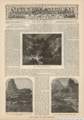
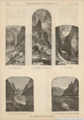
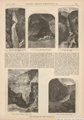
Show 3, 1878. SCIENTIFIC AMERICAN SUPPLEMENT, No. 135. 2141 FIG. 40.-FILLING'S CASCADE, THE LOWER FALL ON PINE CREfK. ff about. On the face of the cliff beneath the house, and down the river for two or three hundred yards, are many etchings. Fifteen milos below on the, river are other buildings. The principal ruin is on,a fitll, and a part of the walls yet stands. Tiie house was in the shape of an L, with live rooms on tha ground floor, one in the angle, and two in each wing. In the angle there is a deep excavation. From what we know of the people in the province of Tusayan, northern Arizona, wno doubtless airc of tho same race as the former inhabitants of these ruins, we conclude that this underground chamber was a " kiva," where their religious ceremonies were performed. Professor Powell, in attempting to climb a neighboring rounded eminence upon the top of the canon wall, was surprised to find a stairway cut in the rocks, and where the rock became vertical he discovered a rickety old ladder. This eminence must have been used as a watch-tower by that ancient people. At one point in the Grand Canon are the ruins of an old 38.-GAVE LAKE IN KANAB CANON house and evidence of a garden where a great spring bursts from the rock. On rocks near by are curious etchings. Near the junction of the Bright Angel River with the Colorado were discovered the foundations of two other old houses, and in one room a mealing stone, deeply worn. A great quantityfof broken pottery was strewn about, and old trails were traced worn deep into the rock. It is a source of wonder why this ancient people sought such inaccessible places for their homes. Doubtless they were an agricultural race, but there is little land here that could be cultivated. To the west of Oraiby, one of the towns in northern Arizona, the inhabitants have built little terraces along the face of the cliff where a spring flows forth, and thus make their garden sites. It is possible that the ancient inhabitants of these places made their agricultural lands in the same way. But why should they choose such barren spots? Surely the country was not so densely populated as to demand the utilization of such an arid land. The only Fia 41.-MARY'S VAIL, THE UPPER FALL ON PINE CREEK. apparent solution is that the ancient people fled to these fastnesses to escape the persec utions of the Spaniards. For a century or two after the settlement of Mexico by the Spanish many expeditions w ere sent into the region now known as Arizona and New Mexico to bring the town-building race under the dominion of Spain. Many of their villages were destroyed, and? the inhabitants fled to regions then unknown. According to the traditions among the people who inhabit the pueblos that still remain, these unknown regions were the canons of the Colorado. These canon ruins have a much more modern appearance than those scattered over Nevada, Utah, Colorado, and New Mexico. The old Spanish conquerors had a monstrous greed for gold and a wonderful lust for saving souls, and when they could not plunder they converted the heathen by the argument of the sword. It is no wonder that the ancient inhabitants fled to the canons. On many of the tributaries of the Colorado their deserted dwellings have been found. Those that show evidences- of having been built during the latter part of their occupation of the country are usually placed on the most inaccessible cliffs. The mouths of caves were walled across, and there are other evidences of their anxiety to secure defensible positions. Probably the nomadic tribes were sweeping down upon them, and hence these unusual safeguards. So from remotest time the struggle for existence among men has been as fierce as that between the brutes. FIG. 43.-MU-AV CANON, A SIDE GORGE. PlG. 44.-GRANITE WALLS, GRAND CANON. THE CANONS OF THE COLOKADO. |