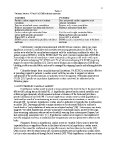
| OCR Text |
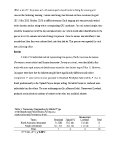
Show related to historical experiences was classified into 'anti-Japanese inferiority complex' and 'Western inferiority complex’. A) The experience of the Japanese colonial period and ‘Anti-Japanese inferiority complex’ The sense of inferiority to Japan is different depending on generations. Older generations who were born in the Japanese colonial era, and were educated and studied abroad in Japan, are classified as ‘Pro-Japanese.’ While they are very few Koreans, most of the elders had lived a painful life ruined by the Japanese military. And the pain has been passed down to the next generations, and became like Koreans’ genes, and their dislike of Japan has hardened. The degree of national inferiority toward Japan is different depending on generations. Older generations who experienced Japanese occupation have more of a sense of inferiority toward Japan due to the combination of inferiority, defeat, and hostility in their minds (Jung, M. J. 2019). The Japanese occupation period was embedded in Koreans as a deep sense of inferiority that is still unresolved. Compared to other non-Western countries, Koreans' colonial experience is a short period of 36 years, but as Japan used assimilation policies, this led to a deeper sense of inferiority. In other words, during the Japanese colonial period, Japan abolished all Korean language, script, and cultural history, and tried to replace those with Japanese language, culture, and history. Moreover, they even forcibly abolished the Korean family name system. In this process, Japan continued to instill in the Korean consciousness that Korean language, script, culture, and history are inferior, resulting in an ‘anti-Japanese complex.’ (Hong, S. P., 2010) The war with Japan, and the sense of collective damage created the complex against Japan. The oppression, wounds, hatred, and anger of the colonial era created a complex against Japan made Koreans unconditionally view Japan as bad. The colony’s experience has created a sense of antiJapanese complex (Nam, S. W., 2009). Longing for escaping from the colonial experiences during the Japanese occupation often appears as decolonization in sports nowadays. In other words, the idea that Korea must unconditionally win in Korean-Japanese sports games is seen as a symbol of decolonization. (Cho, J. S, 2009). B) The experience of the U.S. military period after the Korean War and ‘Western complex’ After liberation from the Japanese colonial period, Korea was greatly influenced by the States in the process of establishing the US military regime and the independent South Korea government. From the standpoint of the United States, the American system of liberal democracy and American values were disseminated to South Korea, and poor Korea accepted America’s aid role. This historical experience led to a ‘Western complex’ of Koreans divided into “pro-American” and “anti-American” (Ko, K. S., 2012). Korean society has a strong interest in early study abroad, especially studying in the United States. |