| OCR Text |
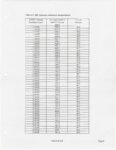
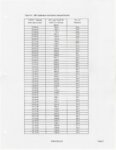
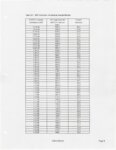
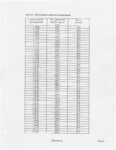
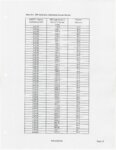
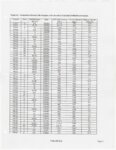
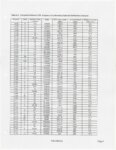
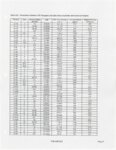
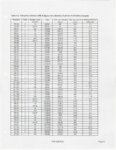
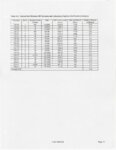
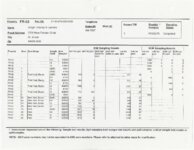
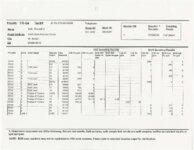
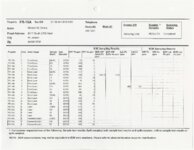
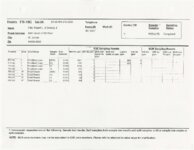
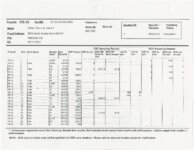
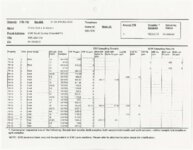
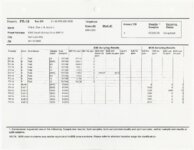
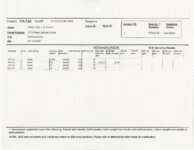
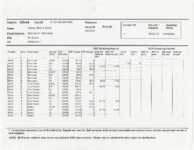
Show ARC0963 /SAMP _RES.RPT.13 07 /31/96 Prior to analysis activities each day and following analysis of approximately every 10 or 11 samples, a CV check sample was analyzed (total of 451). The actual calibration check frequency as to total number of XRF field samples analyzed (3,477) was 12.9 percent. This CV check sample was Standard #2711 prepared by the National Institute of Standards and Technology (NIST). NIST Standard #2711 is Montana soil spiked with a known concentration of lead (1,162 ppm). Table A-1 in Appendix A presents the comparison of the CV sample results to the known standard concentration. The comparisons are calculated as percent recoveries. The percent recovery is calculated as follows: Percent Recovery = XRF of NIST 2711 Standard x 100 NIST 2711 True Value According to the SAP, the control limits are a recovery of 80 to 120 percent of the standard's true value (percent recovery). As indicated from Table A-1 (Appendix A), all CV check sample results were within the control limits listed above, with the exception of two samples on February 6, 1996. These two samples indicated percent recoveries of 73.9 and 75.6. Review of field notebooks and discussions with the field laboratory supervisor indicated that these two samples were the initial values prior to re-analyzation of the NIST Standard #2711. The field laboratory QC procedure was to re-analyze all CV samples with initial values of less than 1,000 ppm. Table A-1 (Appendix A) presents all CV sample analyses including the initial values of re-analyzed samples; therefore, as indicated in Table A-1 (Appendix A), all but two of the initial values were within the control limits. 4.3.2 QA2 VALIDATION RESULTS According to the SAP, 10 percent of the XRF analyses are to be duplicated and analyzed in a laboratory for comparison with XRF analyses. These samples are referred to as laboratory verification samples. In addition, sampling equipment decontamination wipe samples are to be collected at a 10 percent sampling interval and submitted to a laboratory for analysis. A total of 758 QA laboratory samples were submitted to ESE's Denver, Colorado office for data validation review. Of these 758 samples, 407 were duplicate laboratory verification samples and 351 were equipment decontamination wipe samples. A total of 407 XRF samples were duplicated and submitted to AWAL for verification analyses. This is a 9 percent verification frequency, which was a greater frequency than the SAP-required 10 percent. The XRF instrument was calibrated with a 1,162 ppm lead standard (near the removal action level of 1,100 ppm); therefore, analyses of samples with concentrations much less or much greater than this action/calibration level are subject to instrument drift. This is illustrated in Tables A-2 and A-3 in Appendix A. Table A-2 presents a comparison of the 407 XRF analyses and the corresponding duplicate laboratory analyses as RPD. RPD is calculated as follows: 13 |