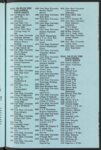
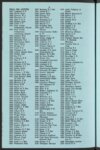
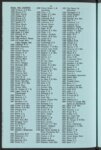
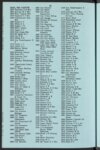
| OCR Text |
Show v ra INTRODUCTION Amusements-6 moving-picture houses; 1 theatre; 10 ward recreation halls; 2 bowling parlors; 3 school gymnasiums with swimming pools; 3 tennis courts, 3 parks for softball, picnicking and recreation; 1 roller skating rink; natural skating rink and ski area for winter recreation. 1 recreation center. Education-Utah State University, with 10,000 students. 9 public schools, including 1 senior high school and 1 junior high. Number of students in public schools, 3,100; teachers, 111. Public Libraries-Cache County Library, with one of the largest genealogical sections of any library in the Intermountain states. Also libraries at Utah State University and the senior and junior high schools. Churches-20, representing 6 denominations. 3 seminaries. Industry-Chief industries of Logan and Cache County are milk and cheese factories, flour milling and elevators, pea and bean canning plants, knitting and wearing apparel factories, candy and ice cream plants, bakeries, chicken and fish hatcheries, floral houses and nurseries, farm wagon factory, iron works, sand and gravel plants, upholstering and tailor shops, sawmill and millwork, monument companies, mattress factory, bottling works, harness shop, turkey processing plant, abattoir, trout farms, honey culture, mobile home manufacturing division; tire retreading plants. Business forms printing, piano manufacturing, farm machinery, printing. Industries which are best suited for the crops and conditions have been established here. This being an agricultural section, those industries which use agricultural products have been fostered and supported. The chief crops are hay, grain, sugar beets, potatoes, peas, beans, alfalfa seed, apples, fruits and vegetables. Dairying is one of the main industries, with poultry, including turkeys, developing very fast. Trade Jobs But manufacturing is not the only contributor to the new Cache County look: Trade jobs, thanks principally to the opening last summer of the Cache Valley Mall, are up almost 600 in the last five years. Government jobs are up 1,000. Construction has added 200 jobs in five years. Service jobs are 500 more than in 1970. And agriculture has kept pace, with an increase from 1,538 in 1970 to 2,242 in 1975. General Review Logan was settled in the early spring of 1859, by two small groups of families that came from the Salt Lake Valley to build homes in the beautiful Cache Valley. The plateau on which part of Logan is now situated, and the Logan River, with its power and irrigation possibilities, soon convinced these pioneers that this was an excellent place to start a settlement. The city is located on the lake bed and deltas of the ancient Lake Bonneville. The shore lines of this old lake are plainly visible on the slopes of the foothills of the east mountains. The site of the city was covered with 700 feet of water at the high level of the lake. Logan was incorporated on Jan. 17, 1866, with Alvin Crockett as the first mayor. The City being near the center of the valley and with the largest stream for irrigation and power purposes, naturally make it the center of development, and it became the county seat soon after its settlement. Freight service to Logan and the surrounding area is supplied by the Oregon Short Line R.R. (Union Pacific); four trucking companies; one airline serving Cache airport with four flights daily, and United Parcel Post. Two through bus services, one Logan intracity line, car rental, one taxi firm and two charter air services provide personal and group transportation. |