| OCR Text |
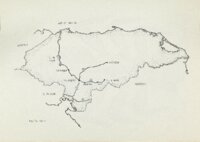
Show 64 The nymphs their flat readily distinguished are claws with many Traver and Edmunds from reared pecimen a zenobia other Baetidae by apical ctenidia. are in from all describing the field one species of Datylobaetis Honduras, which in will be named (manuscript name). Distribution Neotripical and Oregon and Nearctic, extending from Peru and Brazil to Idaho. Dactylobaetis zenobia Male north Length 5 imago. mm. Fore n. sp. Thorax largely dark wing 5 mm. markings; legs pale yellowish; with dark rather paler brown, wings hyaline whitish; in fore wing, extreme bases of C, Sc, and Rl dark brown; costal angulation narrow, acute, followed immediately by a humped area, this in turn by a slightly derpessed area; ventral margin concave near base. Abdominal terga olive brown with pale grey overcast, apical terga slightly rose-tinged; terga two and three with small reddish subedian mesonotum spots; median spots also on terga five and six, tergum six; wide dome-shaped penis cover present. and median spots on Nymph. one extra, Seven and to two to mandibles with inner subdian ctenidia per claw; labrum with one central, three lateral spines just below apical margin; eight incisor with four, and outer with three, denticles; greyish brown. Abdominal terga greyish brown, tergum eight pale; pale midline a few terga seven, nine and ten; main trachea of gills distinct; dorsum of lateral thorax dark branches may be present. on |