| OCR Text |
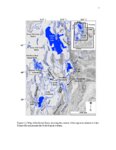
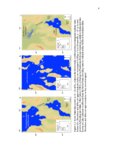
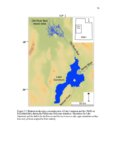
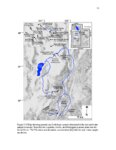
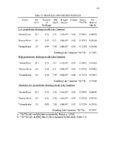
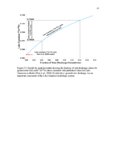
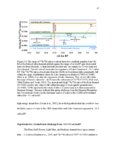
Show 65 Implications for groundwater flow from the Sevier basin Mollusks from younger channels of the ORB inland delta that were active after Lake Gunnison regressed at ~11.5 cal ka BP are within the expected range of 87Sr/86Sr ratios of mollusks from Lake Gunnison in the Sevier basin (0.70930-0.71049) (Figure 3.6) (Hart et al., 2004). This leads to the conclusion that water reaching the ORB inland delta was from the Sevier basin both prior to and after the regression of Lake Gunnison. To explain these observations, a variation of the Oviatt et al. (2015) groundwater discharge hypothesis is proposed. In this scenario, despite Lake Gunnison regressing below its overflow threshold at ~11.5 cal ka BP, water flow continued into the Sevier basin via the Beaver and Sevier rivers. This would have produced a shallow water table, as suggested by the appearance of wetlands in the Sevier basin at this time (Oviatt, 1988; Madsen et al., 2015). This shallow water table recharged a near-surface phreatic aquifer system, perhaps similar to seepage from Lake Chad that recharges a phreatic aquifer in the African Sahel (Isiorho et al., 1996). Groundwater travelled from the Sevier basin into the ORB valley, perhaps through the sediment of an ORB paleochannel, discharging to the surface prior to reaching the ORB inland delta on DPG. This hypothesis is consistent with studies in the region indicating that even moderate increases of groundwater in the Sevier basin could lead to surface flow in the ORB valley in modern times (Stephens and Sumsion, 1978; Madsen et al., 2015). Additional evidence favoring this hypothesis includes fluctuations in the 87Sr/86Sr ratios of mollusks from younger channels at the ORB inland delta as well as archaeological and geomorphological anomalies in the ORB valley, each of which are reviewed below. |