| OCR Text |
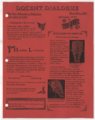
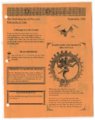
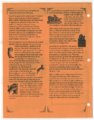
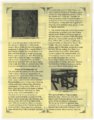
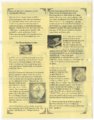
Show J he Utah Museum of Fine Arts University of Utah April, 1995 r .. F=;POTLIGHT ON OBJECT;, A Message from the Curator I would like to commend all of our docents for the dedication and commitment they have shown during the past winter. Your willingness to come in snow, rain or wind puts the post office to shame. It makes me want to stand on the roof of the tallest building on campus and shout out just how great you all are. Since I am afraid I would end up in a padded cell I will just keep on what I have been doing -- praising you all to any one who asks about our docents. DOCENT MEETING The next Docent Meeting will be on April 11 at 1:00p.m. STEERING COMMITTEE MEETING The next Steering Committee Meeting will be on April 3 at 9:00 a.m. The Education Staff wishes you and your families a holy Passover and a blessed Easter. •• ~· "Palembang Selendang" .,. ·~ A woman's ceremonial shoulder cloth from Sumatra, our example, 1987 .51.2, is made from silk. The museum's cloth is done in the batik technique whereby wax is applied to the cloth to cover it for the various stages of dyeing. The design is first sketched on the cloth with a pencil. Then, all of the intricate portions which are to be protected from the first dye are carefully covered on both sides of the cloth with melted wax. By dyeing, removing the wax, re-waxing and redyeing several times, usually in yellow, brown and blue, the piece of batik is completed. Both men and women wear salendang or shoulder cloths. Women's salendang are usually shaped from rectangular textiles folded in half lengthwise and worn over the shoulder. In some areas of Sumatra the cloth is passed under the left arm and the two ends are tied in a knot on the right shoulder which indicates a woman's status as married. While silk was preferred cotton was employed by poorer villagers. Cotton also provided the weft thread for the center section in order to provide strength and durability for the many tyings the cloth would undergo. Additional silk and/or metallic thread were applied to most ceremonial textiles during the weaving to add stunning patterns that often identified the village of the weaver. Some of the techniques used in include embroidery -- couching, drawn work, satin stitch -- slit tapestry and weft ikat. These techniques are utilized not only to produce the textile to convey a message to both wearer and observer. Many motifs are drawn from nature -- for example, "kunang kunang" represents fireflies ~and "ulek tantadu", parading caterpillars. ~ |