| OCR Text |
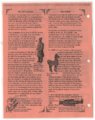
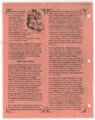
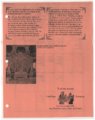
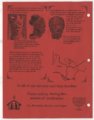
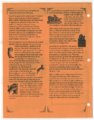
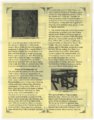
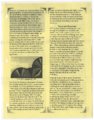
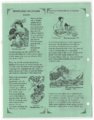
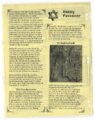
Show ~"°'", & ,,~ 'Fsi~ed . . - .. r llf ~ectual and cultural -Cir, ;Among those active ·"'·\\: . -~--... in this period were the /, . · .·· ._, . .,, . . t · ·t~~i~, .- ···v"" philosopher Wang . . · -.:-r_·· ··=· .. -~~:· Yangming; the painter ··=· . _,~. · ·:'·· ~- : . :_:·:·. , ·.·····~.. and art theorist Dong ·. ·~ . _>,,...:. , Qichang (Tung Ch'i1:~(~~·-·=."'.:':·.·../ ..,_:: Ch'ang); the dramatist = } ~~( · ~ .:.= Tang Xiandu (Tang '··=~-=~~~,~~;. ....~»:-~;~-=r.; Hsien-tsu), who wrote The · :.:!._:··:;ritt~=z=t ::·:::· .,:~~,/?t° Peony Pavilion; and the Monumen~·-,g ~@:lio~s Jesuit missionary, Matteo stone. ' Ricci.The painted porcelain of the Ming period is regarded as a high point in Chinese ceramics. f · ~1 M, ~ - = :;.. ·.,Jtr<". :-,·~~,-~·-· _,·:~·~L;l~~-:;: ~'l • '= :\J • Ming power began to decline in the reign (15731620) of Wanli (Wan-Ii). By 1644 the empire was bankrupt, and the rebel leader Li Zicheng (Li Tzu-Ch'eng) took Beijing. The local Ming general called upon the Manchu tribes for help. Although the Manchus retook Beijing, they would not relinquish their control. The Ming dynasty came to an end. . -·---- ..... _.......-..... ·.-~·-·-. ---.·.·-·--.·------ ...--·:-_·_·· -·- .. . ~.. . ·-· • . :. . , .. -. ,;;.·..:.1;.~i';.•.,., '""' ...... .-.-- -·----- ----~:-:•:-:-:-:...~:-.:..•:-;:..:-;.-_::;......... -. -~~-.......-.-- , the Treaty of Nanjing (Nanking, 1 8 4 ~ ~ g Ho?g Ko~g to Britain outright and o;n- '~ mg to foreign residence and trade the five soc~lled treaty ports of Guangzhou (Cant~n), Xiamen (Amoy), Fuzhou (Foochow), Nmgbo (Ning-po), and Shanghai. Cruel exploitation by co~pt civil officials and a general unease ove~ foreign encroachments awakened the latent anttManchu sentiment of the Chinese people. A wave of minor insurrections ensued, eventually triggering the outbreak of the Taiping Rebellion in 1850. The massive Taiping armies fought for over a decade to overthrow the Manchu dynasty, causing millions of deaths as well as the devastation of most of central China-·before their suppression by the forces of Zeng Guofan (Tseng Kuo-fan). ment for broader trade and diplomatic concessions, British and French warships bombarded Guangzhou. After taldng the port in 1858, they sailed to Tianjin (Tientsin) near Beijing (Peking), whereupon a new treaty was negotiat- . ed to allow foreign ministers diplomatic equality with their Chinese counterparts. When the Qing court balked at ratification, a larger European force stormed Beijing. The emperor fled while his brother, Prince Gong (Kung), exchanged ratifications and signed new conventions. A few days later Russia wrestled a treaty ceding territory on the-Pacific. The Qing or Manchu dynasty, founped by conquerors from Manchuria in 1644, was the last imperial dynasty of China.When it was overthrown in 1911, China became a republic.Under the Manchus the Chinese empire reached its greatest extent, covering all of China proper, four outlying dependencies (Manchuria, Mongolia, Xinjiang/Sinkiang, and Tibet), and several tributary states (chiefly Korea, Annam, Burma, and Nepal).The first 150 years of Qing rule also saw vigorous cultural and economic growth as the masterful emperors Kangxi (K ang-hsi; r.1661-1722) and Qianlong (Ch'ienlung; r.1735-96) preserved the institutions of neo-Confucianism while enlarging contacts with the West.From this period came the great novel, The Dream of The Red Chamber, and there was a steady flow of travelers and missionaries from Europe. 1 :,~~r~ ·,· In 1856, pressing the embattled Qing govern- Qing (Ch 'ing) Dynasty By the early 19th century the Qing dynasty had ~ - ... _. ·.... -- j Succession of the Dongzhi (T'ung-chih),emper".'. _ or, a young and' Weak -boy,'to··ffie throne .in 1862 . ·" led to a struggle for the regency ultimately won by Dowager Empress Cixi (Tz'u-hsi). Known among Western historians as "The Old Buddha," the Empress Dowager Cixi (Tz'u-hsi, tsoo-shee), b. November 29, 1835, d. Nov. 15, 1908, used a series of "regencies" to rule de facto for the final five decades of the Qing (Ch'ing) dynasty in China. As concubine to the Xianfeng (Hsienfeng) emperor, Cixi bore his only son. In 1861, when the 5-year-old boy became the Tongzhi (T'ung-chih) emperor, Cixi contrived to become co-regent with the empress, Xianfeng's former L::*; j consort Cian (Tz'u-an). On the deat~::t to decline. After the British seizure o,~;M ~ n g z h i emperor in 1875, Cixi maintain~ ~ a l ports during the First Opium War, ~ ~h ___ ,.- |