| OCR Text |
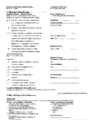
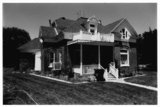
Show NPS Form 10-900-a Utah WordPerfect 5.1 Format (Revised Feb. 1993) 0MB No. 10024-0018 United States Department of the Interior National Park Service National Register of Historic Places Continuation Sheet Section No. _8_ Page _3_ James H. and Rhoda H. Gardner House, Lehi, Utah County, UT several such structures built by the company throughout Utah and Idaho.3 Started in 1890 at Mulliner's Mill Pond, the factory employed many local people at its large factory, and bought its raw material, sugar beets, from local farmers.4 Born in the Millcreek area of Salt Lake County in 1859, James H. Gardner was a son of Archibald Gardner, one of Utah's first millers.5 James learned the process of boiling sugar while serving as a Mormon missionary in the Hawaiian Islands from 1880-1884. Two years after his return, he married Rhoda Priscilla Huffaker, a resident of Peoa, Utah. Rhoda Huffaker was also a native of Salt Lake County, though she went to live with her grandparents in Peoa when her mother died shortly after Rhoda's birth. The Gardners went to Idaho shortly after their marriage in 1886 and set up a homestead near Idaho Falls. In 1890, the Utah Sugar Company began construction of a beet processing and sugar refining plant in Lehi. Gardner, with his experience in making sugar, was recruited to be a sugar boiler. On October 15, 1891, Gardner boiled the first batch of sugar to be made at the Lehi plant. He later recalled: The first strike of sugar was watched with considerable interest and great concern. Such a crowd of citizens were present in the pan room while the boiling was going on that it was difficult to get around...It was after midnight when that strike was dropped, but they all waited for that important event. Then everyone rushed to the centrifugal and when the first machine was spun off the molasses, Mr. Dyer could hardly get room enough to perform the washing. However, he soon passed out some of the clear white sugar, giving each one of his audience some of it "right in his hand." Immediately "hurrahs" and "hosannas" filled the air..."6 The sugar factory was significant not only to Lehi, but to all of the Mormon settlements in the West. Until the arrival of the Lehi Sugar Factory, sugar had to be imported into the Utah Territory. Despite several spectacular failures at sugar making in Utah (including a failed effort that gave the Sugarhouse neighborhood in Salt Lake City its name), it was not until 1891, and that first batch of sugar boiled by James Gardner, that Utah had a supplier of local sugar. Although the Lehi factory would close in 1924 after an infection of nematodes decimated the sugar crop in Utah Valley, its importance to the 3 All that remains of the factory is a smokestack and some coal pits. "Van Wagoner, 238-247. 5Biographical information for James H. and Rhoda H. Gardner is taken from Thomas F. Kirkham, ed., Lehi Centennial History 1850-1950 (including reprint of Hamilton Gardner's History of Lehi [Salt Lake City: Deseret News, 1913])(Lehi, Utah: Lehi Free Press Publishing Co., 1950), 258-259. 6Fred D. Taylor, A Saga of Sugar. Being a Story of the Romance and Development of Beet Sugar in the Rocky Mountain West. (Salt Lake City, 1944), 91. Quoted in Van Wagoner, 241. |