| OCR Text |
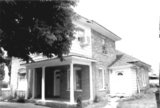
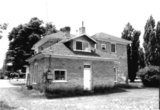
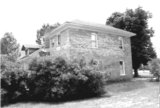
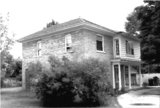
Show NPSForm10-900-a 0MB No. 10024-0018 Utah WordPerfect 5.1 Format (Revised Feb. 1993) United States Department of the Interior National Park Service National Register of Historic Places Continuation Sheet Section No. _8_ Page _4_ Carter/Terry/Call, House, Orem, Utah County, UT Penitentiary, being released May 20,1890. His first wife Sarah died in October 1899, soon after which Lydia left him. He was then left with thirteen children to raise. On January 3,1900 Otis married his brother's widow, Mary Johanna Rasmussen, and a year later they moved to the Provo Bench and purchased this house. 1 Terry was called to replace Peter Wentz as bishop of the Timpanogos Ward on August 19,1903. Under Terry's Bishopric many additions were made to the 1898 Timpanogos Ward building. The first project was the construction of the two-story brick vestry wing on the south end of the chapel which cost the ward $5,000. Toward the end of his fourteen year calling, Terry organized the construction of the large, Prairie Style multi-purpose building which was completed in 1915. After Terry's release from the bishopric, he and Mary moved to Provo in 1917. Mary died of an illness September 21,1925; Otis died of injuries after being struck by an automobile on October 9,1932.2 Orvis J. Call purchased the Terry's house in December, 1917. Little information is given of Call's life in his obituary, except that he was 75 when he died December 29,1943. His date and place of birth are not provided, although he was probably born in Heber, Utah. He was a school teacher for thirty years in various schools throughout Utah. He married Chloe Ryan July 19,1893 in the Salt Lake L.D.S. Temple. Chloe was the daughter of William M. and Floretta Fraughton and was born June 15,1873 in Heber, Utah. The Calls first moved to Orem in 1917 when they bought the Terry's house and lived in it until 1957 when Chloe passed away on April 20 of that year. The house remained in the family until 1964 and has since had several different owners. Victorian forms were popular in Utah 1885-1915. The cross-wing house plan began with earlier Gothic Revival and Italianate house styles, but was very popular with Victorian styles as well. The style of the house describes the early twentieth century and the changes that were occurring in Utah. Rural areas were less isolated from stylistic developments occurring on both the national and local levels. The pattern-book styles and standardized building components were available and easily adapted for use with local materials. The former isolation of rural areas was no longer an obstacle to building well and the quality of design and workmanship were also affected during the Victorian era.3 The changes that occurred in the Carter/Terry/Call House in the 1920s illustrates a trend toward an era when the forms that were being created were clean, precise, and angular, and they emphasized horizontality. The introduction of a low, hipped roof on this house provides some of the flavor of this period. The combination of Classical, Victorian, and Early Twentieth Century stylistic elements create a unique house form. It reflects the tastes of the individuals who owned and occupied the home. This home shows the evolution of the city of Orem and its changes from c. 1899-1941. 1 Andrew Jenson. L.D.S. Biographical Encyclopedia, vol.11. City: Andrew Jenson History Co., 1914. Pg. 804. 2 Deseret News. October 11, 1932. Salt Lake Pg. 6, sec. 2. 3 ibid. pp.110-111. X See continuation sheet |