| OCR Text |
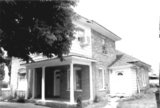
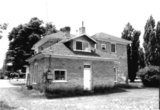
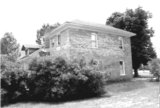
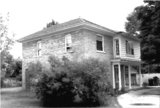
Show NPSFomHO-900-a Utah WordPerfect 5.1 Format (Revised Feb. 1993) 0MB No. 10024-0018 United States Department of the Interior National Park Service National Register of Historic Places Continuation Sheet Section No. jj_ Page _3_ Carter/Terry/Call, House, Orem, Utah County, UT Narrative Statement of Significance The Carter/Terry/Call House is significant for its association with the "Settlement and Agricultural Expansion: Mid-1870s-1913" and the "Establishment of Orem: 1913-1941" categories of the Historic and Architectural Resources of Orem, Utah, Multiple Property Submission. Although probably built c.1899 by Richard Carter, the most significant owner of the house was Otis L. Terry, the second Bishop of the Timpanogos Ward (parish) which then embodied almost the entire Provo Bench. The size and style of the house exemplify the importance of the bishop, who was not only a religious leader, but a civic leader in a growing settlement and is representative of the kinds of homes built by prominent members of the community during a period of agricultural growth. The "Agricultural Expansion" period of Orem was one of the greatest growth periods in the early days of the Provo Bench. Prior to this period seasonal landholders would attempt to raise crops on the bench, but could not live there because there was little water. After the construction of the Provo Bench Canal in 1864 more people settled on the bench and subsequent irrigation ditches and canals allowed for greater farm production and the ability to sustain the landowners year 'round. Fruit trees were found to be the best cash producing crops, and by the turn of the century those who had become involved in raising fruit started to realize great success which, in turn, encouraged others to move here and raise fruit orchards. During the "Establishment of Orem" period, the Provo Bench saw more changes associated with growth than in the previous periods. After the first decade of the 20th century, fruit growers on the bench realized that if their prosperity was to continue they must market their produce outside of the area and outside of Utah. With the establishment of a rail line in Orem, the "Orem Line," plus the increasing popularity of the automobile, the fruit and produce industries were able to market their products all over the western United States. With the increased prosperity, the Provo Bench soon became Orem Town in 1919 (in honor of Walter Orem who brought the railroad to the area), and eventually, in 1941, Orem City. The Carter/Terry house is situated on land which first received a patent by an O. Glazier who then deeded the property to George Chappell in 1884. He then sold the land to Richard Carter in July, 1892. If the 1899 construction date is correct on the tax file, then the house would have been constructed by Carter. Such a large house would surely indicate a prominent citizen in the community. Although his name is mentioned in some accounts, no biographical information was discovered. Carter owned the property for ten years before selling to Otis L. Terry, jr., who purchased the house and twenty acres of surrounding land for his third wife, Mary R. Terry. Otis L. Terry, Jr. was born January 6,1852, at Millcreek, Utah to Otis L., Sr., and Fanny M. Loveridge Terry. He married Sarah Lovina Howell in February 1876. She bore ten children before her death. Otis then took a second wife in polygamy in 1881, Lydia Butterfield Middleton with whom he had three more children. In 1886 he moved to North Bend (Fairview), Utah, with his two families. Because of the laws against polygamy, Otis was forced to serve six months of a nine month sentence in the Utah X See continuation sheet |