| OCR Text |
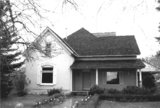
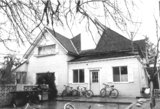
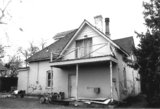
Show NFS Form 10-900-a Utah WordPerfect 5.1 Format (Revised Feb. 1993) OMBNo. 10024-0018 United States Department of the Interior National Park Service National Register of Historic Places Continuation Sheet Section No. 8 Page 4 Baxter, David & Drusilla, House, Orem, Utah County, UT she met David, who was working for a railroad company. Drusilla was every bit the frontier woman. After she and David moved to their land on the Provo Bench in 1888, Drusilla helped David clear the land of sagebrush and irrigate the crops. While David was working at the mines at Myton, she operated a boarding house where she cooked for up to 25 men a day. She then managed a boarding house for several years at the Culmer Company quarry in Colton. She was offered a management position at the Culmer Hotel in Salt Lake City but decided instead to move back to Provo Bench so that she and David could run their farm. David was born January 25,1866 in Sheletston, Scotland to Cornelius and Elizabeth Kelley Baxter and came with his parents and siblings to Utah in 1873. On November 8,1886 he and Drusilla were married, and then they moved to Spanish Fork while David worked for the Oregon Short Line Railroad for a brief time. In March 1889, they moved to the land they had purchased from Cornelius Baxter so that David could begin farming. In 1897, David leased his farm and took his family to stay with Drusilla's brother at Nine-Mile Ranch in Carbon County while David worked at the Parriett Gilsonite mine in Duchesne County. After several years of being a foreman at the mine, David, along with Drusilla, decided to move back to their farm on the Provo Bench, and in 1895 began construction on the brick house where they would farm, raise their eight children, and spend the remainder of their lives. Drusilla died in August, 1940, while David continued to live at the house until he passed away in October, 1954. The house remained in the Baxter family until 1966.3 The Baxter house is a good example of the transitional character of the architecture on the Provo Bench at the latter-part of the 19th century. Although Classical in form, the Victorian influence in the architectural details is readily apparent. Because many of the farmers on the bench struggled to make an income for many years, the architecture of their homes remained in the simple, unembellished Classical-style architecture of their predecessors. Those who saw success in their farms began to build or alter their present homes in the Victorian styles, mainly the Victorian Eclectic which enlisted such details as asymmetrical facades, bay windows, arched window and door openings, wooden shingles on the vertical surfaces, decorative brickwork, and leaded-glass windows. The Baxter house combines a Classical house type with many of the Victorian Eclectic features common from 18851910.4 See continuation sheet 3 The information from the above paragraphs was acquired from brief family history accounts of David and Drusilla Baxter. 4 Thomas Carter & Peter Goss. Utah's Historic Architecture. 1847-1940; A Guide. Salt Lake City: University of Utah Graduate School of Architecture and Utah State Historical Society, 1991. p.127. |