| OCR Text |
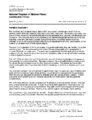
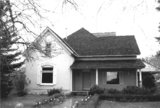
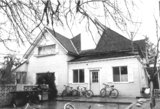
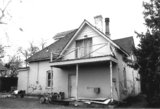
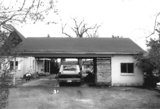
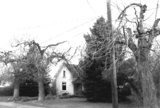
Show NPSForm10-900-a Utah WordPerfect 5.1 Format (Revised Feb. 1993) OMB No. 10024-0018 United States Department of the Interior National Park Service National Register of Historic Places Continuation Sheet Section No. 8 Page 3 Baxter, David & Drusilla, House, Orem, Utah County, UT Narrative Statement of Significance The David and Drusilla Baxter House, built c.1895, is significant for its association with the "Settlement and Agricultural Expansion: Mid-1870s-1913" and the "Establishment of Orem: 1913-1941" categories of the Historic and Architectural Resources of Orem, Multiple Property Submission. The house represents a transition from the unadorned vernacular houses of the early settlers to the more stylish Victorian homes. By the turn of the century, prosperity was beginning to make a foothold on the Bench which can be observed in the increased numbers of larger, more stylistically embellished buildings. The Baxter house is a good example of the architecture common during this period on the Provo Bench. The "Agricultural Expansion" period of Orem was one of the greatest growth periods in the early days of the Provo Bench. Prior to this period seasonal landholders would attempt to raise crops on the bench, but could not live there because there was little water. After the construction of the Provo Bench Canal in 1864 more people settled on the bench and subsequent irrigation ditches and canals allowed for greater farm production and the ability to sustain the landowners year 'round. Fruit trees were found to be the best cash producing crops, and by the turn of the century those who had become involved in raising fruit started to realize great success which, in turn, encouraged others to move here and raise fruit orchards. During the "Establishment of Orem" period, the Provo Bench saw more changes associated with growth than in the previous periods. After the first decade of the 20th century, fruit growers on the bench realized that if their prosperity was to continue they must market their produce outside of the area and outside of Utah. With the establishment of a rail line in Orem, the "Orem Line," plus the increasing popularity of the automobile, the fruit and produce industries were able to market their products all over the western United States. With the increased prosperity, the Provo Bench soon became Orem Town in 1919 (in honor of Walter Orem who brought the railroad to the area), and eventually, in 1941, Orem City. Alexander Gillespie received patent on the land where the Baxter house sits on March 20,1876. In March 1884, 40 acres of this land was sold to Cornelius Baxter, a Scottish immigrant and resident of nearby Pleasant Grove, and he began to prepare the land for farming. After the initial attempt at organizing a canal on the north Bench was abandoned, Cornelius and his son David, worked for several weeks at building their own canal to their land. This tedious work was accomplished by dragging water through hand-shoveled furrows where, often, the water would disappear into the gravelly soil. The ditch bank would then have to packed and firmed up to allow water to travel across. A 20 acre portion of this land was then sold to David on January 12,1889. (Mary) Drusilla Elmer was born in El Monte, California, September 20,1868, and moved with her parents to Juab County, Utah where they started a cattle ranch while she was still a child. While living on the ranch she would milk several cows every day. After graduating in 1884 from Huntington Academy in Nephi, Utah, Drusilla taught school for two years in Mills, Utah. It was while living here that X See continuation sheet |