| OCR Text |
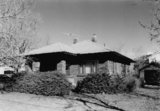
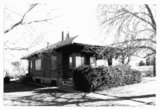
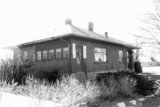
Show NPS Form 10-900-a Utah WordPerfect 5.1 Format (Revised Feb. 1993) OMB No. 10024-0018 United States Department of the Interior National Park Service National Register of Historic Places Continuation Sheet Section No. _8_ Page _3_ Cullimore, William and Lizzie, House, Orem, Utah County, UT mercantile with Mrs. McBride until 1925 when it was sold to Sam Kitchen, apparently so that William could farm his land 1 . The Cullimores continued to live in the house until they deeded it to their son, Luke, in 1941. Both William and Lizzie died several years later in 1948. Luke, who was born on July 11,1902 in Pleasant Grove, married three different times. It was with his third wife, Vera, that he lived with in this house. Luke was employed at various times by Utah and Idaho Sugar Company, Provo River Water Users, and Orem City. He resided in the house until his death in 1978, and Vera continues to live there (1997). Bungalows were a very popular house type in Utah after the turn of the century until World War I. They can be found in urban and rural areas alike. The open planning of the bungalow interiors was quite a change from the previous Victorian and Classical house types in which rooms were usually small and boxy. The bungalow type was established as modern conveniences were being developed such as plumbing and electricity, and was made to incorporate these utilities. The interiors were made for efficient use of space and usually contained built in bookcases, closets, and tables. Quite in contrast to the taller, narrow Victorian styles, the bungalow was conspicuously low in elevation, usually with just one or one-and-one-half stories, and decor was limited to such things as exposed rafter ends, and battered porch columns. There are basically two main styles of bungalows in Utah, the Prairie School, with low-hipped roof, and broad, overhanging eaves (to which the Cullimore house belongs); and Arts and Crafts, which contains more stylistic elements such as the exposed rafters, decorative knee braces, and decorative stone work. Bungalows may either have the gable end or the side facing the street, but either way, the design usually incorporates a full-length, overhanging porch.2 The Cullimore house is a good example of the Prairie style and reflects a non-typical house form used in the area as one of only six remaining in Orem. See continuation sheet William is listed as a farmer in the 1935-36 Polk Directory for Provo, Utah and surrounding communities. He is listed under the town of Lindon rather than Orem, but the far north area of Orem was commonly referred to as Lindon at the time. 2 Thomas Carter & Peter Goss. Utah's Historic Architecture. 1847-1940; A Guide. Salt Lake Citv: Graduate School of Architecture, University of Utah |