| OCR Text |
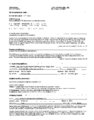
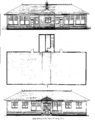
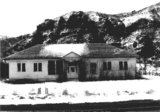
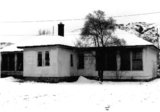
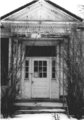
Show NPSForm10-900-a Utah WordPerfect 5.1 Format (Revised Feb. 1993) OMB No. 10024-0018 United States Department of the Interior National Park Service National Register of Historic Places Continuation Sheet Section No. _8_ Page _2_ Echo School, Echo, Summit County, UT Narrative Statement of Significance The Echo School, built in 1914, is significant as the only remaining building constructed exclusively for use as a school 3 for a community that was important as a railroad connecting point for the Union Pacific Railroad. Used as the school for the residents of Echo during 1914-40s, this building helps to describe a changing education system in rural Utah during this period. This two-room schoolhouse also describes the change in the appearance of school buildings from the late 19th century gable-end entry, multi-use building, to a school building type with the entry in the broad, horizontal, broad side. Schools were being designed and built independently of meetinghouses becoming an separate building type in the early 20th century. The Echo School represents one school building type that was often built in smaller towns.4 SUMMIT COUNTY: In 1846 a new cutoff on the California Trail was announced that would eliminate several hundred miles and many days of travel. The cutoff turned southwest from Fort Bridger, Wyoming, and entered Utah and the northeastern corner of Summit County through Echo Canyon. It followed the Weber River to Salt Lake Valley, went around the south shore of the Great Salt Lake, and then west into Nevada. In 1847 the first structure, a log cabin, 5 was erected in Summit County at the mouth of Echo Canyon. In 1853, Weber Stage Station was built at this location and used until 1931. 6 In 1854 the founder and first resident of the town of Echo, James Bromley, settled at the mouth of Echo Canyon and managed the Weber Stage Station, 7 the main stopping point between Fort Bridger, Wyoming and Salt Lake City, The Echo Church/School, listed in the National Register of Historic Places in 1989, remains as an example of the church/school building constructed in the late 1800s. Other similarly constructed buildings include the schools in Boulder and Aurora, Utah, constructed in the 1930s. The Utes were already camping in this area when the Mormons built this structure. Richins, Fannie J. and Maxine R. Wright. Henefer. Our Vallev Home. Salt Lake City, 1958, pp. 55-58. Carter, Kate B. Heart Throbs of the West. Salt Lake City: Daughters of the Utah Pioneers, 1947-51, 2:37273. Whitney, Orson F. History of Utah. IV. Salt Lake City: George Q. Cannon & Sons, 1893, pp. 428-29. X See continuation sheet |