| OCR Text |
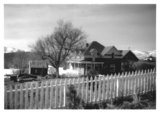
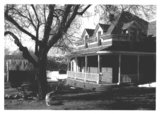
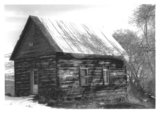
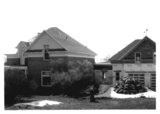
Show NPS Form 10-900-a Utah WordPerfect 5.1 Format (Revised Feb. 1993) United States Department of the Interior National Park Service National Register of Historic Places Continuation Sheet Section NO. 8 Page 6 Crook, Heber and Matilda, House and Lake Creek Schoolhouse, Heber City, Wasatch County, UT important in describing the end of isolation of Utah in the late nineteenth century. Rural areas were less isolated from stylistic developments occurring on both the national and local levels. The pattern book styles and standardized building components were available and easily adapted for use with local materials. While most Victorian eclectic houses were constructed of wood in many parts of the country, Utah often saw this style and type of house constructed of stone. 19 Stone was a commonly used building material in Utah dating from the 1860s-1870s when many classical house forms, such as hallparlor and central-passage plans, were being constructed. Using stone for the building of popular house types and styles, away from the classical stylistic influence, illustrates the continuation of a building tradition within a new form. The Lake Creek Schoolhouse and Heber and Matilda Crook House are excellent examples of wellcrafted structures. Their location in a rural setting, isolated from the larger cities and densely-built environment, contributes to their significance illustrating a period of development in the Heber Valley. See continuation sheet |