| OCR Text |
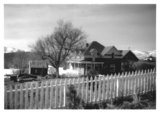
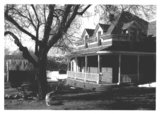
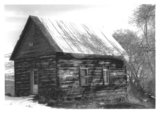
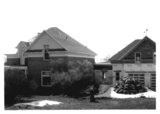
Show NPS Form 10-900-a Utah WordPerfect 5.1 Format (Revised Feb. 1993) United States Department of the Interior National Park Service National Register of Historic Places Continuation Sheet Section No. 8 Page 5 Crook, Heber and Matilda, House and Lake Creek Schoolhouse, Heber City, Wasatch County, UT The school was built prior to the merging of Center Creek and Lake Creek into one community in 1898. The cabin was reportedly used only briefly as the Lake Creek school before the children were sent to Center Creek school. 15 The "chalk width" top rail of the wainscotting provides apparent physical evidence of the building's use as a school. The log cabin is significant in its contribution as a place for learning in the area of Lake Creek and Center Creek and architecturally as a fine example of log cabin traditional construction methods and as a surviving example of outlying schools. The craftsmanship of the log cabin is best seen in its excellent execution of compound dovetail notching. 16 It was moved to its current site c.1899 by Heber and Matilda Crook to serve as their living quarters for their family of seven while they were constructing their sandstone house. HOUSE: The Victorian eclectic house was built between 1900-1903 and is constructed of sandstone taken from a family quarry that was located one mile east of the house. The quarry was developed on property owned by John Crook (Heber's father) and Herbert Clegg. The stone was used to build many homes in Center Creek, Lake Creek, Heber City and Salt Lake City. 17 The location of the Crook house outside the traditional Mormon town grid 18 describe a significant period of growth in Utah. The home, cabin, and formerly farmed surrounding land are located on a winding country road, very much unlike the town grid imposed on the landscape in Heber City four miles away. The style of the house also describes the early-twentieth century and the changes that were occurring in Utah. This central block with projecting bays house type with Victorian eclectic styling is 15 Mike Loriz interviewed two of Heber and Matilda Crook's grandchildren, Cal Crook (son of Thomas) and Curtis Crook (son of Chase). Cal Crook was born and married in the house and raised pigeons in the attic of the schoolhouse. Curtis Crook continues to live 1/2 mile east of the subject property. "In later years a sandstone school building of two rooms was built ... and used until consolidation of the schools when the pupils were taken by bus to Heber City." How Beautiful the Mountains, p. 1059. 16 Physical evidence supports the idea that the joints were precisely cut with hand tools, and not with an adz or at a mill. 17 How Beautiful the Mountains, p. 1049. 18 Utah settlement patterns were based on the Plat of the City of Zion that was outlined by the Mormon prophet Joseph Smith. The plan, though not fully implemented, served as a model for Mormon settlements across the west under the direction of Brigham Young. The plats were one mile square, the blocks were ten acres each and forty rods square, and the lots were laid off alternately within the squares. The towns were set out in a grid pattern with the public buildings and church located in the center of town, surrounded by residences, with the outlying areas being used as farmlands. Mormon settlements became characterized by in-town family farmsteads with a daily trek to the outlying fields. Outmigration became inevitable as populations grew, but much of the old pattern originating in the Plat of the City of Zion has persisted to the present. |