| OCR Text |
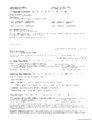
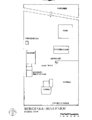
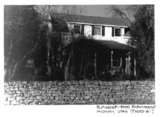
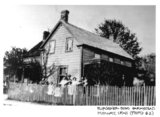
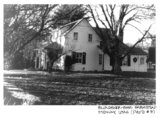
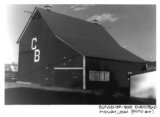
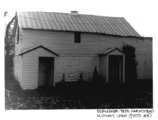
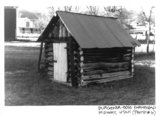
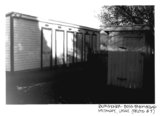
Show NFS Form 10-800-a Utah WordPerfect 5,1 Format (Revised Feb. 1993) United States Department of the Interior National Park Service National Register of Historic Places Continuation Sheet Section No. 8 Page 5 Burgener-Boss House, Midway, Wasatch County, UT families took up land around the Fort square rather than moving back to the earlier settlements. The Burgener-Boss Farmstead is located just northwest of the original Fort square. The area has remained very rural with agriculture as its primary commerce. Burgener-Boss Farmstead: Original ties between the Burgener family and Midway stem from Jacob Burgener's log cabin within the original fort. The Andreas Burgener family was able to establish itself very quickly with the land purchased by Andreas 1 brother previous to their arrival in 1874. The Burgener family name has been firmly established in Midway since its beginning. The Burgener-Boss farmstead is significant because of its historical association with Midway's settlement. The farm is still operational, appears much as it did in the 1880s, and provides a strong visual historic association with the town. The farm complex is one of the few remaining family farms in the Heber Valley still operated by direct descendants. It was built by Swiss immigrants and provides one of the few known connections to what has often been considered Midway's ethnic heritage. The only other documented source of Swiss-built structures are the Huber House and Creamery that were constructed in 1878 and c.1885, respectively. They are also listed on the National Register of Historic Places and provide physical evidence of Swiss settlement in Midway. As a missionary, John Huber was responsible for hundreds of Swiss converts in the United States between 1863 and 1874 and due to his local ties and as a result of his efforts, Midway became one of the few communities in Utah with a concentration of Swiss settlers. Other towns in Utah in which Swiss immigrants settled include Payson, Santa Clara, and communities in Cache Valley and the Bear Lake region. Midway is probably the community best known statewide for its Swiss heritage, but adequate studies have not yet been completed. The complex physically documents the development of a pioneer farm. The original living quarters existed in what was to become the granary, remaining as an example of the kinds of first dwellings in which the settlers began raising their families, Three of the Burgener's children were born in this structure where they lived for five years prior to moving into the permanent home they built. Most original dwellings were replaced and removed as a farm grew, leaving the Burgener-Boss Farm as one of the few enduring examples illustrating a Utah farmstead's evolution, Additionally the farm complex is tied to Midway through its use of an indigenous material, pot-rock, in the granary, the foundation of the house, and the fence constructed in front of the house. Approximately twenty buildings remain in Midway that were constructed between 1875-1890 using the locally quarried pot-rock material. 'Mitchell, Mabel. Midway Second.Hard and Midway Reflections 1859-1989, p. 7. 8Midway Reconnaissance Level Survey, 1991. X See continuation sheet |