| OCR Text |
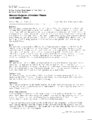
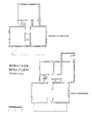
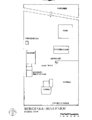
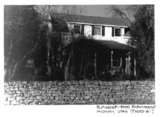
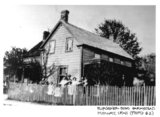
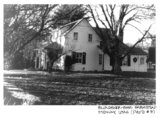
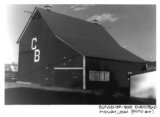
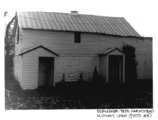
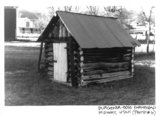
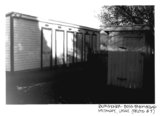
Show NPS Form 10-900-a Utah WordPerfect 5.1 Formal (Revised Feb. 1093) United States Department of the Interior National Park Service National Register of Historic Places Continuation Sheet Section No. 8 Page . 4 Burgener-Boss House, Midway, Wasatch County, Their living quarters were in the top part of the building and the bottom floor was used for storage and a fruit and vegetable cellar. While the larger house was being constructed, Andreas began erecting the "pot-rock" fence. After the new home was completed in 1880, the upper floor of the temporary home became a granary. Deeds at the Wasatch County Recorder's Office state that on February 4, 1898, Burgener acquired the parcel to the north of the original lot. An orchard of apples, pears, plums and prunes, were planted on approximately 2 acres along the northern boundary of the property on the hillside/ Ruby Eliza Abegglen Boss, Andreas Burgener's granddaughter and Joseph Abegglen and Anna Elizabeth Burgener's daughter, was born on December 9, 1876. She enjoyed music, sang, and played the organ. She married Conrad Boss on October 18, 1921 and they had two children. Conrad Boss was born in Midway on December 27, 1897 to Johannes Boss Sr. and Margaret Gertsch Boss (both from Switzerland). Conrad was one of the first volunteers from Wasatch County to enter World War I. He assisted Ruby's father in caring for the 80-acre farm. After Conrad and Ruby lived in Evanston, Wyoming and Park City, Utah between 1923-1927, they moved back to Midway in 1931 and later bought the Burgener/Boss home. Andreas died in November of 1933 and on March 22, 1935, title to the property was transferred to John F. Burgener, Alma A. Burgener and 5 other relatives. On July 3, 1936, Alma A. and Lena P. Burgener transferred the two parcels to Conrad Boss, On June 23, 1969, title was transferred to Ruby Boss (his wife), June B. Tatton (his daughter), Richard C. Tatton (his grandson) and Jay C. Boss. Ruby Boss and June Tatton continue to live in the home and operate the farm. Richard Tatton has worked diligently to maintain the farmstead's character for the past 33 years. Midway's History: The first settlements in this area occurred in 1859 along both sides of Snake Creek, an area chosen for its warm springs and majestic mountains. The upper settlement was originally known as Mound City because of the limestone foundations in the area. A lower settlement was established approximately 3-1/2 miles south of Mound City and 1-1/2 miles south of the current Midway. With the threat of Indian attack during the Blackhawk War (1866-68) the settlers were advised to form one community and the rambling settlements along Snake Creek were abandoned in 1866. A compromise location, approximately halfway between the two settlements was chosen and called Midway. The first structures were 75 dirt-roofed log cabins configured in a square and called Fort Midway. After 1868 when the threat of Indian attack lessened, 3 Abegglen, J. Harold. "Life History of Anna Elizabeth Burgener Abegglen". 1984. 4 Zenger, Ray H. "The Family History of Andreas and Magda'lena Meier Burgener". 5 Hitche'll, Mabel, editor. 6 Boss, Conrad. "Midway Second Ward and Midway Reflections, 18594989". "This is the History of Conrad Boss". May 26, 1961. X See continuation sheet |