| OCR Text |
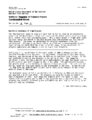
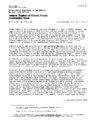
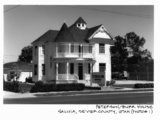
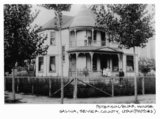
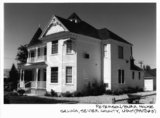
Show OMB No. 10024-0018 NFS Form 10-900-a Utah WordPerfect 5.1 Format (Rev. 2/93) United States Department of the Interior National Park Service National Register of Historic Places Continuation Sheet Section No. 7 Page 1 Peterson/Burr House, Salina, Sevier County, UT Narrative Description The Peterson/Burr house is located on the corner of 200 West and Main Street in Salina, Utah. The community of Salina is situated in the northern part of Sevier County at the junction of highways 10 and 63. The Sevier River Valley is broad and long, bisected by Utah's longest river, and bordered by the Pahvent Mountains on the west and a range of the Wasatch Mountains on the east. The valley is primarily used for agricultural purposes, along with some cattle and sheep ranching and coal and salt mining. The county contains numerous small communities, most dating from the early pioneer period. Within the small community of Salina, the site of the Peterson/Burr House includes a minimal amount of landscaping (grass, shrubs and a few smaller trees) around the house. A non-contributing wood frame garage, compatible with the style of the house, is the only other building on the site, positioned on the northwest side. Built c.1900, the Late Victorian, Queen Anne style house is a two-story, frame house, situated on a plastered stone foundation. This house clearly represents the 'central block with projecting bays' house type. The main entry is located off a double-tiered veranda that wraps around the northwest corner of the house. The porch roof is supported by lathe-turned columns with bargeboard detailing. The side entry on the west has a smaller, similarly detailed porch. The complex roof form consists of a central pyramidal roof with a gable roof over the front bay, a segmental hipped roof over the west bay, a hipped roof over the east bay, a conical roof over the veranda tower, a segmented conical roof over the cupola, a shed roof on the northeast side, and a hipped roof over the rear of the house. The exterior walls of the house were originally covered with drop or novelty siding. A vinyl siding, similar to the historic wood siding (see historic photo), has been installed to cover a non-removable plastered finish applied in the 1980s by a previous owner. The significant form, features and detailing have not been obscured. A significant amount of the original wood detailing remains visible in the jig-sawn decorative patterns of the porch friezes and gable cornices. The windows are mostly original, consisting of one-over-one double hung sash, decorative leaded glass transoms within the larger windows of the projecting bays, and narrower leaded and stained glass in the stairwell and entrance windows. Partial window replacement has occurred, but the historic stained glass has been retained. The doors are paneled wood with transoms over the entrance doors. The exterior of the house has retained its historic workmanship and appearance and remains a visual landmark within the community. x See continuation sheet 1 Thomas Carter and Peter Goss, Utah's Historic Architecture. 1847-1940. pp. 44-48. |