| OCR Text |
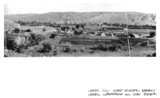
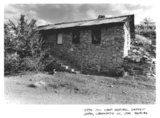
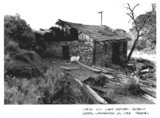
Show NFS Form 10-900-a (8-86) Utah WordPerfect Format OMB No. 1024-0018 United States Department of the Interior National Park Service National Register of Historic Places Continuation Sheet Section number 8 Page 4 Leeds CCC Camp Historic District, Leeds, Washington Co., Utah of workers on Federal work projects was far above the national average. The CCC was one of the "alphabet" agencies created to solve the unemployment dilemma. The establishment of the Civilian Conservation Corps in 1933 gave a major boost to the cause of reclamation in Utah. Projects that had long been planned by the Departments of Agriculture and Interior were finally consummated with an input of financial and labor resources sufficient to spell the difference between demise and fruition... Equally important was the fact that work was needed on the land. In 1933 the Department of Agriculture estimated conservatively that soil erosion cost the country over $200 million annually and that 17.5 million acres were even then beyond reclamation or cultivation... The proposed conservation and development programs provided an ideal opportunity both to help alleviate unemployment and to preserve America's resources. The CCC Camp in Leeds, Utah was one of the first camps to be established in Utah. The Pine Valley CCC Camp (located approximately fifteen miles northwest of Leeds) was in existence from early May of 1933 until the fall of that year when the men were moved to the newly constructed camp at Leeds. Lumber milled by the Pine Valley camp was used to build the Leeds Camp. Approximately 250 men were housed in this camp, with 50 men to a barrack. As was typical for the CCC throughout the nation, enrollment was for a six month period, except for married men, who were signed up for nine to twelve months. Enrollees were not to get married while serving their enrollment period. The training and supervision was somewhat military in nature, consequently thousands of men were partially trained and available when World War II started. In Utah, in addition to the regular enrol lees, "the CCC added 1,300 'local, experienced men,' or LEMs, hired from the ranks of unemployed carpenters, lumbermen, miners, and others who could serve as project leaders." Working crews from the CCC were under the administration and supervision of the "technical" federal agencies, the Forest Service, the Soil Conservation Service (another federal agency created during the Depression era), and the Division of Grazing (now known as the Bureau of Land Management), among others. While over 100 CCC camps were established and located in Utah during the existence of the CCC, many of these were in operation for only a short time (such as the Pine Valley camp). There were typically about thirty-five camps in operation at any given time with numerous temporary, remote, "spike" camps as needed for specific projects. Five specific camps established in Utah to work on erosion control X See continuation sheet 3Kenneth W. Baldridge, "Reclamation Work of the Civilian Conservation Corps, 1933-1942," Utah Historical Quarterly. Volume 39, Number 3, Summer 1971, p.265-7. 4Ibid, p.267. 5Ibid, p.268. |