| OCR Text |
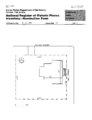
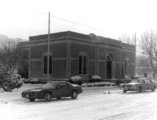
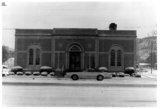
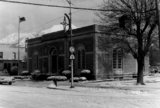
Show 0MB Afpnml No. 1024-0018 NPS Form 10-800* (MB) United States Department of the Interior National Park Service National Register of Historic Places Continuation Sheet Section number R- Page -2- Nephi MPO LOCAL CONTEXT Nephi, with an estimated 1984 population of 3 f 500, is the county seat of Juab County. Nephi is approximately 85 miles south of Salt Lake City, the state capital. The population of the city has been relatively stable since the early 1900s with the economic base focused on agriculture/ mineral extraction/processing, and light manufacturing. Agricultural and mineral extraction/processing are the traditional sectors of the economy. The present site of Nephi was settled in September of 1851 by Timothy B. Foote and his family at the recommendation of Brigham Young. Timothy Foote established the first post office in his log cabin in December of 1851 under the name of Salt Creek. The name remained Salt Creek until it was changed to Nephi on May 22 , 1882. Other families soon followed the Footes. On the site of the existing post office an adobe (log cabin in one account) meeting house was constructed in 1852. (This building was replaced in 1858 by a larger adobe structure which was used as a tithing office.) This was Nephi's first public building. Indian uprisings in 1853 resulted in the erection of a small fort in what is now the downtown core. Farming was the primary occupation and a grist mill and salt mill were established. In 1886 Nephi was named the county seat of the newly formed Juab County and was later incorporated in 1889. The railroad reached Nephi in 1879 and opened a new era. Shipping became an important segment of the economy. By 1890 the population of Nephi was 2,034. Nephi grew slowly through 1910, with a census population in that year of 2,759. Population began to decline and the 1920 census showed 2,603 inhabitants, further declining to 2,573 in 1930. The declining population trend was reversed in 1940 with a slight increase to 2,835. Since that time, population has remained relatively stable with slight growth. The post office fronts along Main Street (east side) with the southern boundary formed by Center Street. Surrounding land uses include commercial to the north (modern frame office adjacent, two-story brick structure (circa 1890), former city hall (1923), and gas station), and commercial across Main Street to the west and Center Street |