| OCR Text |
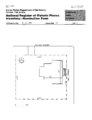
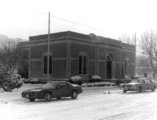
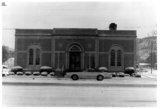
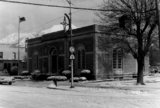
Show 0MB Afpnvtl No. 10244018 NP8 Form 104004 (M6) United States Department of the Interior National Park Service National Register of Historic Places Continuation Sheet Section number 8 Page _!__ NePhi MPO the 1930s and Depression era. The design is transitional in that it retains the rich detailing of the early-1900s designs which were based on the Beaux Arts tradition/ yet immediately precedes the simplified modern designs of the mid- to late-Depression era. The design is based on standardized "cabinet sketches" developed by the Supervising Architect's Office to increase the efficiency of building design and construction, however, the treatment of the facade is unique. The square, centrally-located public lobby, around which are arranged the offices and post office boxes, is a rare example of this particular floor plan (a similar example exists in the 1919 Basin, Wyoming Post Office). The overall design of the building and its exquisite detailing contribute to the building's statewide significance under Criterion C. POLITICS/GOVERNMENT The post office is the first federally-constructed building in the city and is a manifestation of the federal presence during a time of national economic emergency. The construction of the post office represents over two decades of effort on the part of local citizens, through their elected representatives in Washington, D.C., to secure a federal building. As early as 1913, Congress had authorized a post office site for Nephi. A site was purchased in 1918, but federal economies did not allow a building appropriation. Even after the 1926 Public Buildings Act, Nephi was not granted a federal building postal receipts were too low. Finally, with strong lobbying by Senator William H. King, and rumored manipulation of postal receipts by local citizens, the building was granted. The building was constructed in the early years of the Depression and thus predates the massive federal buildings programs which followed soon thereafter. It is also notable that the post office occupies a site that represents a continuum of public buildings in the city, dating back to 1852 when a meeting house was first constructed on the site (later followed by a tithing office). Through these factors the building is locally significant under Criterion A. |