| OCR Text |
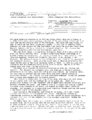
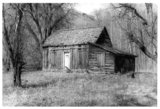
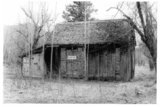
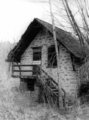
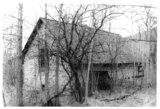
Show NFS Form 10- 900a (Rev. 8-86) 0MB No. 1024-0018 Utah Word Processor Format (02741) Approved 10/87 United States Department of the Interior National Park Service NATIONAL REGISTER OF HISTORIC PLACES CONTINUATION SHEET Section number __§______ Page __3_ John Huber House and Creamery Midway, Wasatch County, Utah spent some time as an auditor of store accounts in the neighboring towns of Heber City and Park City.2 Throughout his life, John remained active in local church and civic affairs. He served in the Midway Ward (congregation) of the Mormon church as ward clerk (18/8-1908), founded a choir and directed it from 1880 to 1910, and he compiled the history of the ward, which was virtually a history of the town, from 1859 to 1905. He was a member of the Midway School Board for 24 years, a justice of the peace for two years, a census taker in 1880 and 1900, secretary of the Midway Irrigation Company for ten years, and local agent of crop reporting for the U.S. Department of Agriculture. He also taught a night classes in spelling and penmanship for adults, and was well known locally for the many songs and poems he composed.3 The house that John Huber built in 1878 served as his residence until his death in 1914. Mary continued to live there until her death in 1935. The house and farm passed to a son, Joseph, who lived there until 1960, when he sold it to the Division of State Parks and Recreation. State Parks developed a golf course on much of the farmland and adjacent property, tearing down all but the house and creamery in the process. These buildings have been left vacant for years, though tentative plans have been discussed for renovating and maintaining them as an interpretive historical site as part of Wasatch Mountain State Park. Much of the Swiss heritage of the Midway area can be attributed to John Huber. Both he and his wife were Swiss, and, as documented above, he was instrumental in bringing scores of his countrymen to Utah to settle. The exact number of Swiss immigrants who settled in Midway as a result of John Huber*s influence is unknown. Many of the Swiss families in the area have credited him with directing their ancestors to Midway. The Swiss influence in Midway's early history were noted as early as 18/2, when it was reported that most of the town's 80 families were Swiss.^ That claim was probably somewhat exaggerated, though the number of Swiss immigrants settling in Midway was rapidly increasing at that time. The census records show that between 18/0 and 1880 the percentage of Swiss in the town rose from 14.5 percent to 33.3 percent.6 The local awareness of their Swiss heritage continued into the twentieth century, being expressed most explicitly in the construction of a "Swiss" style WPA city hall in 1939-41. The town's annual celebration, Swiss Days, continues to recognize the ethnic nature of many of the early settlers. Midway is not the only town in Utah in which Swiss immigrants settled in significant numbers. The towns of Payson in north/central Utah, Santa Clara in southwestern Utah, and communities in Cache Valley and the Bear Lake region, had concentrations of Swiss as well. Midway, however, is probably the community best known statewide for its Swiss heritage. Whether the Swiss influence was actually strongest there is unknown; adequate ethnic studies have not been completed yet. |