| OCR Text |
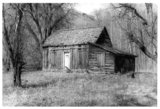
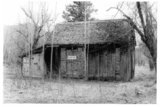
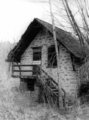
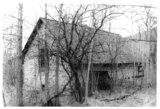
Show NFS Form 10~900a (Rev. 8-86) Utah Word Processor Format (02741) Approved 10/87 0MB No. 1024-0018 United States Department of the Interior National Park Service NATIONAL REGISTER OF HISTORIC PLACBIS CONTINUATION SHEET Section number ____8____ Page _ 2_ John Huber House and Creamery Midway, Wasatch County, Utah In 1864, after spending a short time in Payson, John and Mary Huber settled in the upper Provo River Valley in the area that would later become Midway. The upper Provo River Valley was first occupied by Mormons in 1859, with settlements established at E'ort Heber and at locations on nearby Snake Creek. Displeased with the extent of Mormon intrusion into their country, the local Ute-Shoshone people rose up against the Mormon settlers in 1866. The ensuing Black Hawk War forced the Mormons to abandon the two Snake Creek communities and gather at a point midway between them for protection. Here, in a town appropriately called Midway, 75 log cabins were arranged fort-like around a 6-acre central enclosure. The Midway fort was maintained until the war ended in 1867. In that year the town was platted in gridiron arrangement according to Mormon custom, and a permanent village site was founded. People immediately began moving out to their new city lots. In 1870 as John Huber was in the process of building a house in Midway he was called by church leaders to serve another mission in Switzerland. During the three years he was gone, his wife and four children lived in the partially built house. Upon his return in 1874 the house was completed. This house, located in the town proper, was apparently torn down and replaced by a newer house in early twentieth century. During this second mission to Switzerland John Huber played a key role in Mormon church affairs in his homeland. From 1872 to 1874 he presided over the Swiss and German mission, directing the missionary work in those two countries. He also helped edit the "German Star," a German-language version of the church's M.ilJ._ejjj.^l._Sta.r newspaper, assisted with the initial publication of the Book of Mormon in German, and helped write various missionary tracts and translate others into German. John Huber also wrote a poems and songs and translated some hymns into German, some of which have persisted to the present in the church hymnal. At the conclusion of his second mission in 1874, John Huber returned to his home in Midway, finishing the house that he had begun in 1870. In 1875 he purchased land at the mouth of Snake Creek where he eventually established his farm. But for two years he and his family lived at Cottonwood, across the mountain, where he helped ship granite from the quarry to Salt Lake City for use on the Mormon temple there. In 18/8, after spending a short time in Salt Lake City, the Hubers moved back to Midway to their farm property and had a two- room frame house constructed there.^ That house remained their home for the remainder of their lives. Lumber for the house was obtained from a sawmill farther up Snake Creek Canyon where the power plant now stands. Though John had operated a sawmill along Snake Creek in 1869, he devoted himself primarily to farming at this point in his life. He built up his farm over the years, purchasing additional land, planting orchards, and constructing a barn, corrals, root cellar, and creamery on the property. The creamery, with two bedrooms on the upper floor, helped accommodate his large family of ten children. In addition to farming, John also |