| OCR Text |
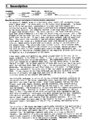
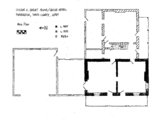
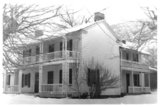
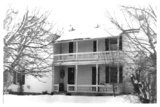
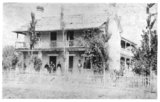
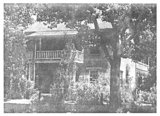
Show Period prehistoric 1400-1499 1500-1599 1600-1699 1700-1799 _JL 1800-1 899 1900- Specific dates Areas off Signifficance Check and justify below archeology-prehistoric community planning archeology-historic conservation agriculture economics X architecture education art commerce communications engineering ^ exploration/settlement industry invention c , 18S7 landscape architecture law literature military music philosophy X politics/government religion science sculpture social/ humanitarian theater transportation other (specify) probably Hector C. Haight Statement of Signifficance (in one paragraph) Built c. 1857, the Hector C. Haight House/Union Hotel is architecturally significant as one of a very limited number of two story double cell houses in Utah, Because the state survey is not complete, it is impossible to conclusively state how many houses of this type are extant, but the double cell in its one story form was not a popular traditional house type in the early days of settlement. Two story examples of the type are even less common. The hou'se is also historically significant as the oldest remaining hotel in Farmington, fas.one ~of the few remaining houses in Utah that were built during the' l£i>ds t j a^ the "father of Farmington." Haight, in addition to helping settle the commumty, was prominent in the county government, serving, among other positions, as probate judge for nine years. The virtually unaltered interior of the house also contributes to Hs si gnifipance^ The'e^terior of the house has been altered by the addition of aluminum siding over the original adobe walls, an alteration that is considered major and which usually disqualifies a house for listing in the National Register. In this case, however, where it serves to protect the badly-weathered original adobe, aluminum siding should be considered acceptable because, unlike stuccoing, a common and accepted treatment for weathered adobe walls, it both preserves the original material and is reversible. The exceptional significance of this house, both architectural and historical , mitigate-the detracting influence of the alteration. Hector C. Haight was one of the first men to settle in the Farmington area in 1847, and he is claimed to be the first settler of both Farmington and the nearby town of Kaysville. His first homesite was on Haight Bench, located northwest of Farmington, but no evidence of his cabin there remains. In 1852 he moved into the town proper and soon after built this house, which he probably lived in until his death in 1879. Local history claims the construction date of this house to. fee -1 857, "1 but it may have been built either earlier or later. Haight, a noted local builder, was serving a church mission in Denmark between 1855 and 1858, so it is unusual that he would have had someone else build the house during his absence. Hector C. Haight was born in New York in 1810, and, after converting to the Mormon church, came to Utah in 1847 with the second group of Mormon pioneers to enter the Salt Lake Valley. He was a farmer, stockraiser, builder, and, after completing this large house, a hotel proprietor. He was also well-known forhis service in( the Davis County government, in which he held the position of probate judge for nine years and also served as assessor, collector, and sheriff. In keeping with the LDS church practice of polygamy at time, Hector C. Haight had more than one wife, although it is unknown whether or not they ever shared this house. With its double entrances, this house would have provided the |