| OCR Text |
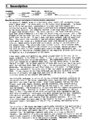
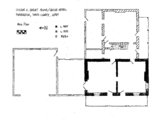
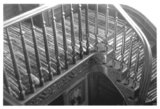
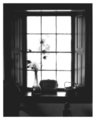
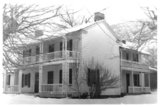
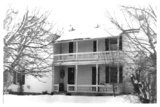
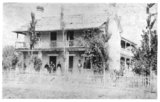
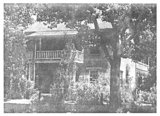
Show 7. Description Condition excellent Xgood»- fair -, deteriorated ruins unexposed Check one unaltered X altered Check one X original site moved date Describo tho present and original (iff known) physical appearance The Hector C. Haight House is a two story adobe double cell vernacular house with a gable roof. The adobe walls are 18 inches thick throughout. The house was built in two sections, consisting of a c.1857 two story double cell section facing west, and a two story c.1870 rear wing attached perpendicular to the front section. The original section is one room deep and has two rooms of equal size on each floor. Two doors open into the house from each floor, each door being flanked by a six over six double hung sash window. All of the windows on the two older sections of the house are the same type. A two story porch spans the facade. It has a shed roof which extends from the major roof line. Each porch pier consists of two 4x4 columns spaced about six inches apart which are joined by a vertical wood panel with decorative patterns cut into it. These panels extend only up to about the top of the Balustrade on the second story. The balustrades have straight posts. At an unknown date, the original full-width porch was reduced to a centered, two-column porch, but the portions that had been removed were rebuilt in 1984, duplicattng the ." , structural and decorative elements found on the remaining original portion and as depicted in old photographs of the house. A two story gable roof addition was added perpendicular to the rear of the house, probably in the 1860s or 1870s. It has a two story porch on the south side with balustrades of turned balusters. The easternmost portion of that porch was removed at an unknown date, but, like the front porch, it too was rebuilt in 1984. The original portions of both this porch and the front porch have, for the most part, been left intact, thereby preserving tbe. original materials,, two doorways/on, each floor open[onto thisporcn. A frame kitchen lean-to was attached to the north side of the rear addition probably before 1900. It was removed i,n J,he late,1930s ^t^as replaced Iri 1,968 by a : frame lean-to of virtually the same size and style as the original. That area currently serves as the kitchen and bathroom. The virtually,,unaltered, interiors of the two original s,ec|lon$ contribute to the significance of the house,"especially since there are very few houses in the state that date from the 1850s. Significant features include the pine floors, wood trim, doors, windows, and the elaborate, hand carved curving staircase. The height of the ceilings and the size of the rooms have also been maintained. The installation of bathrooms did not require the alteration of interior rooms. Restoration of thS interior was undertaken in 1982 and 1983, at which time many of the walls and ceilings were replastered and the wood trim and moldings, which were originally grained but had been repeatedly painted over the years, were stripped and regrained. Also at that time non-original closets were removed from the upstairs bedrooms. Of course some minor alteration.? have been made on the interior in order to provide the necessary modern improvements of electricity, plumbing, and heating in the house. The exterior of the house has been significantly altered by the application of aluminum siding over the weathered adobe walls in the late 1950s. The siding obscures the adobe, and covers the sills, lintels and the frieze at the cornice line. In addition, shutters were added to windows on the major facades. The addition of siding and shutters has changed the house so that ,it more closely resembles a New England house built of clapboards, something that it never was intended to be in the historic period. Therefore its original (See Continuation Sheet) |