| OCR Text |
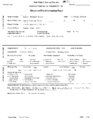
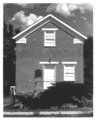
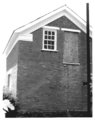
Show Kanosh Tithing Office History Continued: community, therefore tithing contributions were usually farm products, such as crops, dairy products, and livestock. By at least the 1920s, however, cash was much more plentiful and was used for tithing donations instead of the "in kind" commodities. Since the building was no longer needed for its original use, it was either left vacant or used as a meeting place by auxiliary organizations of the church for a number of years. Even when serving as a tithing office, the building was used as the first meeting place of the ward's Mutual Improvement Association, the organization for the teenagers.^ In 1952, the church granted the building to the local chapter of the Daughters of Utah Pioneers, which has used it as a meeting place and relic hall up to the present. Notes Halbot Hamlin, Greek Revival Architecture in America, (London: University Press, 1944), p. 268. 2Hamlin, p. 266. Oxford 3Tom Carter, "Folk Design in Utah Architecture: 1849-90," in Utah Folk Art: A Catalog of Material Culture, ed. Hal Cannon, (Prove: BYU Press, 1980), p. 44. ^S tell a H. Day and Sebrina C. Ekins, compilers, Milestones of Mi Hard, p. 371. |