| OCR Text |
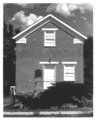
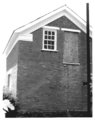
Show Street Address:_________________________________________Site No: LLJ DC Architect/Builder. r> o Building Materials: 5= o cc Building Type/Style: Greek Re viva I/ Temple Form ________________'. Description of physical appearance & significant architectural features: LLJ Brick (Include additions, alterations, ancillary structures, and landscaping if applicable) The Kanosh Tithing Office is a 1 1/2 story rectangular brick temple -form building with a gable roof and a stone foundation. Typical of a Greek Revival temple-form building it is oriented gable end to the street and has a boxed cornice which returns on the gable end. The gable end orientation and pedimented gable facade are meant to imitate monumental classical buildingsJ The Greek Revival temple -form building was the preferred building type for religious buildings in Utah in the late nineteenth century. A door is centered on the gable end flanked by a single six over six light double hung sash window. A similar window is centered over the door. A single window on the top half story of the rear of the building is flanked by a door. The building reflects the simple elegance of the Greek Revival style, its only embellishment being a line of dentils on the frieze. It is unaltered, and therefore maintains its original integrity. Notes Hamlin, Greek Revival Architecture in America, (London: University Press, 1944), p. 266. g > § co x Oxford Statement of Historical Significance: Construction Date: 1370 Built in 1870, the Kanosh Tithing Office is historically significant as one of 28 well preserved tithing buildings in Utah that were part of the successful tithing system of The Church of Jesus Christ of Latter-day Saints (LDS or Mormon church) between the 1850s and about 1910. Tithing lots, which usually included an office and several auxiliary structures, were facilities for collecting, storing, and distributing the farm products that were donated as tithing by church members in the cash-poor agricultural communities throughout the state. Tithing offices were a vital part of almost every Mormon community, serving as local centers of trade, welfare assistance, and economic activity. They were also important as the basic units of the church-wide tithing network that was centered in Salt Lake City. In addition, the Kanosh Tithing Office is architecturally significant as one of eight extant examples of Utah's tithing offices which were designed in the Greek Revival style. It is one of seven of those buildings which is a temple-form building. Of those seven temple-form buildings, it is one of the three best preserved examples of the type. The other two examples include the tithing offices at Escalante and Paradise. The temple-form building originated in the Greek Revival period of American building,' and typically has its short end to the street and a pedimented gable end in imitation of monumental classical buildings. 2 The temple-form building was the preferred building type for early religious buildings in Utah, having been brought to the area by members of The Church of Jesus Christ of Latter-day Saints after 1847. 3 Very few unaltered, well preserved examples of this building type are presently extant in Utah. Under the direction of Culbert King, bishop of the Kanosh Ward, the Kanosh Tithing Office was built in 1870 to serve as the center for the collection and distribution of "in kind" tithing contributions from members of the Kanosh Ward of the LDS church. Typical of most other Utah towns during the nineteenth and early twentieth centuries, Kanosh was a cash-poor agricultural (See Continuation Sheet) |