| OCR Text |
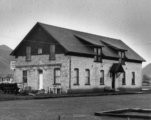
Show FHR-8-300 (11-78) United States Department of the Interior Heritage Conservation and Recreation Service National Register of Historic Places Inventory Nomination Form Continuation sheet___________________Item number 8________Page 3 have been four explanations advanced for the plant's failure. The first justifies closure by the recurring infestation of the "curly-top" disease in the Sevier Valley. Competition for locally grown beets by the erection of the Gunnison Sugar Beet Factory in 1918 is offered as the second; and the third argues that the relationship between the farmers and U & I officials continued to decline as both struggled to stay alive during the agricultural decline of the 1920's. The fourth explanation argues that low tariffs on sugar confoined with a 20 million dollar mortgage hanging over U & I properties did not allow for keeping marginal factories in operation. In 1928 the beet processing machinery was sold to a firm in Quebec. Fourteen years later, in 1942, the factory's main structural elements were dismantled leaving only the office and sugar warehouse intact. At the end of World War II the warehouse was converted into a drying plant for potatoes from which a flour was made and then shipped to Europe. The operation was owned by Utah Food Products Cooperative and was a locally owned concern. In 1945 the business was forced to sale the property because it had failed to meet its mortgage payments. American Food Products Corporation bought the site but it suffered the same fate as the Utah Company. After a series of owners the Elsinore Sugar Factory property was purchased by Wilson Milburn. He has convertd the office into a home and hopes to reuse the sugar warehouse as a local shopping mall. |