| OCR Text |
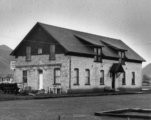
Show 8. Significance Period prehistoric 1 400-1 499 1500-1599 •i cnn_ -i coo 1700-1799 •\ Rnn_-t RQQ _^1900- Areas of Significance-Check and justify below archeology-prehistoric community planning archeology-historic conservation ^^agriculture architecture art commerce communications Specific dates IQIQ_]J <i- economics education engineering exploration/settlement ^industry invention landscape architecture law literature military music philosophy politics/government religion science sculpture social/ humanitarian theater transportation other (specify) Builder/Architect E>H> Statement of Significance (in one paragraph) Ofte Elsinore Sugar Factory is significant as the single most important agri-business in Sevier County history. The factory's economic and social impact on local communities, as assessed by a recent county wide historical survey, exceeds that of any other business enterprise for the years 1911 to 1928. Also, the Elsinore plant is significant as a good representative of the overall sugar beet industry in Utah and as an excellant example of the Utah-Idaho Sugar Company's contribution bo the history of the state. The first attempt at refining sugar from beets in Utah occurred in the early 1850 's under the auspicious of the Deseret Manufacturing Company. With the strong financial and social support of Brigham Young, and with imported French machinery, a sugar beet factory was erected in Provo. This primitive plant was unable to recrystallize the sugar from the beet juice. With the company near ing financial ruin, it was purchased by the Mormon Church. After removing the machinery to Salt Lake City, the church tried anew, and again the process failed. This second attempt was the last try at refining sugar in Utah until 1891. During these thirty plus years the MDrmon desire for economic self-sufficiency kept alive the "sugar beet hope". Experimentation with sugar beets reached Sevier County in 1878 as William Seegmiller and C.A. Madsen each produced a few high quality plants. Local soil conditions were discovered to be excellent and with improved irrigation systems, large yearly crops were predicted. The improved refining techniques used by E.H. Dyer at his California plant that resulted in the production of a high quality sugar, helped revive the sugar beet interests in Utah. With increased tariffs on sugar that came with the Merrill Act, 1883 and the McKinley Act, 1890, the atmosphere for the "sugar business" improved. The Mormon desire hope for financial autonony now had the technological means, the capital and the interest to form the Utah Sugar Company in 1889. Two years after incorporation a sugar beet refinery was erected in Lehi under the direction of E.H. Dyer. As in the 1850 's the Mormon leadership strongly endorsed the enterprise. Church wards encouraged local farmers to plant sugar beets in the spring for processing in the fall. The refinery was from the beginning a technical success but it took time for utahns to accept the fact that beet sugar was as good as cane sugar. As the financial success of the sugar beet enterprise became apparent, it accelerated the proliferation of other sugar beet refineries. In 1898 sugar produced from beets made up 2% of the American sugar out-put, by 1901 it was |