| OCR Text |
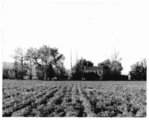
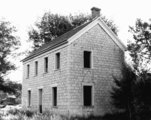
Show FHR-8-300A (11/78) UNITED STATES DEPARTMENT OF THE INTERIOR HERITAGE CONSERVATION AND RECREATION SERVICE NATIONAL REGISTER OF HISTORIC PLACES INVENTORY « NOMINATION FORM CONTINUATION SHEET ITEM NUMBER PAGE County. In this new location, farming continued to be his main occupation. The Crawforth family lived within the town limits of Spring City until the big rock house was completed on the outskirts of town in 1884. Crawforth's decision to locate outside of town is a departure from the norm. The record shows that he remained active in the LDS Church; religious disaffection seems not to have been an issue inhis choice of a building site. The spot where the house stands is extremely attractive and the view northward toward Mt. Nebo particularly inspiring. A sense of individualism and an eye for beauty could well lie beneath Crawforth 1 s behavior. Two other changes in the region likely were factors in his move outside the village of Spring City. The opening of a U.S. Land Office in Salt Lake City in 1869 marked the end of a land settlement pattern controlled by the Mormons. Church leaders emphasized throughout the nineteenth century the importance of living together in towns, and the village still dominated the Utah landscape. With the establishment of federal land surveys after 1869, a homesteading pattern of isolated farmsteads filled in the open spaces between established Mormon villages in those counties were land was still available. In the Sanpete Valley, because of its early date of settlement, scarcity of agricultural land had become an issue by the 1870 f s. Two consequences of this scarcity were outmigration (to Emery and Sevier counties) and the attempts to develop cash agriculture cattle, sheep and crops like sorghum and fruit. Crawforth f s development of orchards may have been one reason for his move, which showed that Church control over settlement was declining. The Crawforth farmstead is a reminder that the Mormon landscape was not a strictly uniform landscape. Charles Crawforth lived in the house from 1884 until his death in 1910. The farmstead was locally a showcase for Crawforth's talents in landscaping as one observer noted, "he took pride in beautifying his home surroundings and had one of the best kept gardens and orchards in that part of the state." Later generations of Spring City residents recall stories of peacocks which used to strut proudly around the old house. The cut-stone walk which rings the house seems consistant with this portrait of Crawforth as horticulturalist and landscape architect. Crawforth continued to be a successful farmer and his prestige in the community is evident in the large turnout at his funeral. Bishop Lauritz 0. Larsen and Patriarch Rasmus Justesen delivered eulogies at the ceremony. |